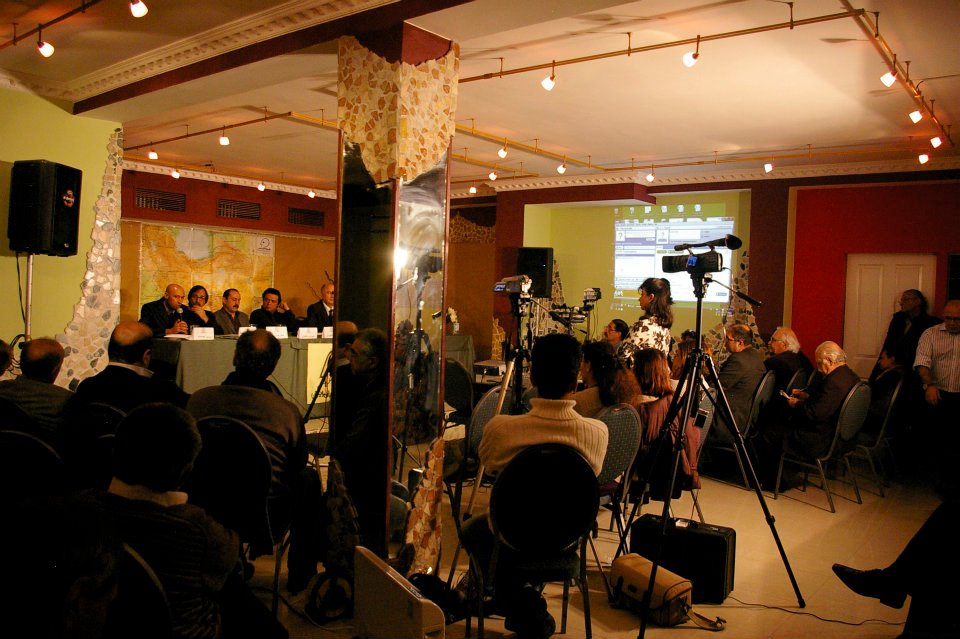
ACI would like to announce ACI its fifty second international conference dedicated to the plight of the Iranian Baloch People to coincide with the seventy fifth anniversary of UN Human Rights Day with its theme of ‘Dignity, Freedom and Justice for All’.
This one day seminar proposes to discuss the wider dimensions of poverty, multidimensional deprivation and discrimination based on religious, ethnic and linguistic rights to give context to the grievances and challenges facing the Iranian Baloch People in over four decades. Along with the issues concerning discrimination, poverty and human rights, the question we aim to discuss further is the continuous disproportionate use of the death penalty and the systematic use of lethal force against unarmed civilian population leading to many deaths in the Baluchistan region with regard to the ICC Statute and crimes against humanity.
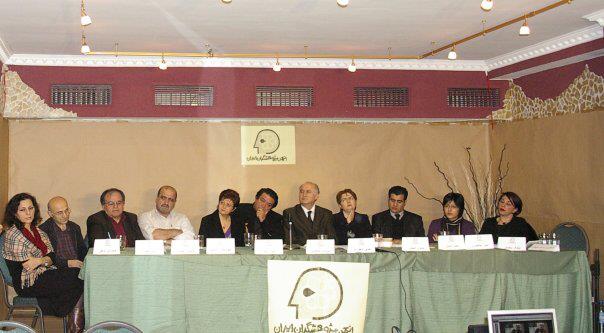
Speakers include Dr Javaid Rehman United Nations Special Rapporteur on the situation of human rights in the Islamic Republic of Iran who will examine the present day situation of the Iranian Baloch people alongside other international experts, Baloch activists and human rights defenders.
Panel 1 (English) – 10:00 – 13:00
Along with the issues concerning discrimination, poverty and human rights, the question we aim to discuss further is the continuous disproportionate use of the death penalty and the systematic use of lethal force against unarmed civilian population leading to many deaths in the Baluchistan region with regard to the ICC Statute and crimes against humanity
Panel 2 (Persian) – 14:00-18:00
Prospects for the future: Wider dimensions of poverty, multidimensional deprivation and discrimination based on religious, ethnic and linguistic rights as told by activists and human rights defenders
Subjects for consideration in Persian and English include but are not limited to:
Extreme poverty and human rights
Unemployment and employment opportunities
Housing rights
Access to healthcare
Rights of the Child:
access to education
child marriage
child labour
child soldier
Minority rights: Equality and equity
Women’s rights
Religious freedoms
Ethnic and linguistic rights
Civil and political rights
Brutal treatment of civilian population leading to deaths: ‘Crimes Against Humanity’?
On March 15, 2023, UNODC signed a Country Partnership Programme with the Islamic Republic of Iran for 2023-2026. It is stated that this Programme aims to further strengthen the cooperation between the UNODC and Iran on drugs, crime, international criminal justice, corruption, and alternative livelihood through promoting United Nations standards and international best practice.
The UNODC guidance on the protection of human rights in countries where aid is provided for anti-drugs programmes explicitly acknowledges the links between funding and executions and recommends withdrawal of support where improvements were not made. While there is clearly a need for international cooperation on counter-narcotics efforts, this must be proportionate to right to life and respect for human rights.
In view of the increased number of executions in Iran on drugs related charges this year alone, our conference’s focus is the role and responsibility of the international community:
How is the international community and the UN agencies reconciling the use of the death penalty and lashes as punishments – even for addicts – with United Nations standards and international best practice?
How is the international community and the UNODC resolving the contradictions between cooperation with the IRGC and the regime with the fact that IRGC is complicit in international organised crime and drugs trafficking?
How is the international community and the UNODC resolving the increased numbers of arrests, detentions, torture and ill treatment and unfair biased trials for protestors in the last year with UN standards and international best practice?
What is the role and responsibility of the international community when the State not only fails to protect the safety and security of its people but, poisons, maims, kills and executes its people?
Speakers
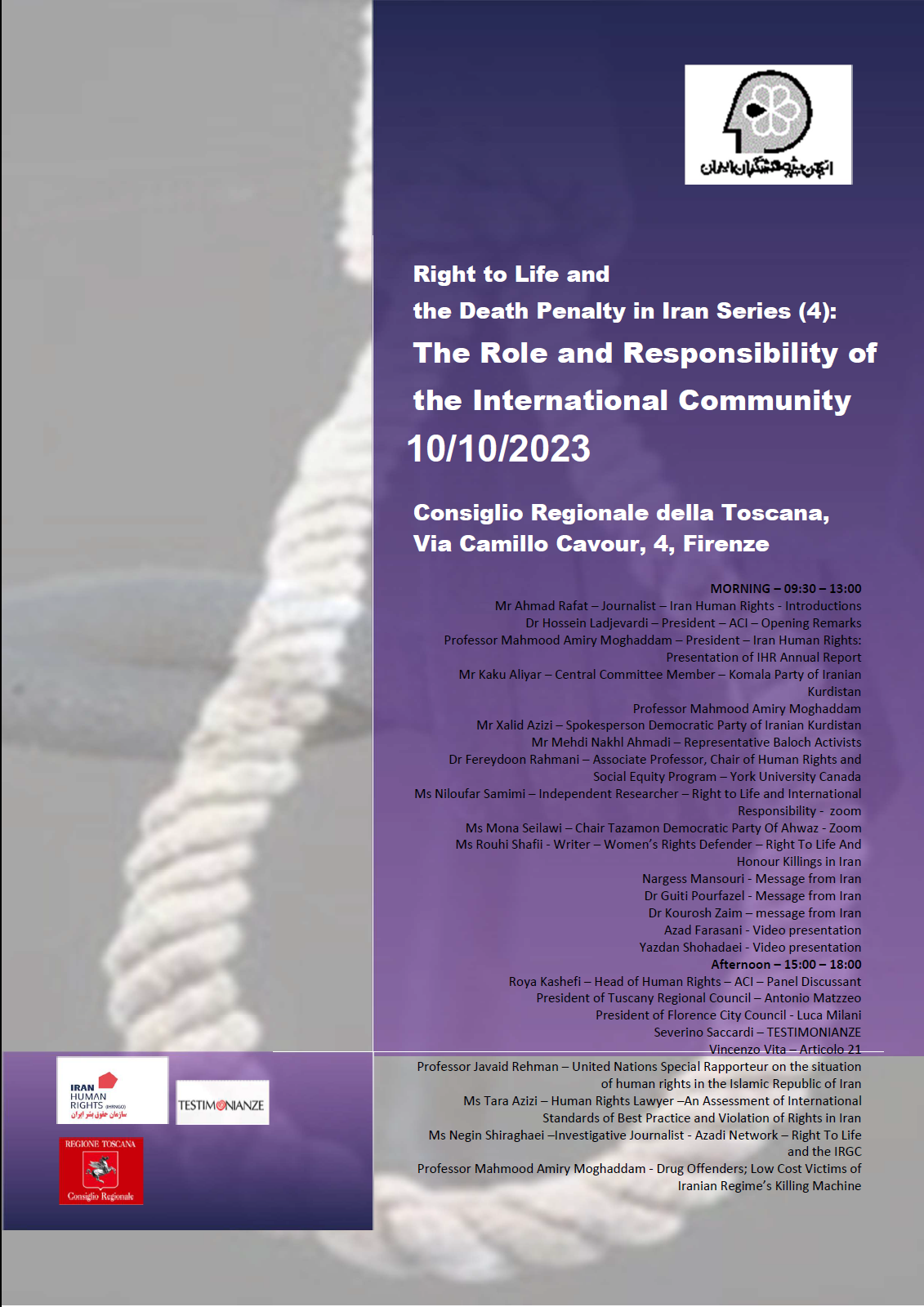
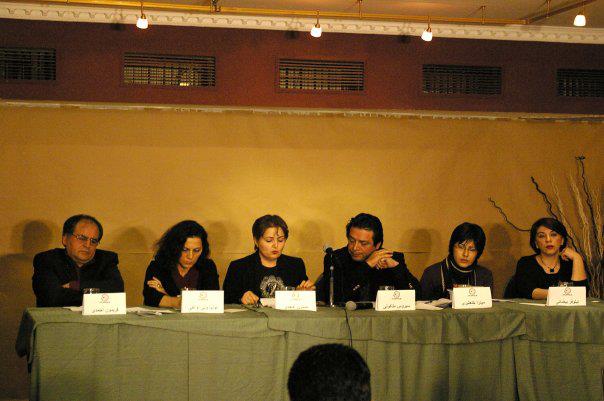
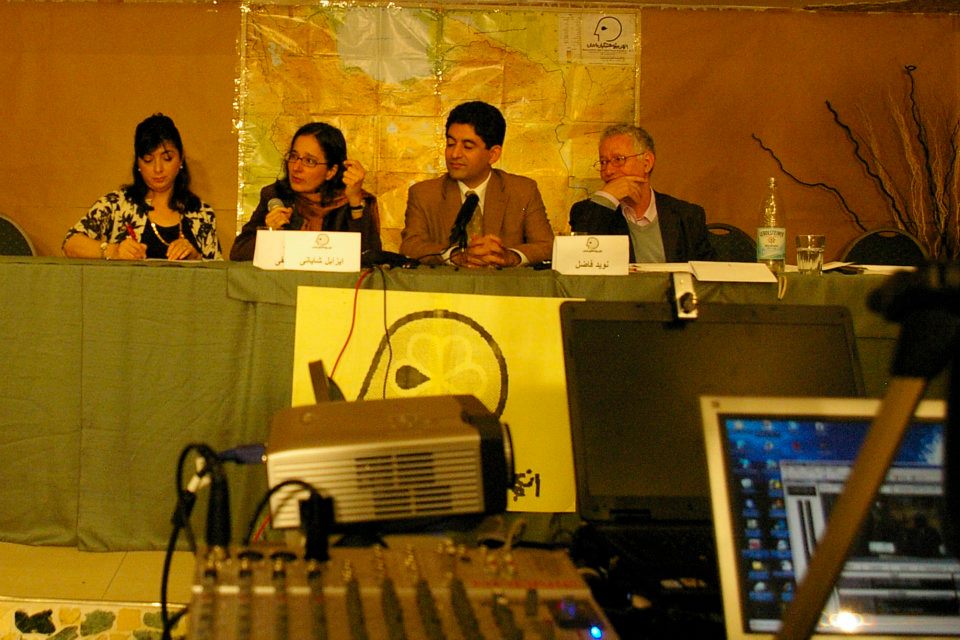
MORNING – 09:30 – 13:00 Film: Part One Mr Ahmad Rafat – Journalist – Iran Human Rights – Introductions Dr Hossein Ladjevardi – President, ACI – Welcome and Opening Remarks Professor Mahmood Amiry Moghaddam – President, Iran Human Rights (IHRNGO) : Presentation of IHR Annual Report Film:Part Two Alphabetical order: Mr Kaku Aliyar – Central Committee Member – Komala Party of Iranian Kurdistan Mr Xalid Azizi – Spokesperson Democratic Party of Iranian Kurdistan Mr Mehdi Nakhl Ahmadi – Representative of Baloch Activists Dr Nargess Eskandari-Grünberg – Mayor of Frankfurt: Message of solidarity – Zoom Dr Fereydoon Rahmani – Associate Professor, Chair of Human Rights and Social Equity Program – York University Canada Ms Niloufar Samimi – Independent Researcher – Right to Life and International Responsibility – zoom Ms Mona Seilawi – Chair Tazamon Democratic Party Of Ahwaz – Zoom Ms Rouhi Shafii – Writer – Women’s Rights Defender – Right To Life And Honour Killings in Iran Mr Fazel Walian – HANA , human rights group Azad Farasani – Video presentation Yazdan Shohadaei – Video presentation Messages from Iran Nargess Mansouri – Message from Iran Dr Guiti Pourfazel – Message from Iran Dr Kourosh Zaim – message from Iran
Afternoon – 15:00 – 18:00 Roya Kashefi – Head of Human Rights – ACI – Panel Chair Film: Part One Ahmad Rafat – Introductions Welcome Address from Antonio Matzzeo, President of Tuscany Regional Council Luca Milani, President of Florence City Council Severino Saccardi – TESTIMONIANZE Senator Vincenzo Vita – Articolo 21 Film: Part Two Professor Javaid Rehman – United Nations Special Rapporteur on the situation of human rights in the Islamic Republic of Iran Ms Tara Azizi – Human Rights Lawyer – An Assessment of International Standards of Best Practice and Violation of Rights in Iran Ms Negin Shiraghaei – Investigative Journalist – Azadi Network – Right To Life and the IRGC Film: Part Three Professor Mahmood Amiry Moghaddam – Head of IHRNGO Drug Offenders; Low Cost Victims of Iranian Regime’s Killing Machine Closing Remarks and ceremony
In Collaboration With: Testimonianze, Iran Human Rights – Italia Supported by: Consiglio Regionale della Toscana
Consiglio Regionale della Toscana, Via Camillo Cavour, 2, 50129 Florence—Italy
On March 15, 2023, UNODC signed a Country Partnership Programme with the Islamic Republic of Iran for 2023-2026. It is stated that this Programme aims to further strengthen the cooperation between the UNODC and Iran on drugs, crime, international criminal justice, corruption, and alternative livelihood through promoting United Nations standards and international best practice. Its strategic goals are in keeping with the United Nations Sustainable Development Cooperation Framework (UNSDCF) for the Islamic Republic of Iran 2023-2027 also signed earlier this year.
The UNODC guidance on the protection of human rights in countries where aid is provided for anti-drugs programmes explicitly acknowledges the links between funding and executions and recommends withdrawal of support where improvements were not made. While there is clearly a need for international cooperation on counter-narcotics efforts this must be proportionate to right to life and respect for human rights.
In view of the increased number of executions in Iran on drugs related charges this year alone, our forthcoming conference will focus of the role and responsibility of the international community.
How is the international community and the UN agencies resolving the use of the death penalty and lashes as punishments – even for addicts – with United Nations standards and international best practice?
How is the international community and the UNODC resolving the contradictions between cooperation with the IRGC and the regime with the fact that IRGC is complicit in international organised crime and drugs trafficking?
How is the international community and the UNODC resolving the increased numbers of arrests, detentions, torture and ill treatment and unfair biased trials for protestors in the last year with UN standards and international best practice?
ACI proposes to discuss the use of the death penalty as a tool of oppression as well as the above in view of the alarming increase in the number of executions in 2023 and the dual role and responsibility of International Community.
In view of the increased number of executions in Iran on drugs related charges this year alone, our forthcoming conference will focus of the role and responsibility of the international community:
How is the international community and the UN agencies resolving the use of the death penalty and lashes as punishments – even for addicts – with United Nations standards and international best practice?
How is the international community and the UNODC resolving the contradictions between cooperation with the IRGC and the regime with the fact that IRGC is complicit in international organised crime and drugs trafficking?
How is the international community and the UNODC resolving the increased numbers of arrests, detentions, torture and ill treatment and unfair biased trials for protestors in the last year with UN standards and international best practice?
What is the role and responsibility of the international community when the State not only fails to protect the safety and security of its people but, poisons, maims, kills and executes its people?
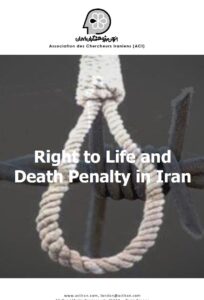
Iran has the highest rate of executions per capita, and the numbers are increasing at an alarming rate. In keeping with ACI’s aims and objectives of finding solutions and building a better future for Iran, ACI has undertaken a series of studies and surveys to find out how the death penalty can be abolished in Iran. Key questions to consider include:
International obligations and Human rights standards vs. national laws;
Can the death penalty be abolished in view of the present-day religious and ideological laws in Iran;
Qesas, the law of retribution;
‘Serious crimes’ or ‘exceptional circumstances’;
Alternative punishments for worst offenders;
Executions as deterrents;
Victim’s rights vs. community rights;
Possible execution of innocent persons;
The use of the death penalty as a tool of intimidation, oppression and control;
Due process and prison conditions for death row inmates
The recurring question to be examined at all conferences concerns public opinion and the role and responsibility of mass media:
The role and impact of traditional mass media vs. social media;
The role of social media in improving community cohesion;
The policy impact of media reporting and media bias;
The dynamics between the mass media and special interest groups;
The issues behind media financing;
An independent media with a diversity of views;
The relationship between mass media and power
The Conference Series
To date, one internet survey and three conferences have been undertaken with a further conference proposed in the near future.
All conferences are live streamed and the films of past conferences are available on ACI’s YouTube channel. Presented papers are published in a book available from any of ACI’s offices.
The Regime’s Instability and the Deployment of Violence and Executions
5/6 December 2009 – Cologne, Germany
Following the disputed presidential elections in Iran and in view of the widespread deployment of violence, intimidation, rape, imprisonment and the ultimate cruel, inhuman and degrading punishment ‘the death penalty’, ACI organised an emergency conference in Cologne-Germany with the aim of reaching a coordinated and concerted effort in opposing and working towards abolishing the death penalty in Iran, in all cases, regardless of the nature of the crime, the characteristics of the offender, or the method used by the regime to kill the prisoner. The following key issues were examined:
The sociological aspect of the use of the death penalty
Human rights: the violation of fundamental rights in Iran
The use of violence and the death penalty against Iran’s ethnic groups
The use of violence and the death penalty against Iran’s religious groups
A realistic assessment of the regime’s instability and the deployment of violence and executions
At the conclusion of the conference, a consensus was reached by all participants comprising Iranian ethnic and religious groups and human rights groups and defenders. The following pledge was signed and others were invited to join leading to a campaign entitled ‘Be our Voice’.
“…We, the undersigned, believe that all Iranians without distinction of any kind, such as race, colour, sex, language, religion, political or other opinions, national or social origin, property, birth or other status are equal and for this reason, we condemn all cases of execution throughout Iran and commit to full and mutual support for each other
We, the undersigned, invite all individuals, groups, organizations, parties and human rights activists and organizations to join us in condemning the use of the ultimate violence, the death penalty, in Iran. With your help, we can employ global networks and opportunities in order to support the persecuted in Iran and end executions that are taking place all over Iran today.
May we be the voice of the voiceless in Iran who are the helpless victims of systematic and escalating state-sponsored violence…”
Human Rights and Death Penalty as a tool of oppression
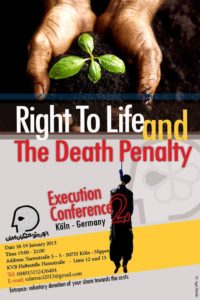
18/19 January 2014 – Cologne, Germany
On day one of this conference the key question of ‘the right to life and the death penalty’ was discussed with regard to overall laws and religious practices in Iran. The consequences and affects of violent laws and public executions on society were among important topics of discussion.
The showing of a moving and award-winning documentary about the plight of three minors on death row also took discussions further concerning State perpetuated the cycle of violence when the responsibility of making life or death decisions is passed on to the aggrieved families of victims.
In a taped message from Iran, we heard from activists who work relentlessly on securing pardons for death row prisoners such as the young minors in the documentary and the invaluable role of sportsmen, actors and public figures in these efforts.
Day Two of the conference heard from Iran’s ethnic and religious groups and the use of the death penalty as a tool of oppression. Through a taped phone message, we heard the pleas of a young Sunni Kurd on death row, imprisoned at Rajaie Shahr prison, who bravely told the conference of repeated failures and injustices he had experienced. We also shared the tragic story of a mother whose two young sons were executed in Iran.
At the beginning of the last panel, we received a message of support from campaigners within Iran who welcomed the active cooperation of the Iranian diaspora in upholding the ‘right to life’. This was followed by an examination of the importance and relevance of public opinion on policy decisions and the role of media in reporting executions. We heard from experienced journalists with national and international experiences about the opportunities and obstacles to unbiased objective reporting in Iran. Legal experts discussed the duties of governments, the effects of laws on changing culture and the importance of education in raising public awareness about the right to life and the death penalty.
At the conference’s conclusion, the participants proposed that ACI set up and coordinate a coalition made up of all Iranian abolitionists to pull resources together and work in a cogent, cohesive manner towards this common objective. In accepting this arduous task ACI has invited the cooperation and participation of all interested parties and is at present working on a plan of action.
The interactions with colleagues, activists and human rights defenders in Iran were a most valuable contribution to the proceedings and their input was an asset in the fight against the death penalty in Iran.
Social and legal aspects of death penalty in Iran and USA
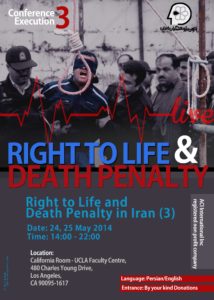
24/25 May 2014 – Los Angeles, USA
In this third conference, the proceedings heard the valuable contributions of US and international organisations such as the ‘American Civil Liberties Union – ACLU’ and ‘Reprieve’ who offered valuable insight into the application and execution of the death penalty in the USA and the importance of raising awareness through carefully planned campaigns.
As in the previous conferences, this gathering also benefited from the active participation of colleagues in Iran.
The key question for consideration at this conference was the likelihood of abolishing the death penalty in Iran in view of existing religious and ideological laws which were discussed extensively.
The media panel highlighted the importance of unbiased reporting and respect for the families of victims when campaigning for pardons in murder cases. The great value of the complimentary work of reporters and journalists in and out of Iran was also discussed.
Conference concluded with the following recommendations:
Raising awareness and dialogue with ordinary members of public must be at the top of the agenda of any successful campaign against the death penalty in Iran;
Safe support for civil society and grass roots activists against the death penalty in Iran;
Informing and engaging the international community to bear pressure on the Islamic Republic on the issue of death penalty in Iran
Poetry and Lyric Competition
24 May – 1 September 2014
ACI’s third conference in this series also saw the launch of a poetry and lyric competition. Entrants were invited to send in their work by the first of September 2014 for selection and publication in time for 10 October 2014 World Day Against Death Penalty. We are fortunate to have Iraj Janati Ataei, renowned Iranian lyricist and playwright, among the judging panel.
ACI conducted a 45 day internet survey on the question of the death penalty in Iran. As a sign of sensitivity to the topic the survey site was hacked and fell prey to three separate ‘phishing’ attempts by the Islamic Republic.
This survey, as with all of our other surveys, did not ask for the personal details of the respondents and limited itself to demographic questions. However, the fake survey page asked respondents from Iran to enter their names and email addresses before completing the survey.
Nevertheless, ACI’s technical experts recovered the survey. The respondents were mainly from Iran, Europe, the United States and Canada respectively. Their responses can be categorised and evaluated based on age, gender, education, employment, religion, place of birth, place of residence and other factors included in the demographic section of the survey.
Out of the 1111 respondents, 67% men and 23% women participated. The biggest age group participating in the survey were the 40-59 year olds.
In total, only 9% of the respondents supported some form of execution, the majority of whom supported Qesas (law of retribution). Men supported the use of the death penalty as a punishment twice more than women.
The full analysis is available upon request.
Future Proposed Conferences
Conference 4
Day One:
Mass Media influence on society and public policy
Day 2:
Criminal Justice system and the death penalty
Conference 5
Day One:
International standards, due process and prison conditions in Iran for death row inmates
Treatment of female death row inmates
Day Two:
Mass Media influence on society and public policy
Transitional justice and the death penalty in the future of Iran
ACI maintains an impartial and unprejudiced approach
to all its activities and respects all schools of thought.
We work actively with colleagues from all over the world
and hope to contribute towards a better future for Iran.
We welcome and invite the participation of all interested in Iran’s future.
ACI international Inc registered non-profit organisation exempt under section 501 (c) (3)
Campaign against executions in Iran – February 2010
“…We, the undersigned, believe that all Iranians without distinction of any kind, such as race, colour, sex, language, religion, political or other opinions, national or social origin, property, birth or other status are equal and for this reason, we condemn all cases of execution throughout Iran and commit to full and mutual support for each other
We, the undersigned, invite all individuals, groups, organizations, parties and human rights activists and organizations to join us in condemning the use of the ultimate violence, the death penalty, in Iran. With your help, we can employ global networks and opportunities in order to support the persecuted in Iran and end executions that are taking place all over Iran today.
May we be the voice of the voiceless in Iran who are the helpless victims of systematic and escalating state-sponsored violence…”
list of initial signatures:
GROUPS
Ahwaz Human Rights Organisation (http://www.ahwazhumanrights.org/) Akhbar Rooz (http://www.akhbar-rooz.com/index.jsp ) Association des Chercheurs Iraniens – ACI Azarmehr Association (http://www.zananeazarmehr.blogsky.com/) Baluchistan Peoples Front (BPF) (http://balochistanpeoplesfront.blogspot.com/) Baluchistan People’s Party (www.balochPeople.org) Centre for Baluchistan Studies (www.balochstudy.com) Committee of Human Rights Reporters (http://www.schrr.net) Democratic Party of Iranian Kurdistan (PDKI) (http://pdki.org) International Coalition Against Torture – InCAT (http://incat.org/index.php) Iran Communist Party (www.cpiran.org/) Iranian Human Rights Activist Groups in EU and North America – IHRAG (www.komitedefa.org) Komala Party – Iranian Kurdistan (http://komala.org/) IRQO (http://www.irqo.org/) Komala Party of Kurdistan (http://www.komala.net/) Kurd Human Rights Organisation in Europe Kurdsish American Committee for Human Rights and Democracy in Iran (www.vokradio.com) Kurdistan Democratic Party Organisation of Kurmanj People Partners for Rights (http://www.partners-for-rights.org/) Pezhvak-e-Iran (http://www.zananeazarmehr.blogsky.com/) Reporters and Human Rights Activists in Iran (http://rhairan.com)
INDIVIDUALS
BACK Asghar Abdi – Researcher Karim Abdian – Ahwaz Human Rights Organisation Ferydoon Ahmadi – Political Activist Nastaran Amjadi – Human Rights Activist Jalil Azadikhah – Journalist, Komala Party of Kurdistan Nahid Bahmani – Central Committee Member: Komala Party – Iranian Kurdistan Rahim Bandoui – Executive Bureau: Baluchistan People’s Party (BPP) Niloofar Bayzaie – Writer and Director Nasser Bolidai – Spokesperson: Baluchistan People’s Party (BPP) Haydeh Daragahi – Human Rights Activist Abdul-Sattar Doshoki – The Centre For Baluchistan Studies Soray Fallah – World’s Women for Life Jamsheed Farooghi – Head of Persian Service Deutsche Welle Saghi Ghahreman – IRQO Fereshteh Ghazi – Journalist Khaled Hassanpour – Kurdistan Democratic Party Nasser Hesami – Head of Asosat TV Komala Party of Kurdistan Reza Hossein Borr – Baluchistan Peoples Front (BPF) Shahu Hosseini – International Representative: Democratic Party of Iranian Kurdistan (PDKI) Omar Ilkhanizadeh – Chairman Komala Party of Kurdistan Rahman Javanmardi – Human Rights Activist Reza Kaabi – Member of Central Committee – Komala Party of Kurdistan Behzad Karimi – Political Activist Roya Kashefi – Head of Human Rights Committee – ACI Narges Kermanshahi – Women’s Voice – Canada Mitra Khalatbari – Journalist Hossein Ladjevardi – President – ACI Sirus Malakooti – ACI Mohamad Mesri – Komala Party – Iranian Kurdistan Rezvan Moghadam – Women’s Rights Activist Verya Mohamadi – Komala Party of Kurdistan Abdullah Mohtadi – Chairman Komala Party – Iranian Kurdistan Hamila Nisgilli – Member of Central Committee Rahe Kargar Shiva Nojo – Peace Activist Hamid Parnian – IRQO, editor of Cheraq Jamileh Rahimi – Member of Central Committee – Komala Party of Kurdistan Bahram Rahmani – Committee Member: Iranian Writers Association (in Exile) Rahim Rashidi – Journalist Jahanbakhsh Rostami – Kurdish-German Cultural Centre Setareh Sabety – Journalist / Writer Zia Sadrolashrafi – Spokesperson ‘Congress of Nationalities of Federal Iran Mojtaba Samienejad – Reporters and Human Rights Activists in Iran Asad Seif – Writer Rouhi Shafii – Human Rights Activist / Writer Elahe Sharifpour-Hicks – Partners for Rights Afrasiab Shekofteh – Organisation of Kurmanj People Foad Taban – Chief Editor, Akhbar Rooz Nosrat Teimourzadeh -Central Committee of Komalah and Communist Party of Iran Behnam Vafaseresht – Human Rights Activist Tonia Valioghli – Committee in Solidarity with Mourning Mothers of Iran Mina Zarin – Human Rights Activist
As the Christian world prepares to celebrate the birth of Jesus and Christmas, this year in Iran, the many Christians from a Muslim background remain persecuted and unable to manifest or worship freely and openly.
On December 21, this year Iranians and those of Iranian heritage all over the world marked the ancient Iranian tradition of YALDA night, the winter solstice. While traditionally Iranians celebrate the end of the longest night of the year and welcome the power of the sun’s shining rays over darkness, symbolically this year, in Iran family gatherings were held at gravesides of the young lives taken by the callous brutality of the regime since September 16, 2022, and the tragic death of Mahsa Jina Amini while in police custody. Outside Iran, candlelight vigils were held in world city centres in memory of the many thousands who have been killed at the hands of the regime since the establishment of the Islamic Republic in 1979.
As the two occasions have historically been linked together, it is a good time to remind the international community that in almost forty four years Iranians throughout Iran have been victims of persecution and discrimination on many different fronts.
Women and religious minorities are legally and systematically discriminated in law and in practice. What the world has witnessed in the last three months led to the expulsion of the Islamic Republic from the UN Commission on the Status of Women. Prior to this vote on December 14th, the UN Human Rights Council had already voted in favour of the establishment of an independent international fact-finding mission on the Islamic Republic of Iran.
ACI offers its best wishes for Christmas, particularly to the Iranian Christian community. ACI looks forward to a free democratic Iran where all are equal and where Iranians can gather in celebration of life and freedom in peace, in harmony and without any kind of distinction.
‘We will take back Iran’ is proudly chanted loudly on the streets wherever Iranians gather, not too long before it becomes a reality. In an echo of the words of President Zelensky to the US Congress ‘Iranians are alive and kicking!’
The expulsion of the Islamic Republic from the Commission on the Status of Women is an unprecedented step taken by the UN and the international community. Thank you for hearing us and taking this extraordinary step.
Discrimination against the women and girls of Iran is as old as the Islamic Republic. Gender and religious discrimination are legal, systematic and institutional on every level and aspect of their lives.
For forty-three years the women’s movement has fought alongside other civil and equal rights movements in Iran and women’s activists have been effective in furthering their aims. They have endured violence, judicial and extra-judicial arrests and detentions, and torture including rape and sexual harassment that plagues their existence even after release from custody because of the traditional and patriarchal practices condoned by discriminatory laws. Women in Iran are subjected to honour killings with impunity while others choose to take their lives rather than live a life that is not of their choosing.
It is tragic that a beautiful young life had to be lost before the world opened its eyes and ears and heard the people. This is a crucial point to remember. The ugly brutality of the regime in the age of social media and global connectivity was laid bare for all to witness despite its determined efforts to close up Iran through internet restrictions and censorship. The world saw what women have experienced in the last forty-three years.
Any advancement of women and/or attained position is through the sheer tenacity and courage of the girls and women of Iran and not the planning or political will of the regime.
The Islamic regime cannot hide behind false claims of progress anymore. It cannot abuse the international system anymore. The Human Rights Council vote to establish a fact-finding mission on November 24, and now this latest timely action at ECOSOC is a clear indication that the global community is finally hearing the voices of the Iranian people and not what the regime misrepresents.
Mahsa Jina Amini’s face will shine brightly in Iran’s history and the over a century-old fight for women’s rights in Iran.
May Jina and all those brave people who have given their lives in her name rest in POWER.
It is tragic that the beautiful young life of Mahsa Jina Amini had to be lost before the world opened up its eyes to the systemic and institutional discrimination of girls and women in Iran, in law and in practice, for the last forty three years.
The boiling point for the stifled voices of the women in Iran was an awful needless death in custody because of mandatory hejab laws that could have happened to any one of them. However, to be accurate the hejab is not just a dress code but a whole culture propagated from an early age through biased ideological curriculum and education. The ruling clergy in Iran has established legal Codes and numerous institutions, agencies and organisations for its enforcement and observance. Legislation, customs and traditions, affected or inspired by interpretations of the Qoran and the Shari’a combine to define concepts of female roles and status within the society. In Iran, laws sanction the traditional patriarchal culture and consequently women have not benefited from equal rights in law and in practice for forty three years.
As ACI pointed out in its objection to IR’s application in 2010, religion, tradition and cultural identity cannot be used as an excuse for violation of universal rights accorded by international standards.
December 16th marks the third month of Jina’s death.
What a gift it would be to oppressed women everywhere if the Islamic Republic’s membership is revoked. It would be a lesson to oppressors everywhere that they cannot abuse the international system and hide their true identity by manipulating existing mechanisms.
What a gift it would be to oppressed women everywhere if this unprecedented step is taken by CSW to prove that they are ready to adapt and improve the system in the fight for equity and equality for girls and women everywhere.
IR’s membership has never been justified: Vote to remove the Islamic Republic from CSW.
the EU High Representative for Foreign Affairs and Security Policy,
Foreign Affairs Council Meeting – Brussels, 12 December 2022
As you prepare for your committee meeting later today the horrific news of yet another young life lost at the hands of the Islamic Republic’s hangman is being reported.
Twenty three year old Majid Reza Rahnavard was executed in public this morning in Mashad. Mizan, the judiciary’s news source reported Rahnavard was arrested when trying to flee the country 23 days ago. It added that his sentence was upheld by a higher court.
This means that in a space of 23 days this young wrestler with his whole life ahead of him, was arrested, interrogated – read tortured – tried, and had the case heard at a higher court, with the sentence of death upheld killed this morning. All in 23 days – 23 days!
Is this the negotiating partner you are still considering having across the table? How would any EU policymaker react if Mohsen or Majid Reza were their young boys? How would you expect the international community to respond?
This regime is violating its own national laws never mind international obligations.
How can it be trusted to honour any international undertaking? How many times should the Islamic Republic violate its international obligations before it is recognised for what it is? A regime that has lost complete legitimacy resorting to terror at home, and in the region and holding the international community to ransom with the nuclear threat. Not satisfied with taking Iranian lives it also engages in the killing of Ukrainians by supporting Putin’s war and the Russian aggression.
Enough is Enough.
Iranians are outraged and expect you will be too Sir. Decisive timely actionable decisions are needed:
Coordinate and align international targeted sanctions
Suspend any economic support and trade dealings by disbanding INSTEX – the damage to Iranians’ lives every day this regime is in power is greater than any sanction
Downgrade diplomatic relationships
Support the calls for a free democratic Iran, rule of law and observance of the universal human rights standards
Commemorating the 75th Anniversary of the Universal Declaration of Human Rights
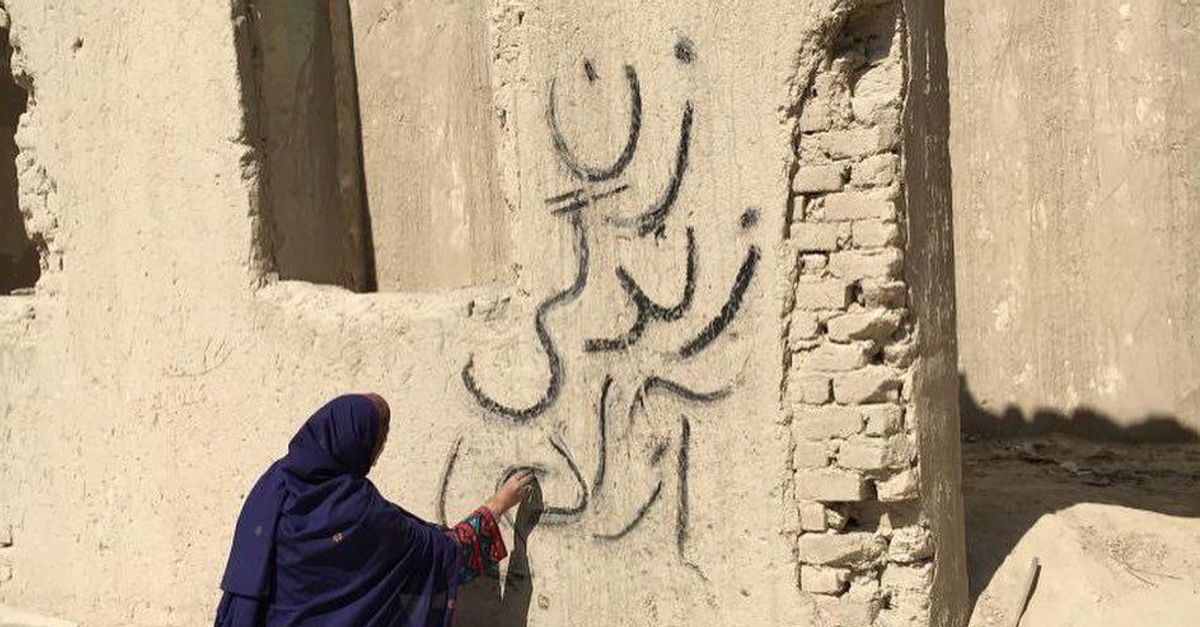
زن زندگی آزادی
For eighty-five days, as Iranians all over the world have raised their voices against human rights abuses at the hands of the Islamic regime, the global community has witnessed an ever-increasing tally of thousands of young people injured, kidnapped, disappeared, arrested, tortured and killed in Iran. A new column has opened up for the number of death sentences issued.
As the first name on the list of those executed is getting international attention, the plight of the thousands of unknown protestors in detention is finding a face and voice. Twenty-three-year-old Mohsen Shekari’s short life is being celebrated on social media alongside the painful cries of his family burying his body at two o’clock in the morning surrounded by security forces because that is how they were allowed to say their final farewells.
The scale and depth of horrors we are witnessing, and reporting, are so painful that perhaps we need a reminder of the core message of the uprising: ‘Woman Life Freedom’.
It all started with the cruel and brutal death of a young Kurdish woman in police custody in Tehran. The beautiful vibrant talented young woman, Mahsa ‘Jina’ Amini, had her whole life ahead of her. Jina’s tragic death and its aftermath bared the injustices, inequalities and legal discrimination experienced by women, and religious and ethnic groups in Iran. On one hand, her cruel death draws attention to the lack of right to an equitable just life for all Iranians without distinction of any kind as enshrined in articles 1 and 2 of the Universal Declaration of Human Rights, and on the other, the obligations, duties and responsibilities of the government to protect and provide a just, safe and equitable life for its citizens.
On this seventy-fifth anniversary of Human Rights Day, Iranians are reminding the world that their political, civil, economic, social and cultural rights have been violated by a ruling elite that chooses to govern in the name of Islam meaning that even choosing to teach in one of the many languages spoken in Iran can be interpreted as enmity against God and punishable by death. Based on these laws, women and religious minorities are legally discriminated against with mandatory hejab the symbol of this discrimination and oppression for women. Demanding equality and equitable access to all Iran has to offer is also translated as anti-revolutionary activity and enmity against God, ultimately punishable by death.
On this seventy-fifth anniversary of Human Rights Day, brave Iranians on the streets of Iran are saying ‘NO’ to the Islamic Republic through peaceful protest and nationwide strikes. They are risking their safety, liberty, and lives for the right to choose their government as declared in article 21 of the UDHR. Daring to dream of change, millions of Iranians and those of Iranian heritage outside Iran have risen in solidarity doing whatever they can to raise awareness. We are witnessing an outpouring of love and hope for the future of Iran, for dignity, freedom and justice for all through art, music and creativity.
On this seventy-fifth anniversary of Human Rights Day, ACI reminds the international community that human rights are universal, indivisible, inalienable, interdependent and interrelated.
With their bare hands, the young people of Iran are fighting for dignity, freedom and Justice for all.
Hear their voice. Support their just demand.
WOMAN LIFE FREEDOM
INDEPENDENT INTERNATIONAL FACT FINDING MISSION – 24 November 2022
ACI would like to thank the responsible members of the Human Rights Council that earlier today voted to set up an investigative and accountability mechanism to assess the deteriorating situation of human rights in the Islamic Republic of Iran, especially with respect to women and children.
The Islamic Republic’s Football Association is state-sponsored and managed – violation of FIFA statute 19, women have not been allowed to enter stadiums since 1981 – violation of FIFA statute 4. Many women who have attempted to enter stadiums have been arrested. One young woman, Sahar Khodayari, facing a six months prison term set herself alight in protest and lost her life. With FIFA’s intervention, women were invited to attend a world cup qualifier match in Mashhad. Tickets in hand they were met with batons and pepper spray and prohibited to enter the stadium. The continued killings and human rights violations violate FIFA statute 3.
The convening of a special session of the Human Rights Council
The people of Iran are asking for change clearly, loudly and with their lives. They are demanding what has been denied them equity, equality, justice, and freedom. They would like to be a positive constructive member of the international community where they can prosper and benefit from all the riches Iran has to offer its people and the international community.
it must be noted that imposing EU sanctions on one hand and facilitating legal routes for the Islamic regime to bypass other sanctions through EU special mechanisms makes a mockery of the entire process.
The time has come for the international community to rethink their dealings with the Islamic Republic and consider the plight of the people of Iran. A democratic, responsible, free-functioning Iran is far more beneficial to the peace and security of the Iranian people and the rest of the world than a regime that opens fire on its own citizens and arrests children from schools with impunity.
Call for UN investigative and accountability mechanism
We call on you to stand up for the Iranian people who are under siege by the judicial and extra-judicial enforcers, who for too long, have committed crimes against the Iranian people with impunity. It is time for the regime to be accountable to the Iranian people and the international community.
The international community has a collective responsibility in sustaining this regime and is complicit in the state sponsored violence perpetrated against women in Iran by condoning the regime’s actions through financial support and EU’s actions in colluding with the regime to evade sanctions through various mechanisms. We ask you as the highest international arbiter and the Secretary General of the United Nations in a spirit of solidarity with the Iranian nation, to defend their rights violated systematically by the entirety of the Islamic regime who are squandering the future of our country Iran.