Category: Human Rights

  • Iran Protests: the use of lethal force / shutting down of the internet

    Iran Protests: the use of lethal force / shutting down of the internet

    European Commission President 

    Jean-Claude Juncker 

    European Commission 
    Rue de la Loi / Wetstraat 200 
    1049 Brussels 

    Tuesday, November 19, 2019 

    Dear President Juncker 

    Iran Protests: the use of lethal force / shutting down of the internet 

    As I am sure you are aware, since Friday 15 November 2019 nationwide demonstrations are taking place in Iran sparked by the sudden increase in petrol prices of 300%. Peaceful demonstrations turned violent when the security forces used tear gas and live ammunition to disperse crowds. Unconfirmed reports put the number of dead at around two hundred, further three thousand people injured and over one thousand arrested since Friday.  The Revolutionary Guards have also threatened ‘decisive’ force against protesters and ongoing demonstrations. The indiscriminate use of lethal force was followed by the shutting down of internet on Saturday, cutting off means of communication nationally and internationally.  This attempt at news blackout is of grave concern and indicates on going protests and further brutal crackdown. At the time of writing Iran remains offline. 

    The ongoing protests in Iran are similar in nature to recent protest in Iraq and Lebanon in rejecting the political system as a whole. In Iraq and Lebanon protestors demand an end to Islamic regime’s interference in their internal affairs and in Iran the slogans reflect the frustration of Iranian people in the Islamic regime’s political and financial intervention in regional affairs. However, as always, the regime attributes domestic unrest to foreign intervention.  

    Almost 40% of Iran’s population is below forty years of age; a quarter of the population (over twenty million) is less than fifteen years old. The present economic crisis in Iran, unemployment, inflation and poverty may be affected by the sanctions but were not created by them. The mismanagement of Iran’s affairs in the last forty years has created an unjust, unequal and fractured society leaving little or no room for any hope for the future of Iran’s young population. Since the 1979 Islamic Revolution, the Revolutionary Guards’ stranglehold over the nation’s economy has tightened, numerous multi-million-dollar ‘charitable organizations’ engaged in trade and construction owned by the regime’s rulers and their dependants are exempt from paying any tax, corruption is endemic in the ranks and file of the regime and its organizations and institutions – one of the reasons FATF cannot be ratified by the regime, and huge chunks of the nation’s income is paid to maintain Islamic religious organizations and institutions leaving a small proportion of the country’s income for the people that together with the devaluation of the national currency and inflation adversely impact the income and quality of life of the majority of Iranians. The sudden increase in the price of petrol affects the most vulnerable of the society. 

    It is inconceivable that the regime did not foresee the kind of nationwide protest and demonstrations that such a decision would create. Having learnt from previous demonstrations, without a shadow of a doubt, the security forces were ready and the order to use lethal force against the most vulnerable of the Iranians was sanctioned at the highest level making the deaths premeditated murder at the hands of the regime’s forces. 

    In view of the fact that the Islamic Republic of Iran desperately needs EU support, we ask you to rise to the defense of the Iranian people and offer them international protection. We demand: 

    • an immediate end to the use of lethal force, sharp shooters and violent crackdown of unarmed protestors; 
    • An immediate end to the internet shutdown that is hindering free flow of information; Iranians must be able to access the Internet in order to exercise and enjoy their rights to freedom of expression and opinion; State sponsored murder is taking place under the dark veil of news blackout. 
    • An independent investigation into the number of the dead and injured as a result of unjustifiable use of lethal force. Based on previous experience, many injured are not seeking medical attention in hospitals fearing identification and arrest further endangering their life; 
    • An independent investigation into the number of those arrested and detained and the conditions under which they are being kept. In view of deaths in custody following the 2017/8 nationwide protests and prevalence of the use of torture and degrading inhuman treatment to extract false confessions in official and unofficial detention centers the situation of those arrested is of urgent and grave concern. 

    Iran is rich in its human and natural resources. With proper and careful management of these resources, Iran and Iranians will be a positive, productive and contributing member of the international community. This is our just and rightful demand.  

    Dr Hossein Ladjevardi 

    President – ACI 

  • Repression of those seeking truth and justice for 1980s killings needs to stop

    Repression of those seeking truth and justice for 1980s killings needs to stop

    JOINT PUBLIC STATEMENT

    The Iranian authorities should stop the harassment, intimidation and prosecution of human rights defenders seeking truth and justice on behalf of individuals who were summarily executed or forcibly disappeared during the 1980s and their families, said 20 human rights groups.

    Over the past few months, several human rights defenders, including Mansoureh Behkish, Maryam AkbariMonfared and Raheleh Rahemipour, have been subjected to harassment, reprisals or prosecution on vague national security-related charges for their peaceful efforts to learn the fate and whereabouts of their loved ones. The persecution signals renewed efforts by the authorities to suppress the struggle that has been ongoing for over three decades to reveal the truth about the gross human rights violations that were perpetrated by the Iranian authorities during the 1980s, including the extrajudicial executions of several thousands in 1988 and their burial in unmarked mass graves.

    The latest wave of persecution of those seeking truth and justice appears to have been triggered by the release in August 2016 of an audio recording of a meeting in 1988 in which senior officials are heard discussing and defending the details of their plans to carry out the 1988 mass executions.

    The audio recording has sent shockwaves across the country and prompted the authorities to admit for the first time that the mass killings of 1988 were planned at the highest levels of government. Ahmad Montazeri, the son of the late Ayatollah Hossein Ali Montazeri, who was at that time the Deputy Supreme Leader, has since been sentenced to imprisonment for posting the audio file on his father’s website.

    The undersigned human rights organizations are deeply concerned about these developments and call on the Iranian authorities to quash the convictions and sentences issued against Maryam Akbari-Monfared, Raheleh Rahemipour and Ahmad Montazeri; close the criminal case opened against Mansoureh Behkish; and immediately and unconditionally release Maryam Akbari-Monfared. The authorities should also ensure a safe and enabling environment in which it is possible for human rights defenders, including family members, to seek information about the mass killings, express themselves without any fear of persecution, and defend the rights to truth, justice and reparation, as a first step to ending impunity in Iran.

    The undersigned human rights organizations urge the Iranian authorities to stop their attempts to silence human rights defenders and others seeking to shed light on past atrocities. Instead, they should respect their obligations under international human rights law to carry out thorough and impartial investigations into the serious human rights violations committed in the 1980s, including the 1988 extrajudicial executions, and ensure the rights to truth, justice and reparations for the victims and their families.

    Cases of individuals targeted Individuals who have been targeted in recent months for seeking truth and justice include human rights defenders Mansoureh Behkish, Maryam Akbari-Monfared and Raheleh Rahemipour, and the son of the late Ayatollah Hossein Ali Montazeri, Ahmad Montazeri.

    Mansoureh Behkish was informed on 29 October 2016 that she had been charged with “gathering and colluding to commit crimes against national security” and “spreading propaganda against the system”. The charges stem solely from her peaceful human rights work to seek truth and justice, including her work with the Mothers and Families of Khavaran, a group comprised of mothers and other family members of political prisoners summarily executed during the 1980s, and from holding commemorative gatherings at her home and going with other families to Khavaran, a deserted mass gravesite in the south of Tehran where Iranian authorities buried some of the thousands of political prisoners extrajudicially executed in the 1980s, including Mansoureh Behkish’s sister, four brothers and brother-in-law.

    Maryam Akbari-Monfared has faced reprisals since October 2016, when she filed a formal complaint from inside prison requesting an official investigation into the mass executions of political prisoners in the 1980s, including her brother and sister; the location of the graves where their bodies were buried; and the identity of the perpetrators involved. Officials have cancelled her medical care arrangements for her rheumatoid arthritis and thyroid problems and restricted visits from her family, including her three children, in retaliation. The prosecution authorities have also threatened her with new charges. According to her family, the Associate Prosecutor of Evin prison has said: “What does she want to know? Those who executed her brothers and sister have either died or become elderly and her brothers and sister are probably buried in Khavaran… Such complaints are of no use. They would only make her conditions in prison more difficult and impede her release or access to [prison] leave.”

    Maryam Akbari-Monfared is serving a 15-year sentence in Tehran’s Evin prison on several charges, including “enmity against God” (moharebeh), after a May 2010 sentencing. Amnesty International’s research indicates that her conviction was based on the fact that she had made several phone calls to her siblings, who are members of the banned opposition group known as the People’s Mojahedin Organization of Iran (PMOI), and had once visited them near the PMOI-run Camp Ashraf in Iraq. She has consistently denied her alleged membership in the PMOI. She was never provided with a written judgement, setting out the evidence and legal reasoning relied upon to convict her. Her husband has said that during her trial session, the judge told her “she was paying for the activities of her brother and sister with the PMOI”. Her appeals were dismissed in a summary fashion with no reasons provided. Her request for judicial review is currently pending before Iran’s Supreme Court.

    Raheleh Rahemipour was sentenced to one year’s imprisonment in January 2017 after Branch 15 of the Revolutionary Court in Tehran convicted her of “spreading propaganda against the system” for her peaceful efforts to learn the truth about the whereabouts of her brother Hossein Rahemipour, who was summarily executed in 1984, and his baby daughter Golrou Rahemipour, who was forcibly disappeared 15 days after she was born in Evin prison. The prison authorities took the baby away, ostensibly for medical tests, but never returned her to her mother. The family was subsequently told that baby Golrou Rahemipour had died, but the authorities never provided a death certificate, information about her death, or where she had been buried.

    The court verdict issued against Raheleh Rahemipour cites her media interviews, her participation in peaceful gatherings while holding a sign that read “You killed my brother! What did you do to his daughter?”, and her signature on a petition in support of demands for truth and justice for those summarily executed as “evidence” of acting against national security. In May 2016, the UN Working Group on Enforced or Involuntary Disappearances sent a communication to the Iranian authorities with regard to the case of Raheleh Rahemipour’s brother and niece. The authorities had not responded by the end of February 2017. Raheleh Rahemipour remains at liberty, awaiting the outcome of her appeal.

    Ahmad Montazeri, the son of the late Ayatollah Hossein Ali Montazeri, was sentenced to 21 years’ imprisonment in November 2016 after the Special Court of Clergy convicted him of several charges including “spreading propaganda against the system” and “revealing plans, secrets or decisions regarding the state’s domestic or foreign policies… in a manner amounting to espionage”. The court ruled that in light of Ahmad Montazeri’s family history and lack of a criminal record, he only needs to serve six years of the sentence. Ahmad Montazeri’s conviction stems from the publication of the audio file on his father’s website, which the authorities said advanced the interests of the enemies of the Islamic Revolution, and the media interviews that he subsequently gave to media outlets based outside Iran. Ahmad Montazeri was imprisoned on 22 February 2017 to begin serving his sentence, but was granted temporary prison leave the next day. He was informed several days later that his prison sentence had been suspended.

    Background

    Ayatollah Hossein Ali Montazeri was once in line to become the late Supreme Leader Ayatollah Ruhollah Khomeini’s successor but he lost his status after he voiced strong opposition to the 1988 mass killings. In the audio file released by his son in August 2016, Ayatollah Hossein Ali Montazeri is heard saying: “The greatest crime committed in the Islamic Republic, for which history will condemn us, has been committed at your hands and, in the future, your names will go down in history as criminals.” Under international law, individuals against whom there is evidence of criminal responsibility for serious international crimes, including those with command responsibility, should be prosecuted and tried before a court established by law and with all necessary procedural guarantees, in accordance with international fair trial standards. If found guilty, they should be punished with appropriate penalties, which take into account the grave nature of the crimes but which do not include the death penalty or corporal punishments.

    Signatories:

    1. Abdorrahman Boroumand Foundation
    2. All Human Rights for All in Iran
    3. Amnesty International
    4. Article 19
    5. Association des Chercheurs Iraniens – ACI
    6. Association for the Human Rights of Azerbaijani People in Iran(AHRAZ)
    7. Association of Human Rights in Kurdistan of Iran-Geneva – KMMK-G
    8. Front Line Defenders
    9. Human Rights Activists in Iran
    10. Human Rights Watch
    11. Insight Iran
    12. International Campaign for Human Rights in Iran
    13. Iran Human Rights
    14. Justice for Iran
    15. Kurdistan Human Rights Network
    16. Small Media
    17. The Baloch Activists Campaign
    18. United4Iran
    19. Universal Tolerance
    20. Women Living


  • Right to life and Death penalty in Iran – 3

    Right to life and Death penalty in Iran – 3

    24, 25 May 2014
    Location: California Room – UCLA Faculty Centre
    Language: Persian/English


    In this third conference,  we were honoured to have Senator Robert Badinter the ex-French Minister of Justice who successfully fought to abolish the death penalty in France as our keynote speaker.

    The proceedings heard the valuable contributions of US and international organisations such as ‘American Civil Liberties Union – ACLU’ and ‘Reprieve’ who offered valuable insight into the application and execution of the death penalty in the USA and the importance of raising awareness through carefully planned campaigns. (more…)

  • Right to Life and Death penalty in Iran – 2

    Right to Life and Death penalty in Iran – 2

    18 – 19 January 2014

    Thirty two speakers participated in this the second of ‘Right to life and Death penalty in Iran’ series of conferences, again held in Koln – Germany.

    ‘Don’t bury my heart‘ a touching and powerful documentary about minors on death row in Iran made by Saba Vasefi featuring the story of Ali Mahin-Torabi was also shown during the two days . A phone conversation with Ali Mahin Torabi and his gratitude to those who fight for the rights of minors on deathrow in Iran touched many present at the conference.

    ACI also presented the findings of its research on public attitude to death penalty at the conference.

    As always voices from Iran provided the latest news about the current situation and  the efforts by right to life defenders. The two main topics of discussion were right to life and activism, and the use of death penalty in Iran by the regime as a tool of oppression and fear. Human rights defenders, journalists, political activists and representatives of Iran’s ethnic and religious groups particpated in the lively debates of the two days. Films of the conference are available on ACI’s YouTube channel

    Speakers

    Kourosh Zaim – Iran (via Skype)

    Mohammad Mostafaie – Sweden

    Abdolsattar Doshoki – UK

    Bahram Abar – Germany

    Kouhyar Goudarzi – Turkey (via Skype)

    Azar Majedi – UK

    Mehrdad Darvishpour – Sweden

    Abdolreza Ahmadi – The Netherlands

    Farhang Ghassemi – France

    Shabnam Moinpour

    Saba Vasefi – film presentation – Don’t bury my heart

    Activist from Iran – via skype – identity protected

    Ladan Boroumand – USA (via Skype)

    Hossein Ladjevardi – Navid Fazel  – ACI Research findings

    Mina Ahadi – Germany

    Abdolreza Karimi – Germany

    Mahvash Alasvandi – Canada ( her two sons were executed in Iran)

    Reza Kaabi

    Kaweh Ahangari – Belgium

    Nader Zahedi – Germany

    Mohammad Mesri

    Faramarz Bakhtiar

    Khaled Hassanpour

    Shahryar Naghshbandi

    Saleh Hamid

    Amjad Hossein Panahi  – (report from Sunni and Kurdish prisoners on deathrow in Iran)

    Mohaammad Nayeri – UK

    Hossein Bagherzadeh – UK

    Mitra Khalatbari

    Sepideh Pouraghaie – France

    Vahid Sadeghi  Shirazi – UK

    Jamshid Faroughi – Germany

    Ahmad Rafat – UK

  • Legalising Paedophilia?
    Legalising Paedophilia?

    Legalising Paedophilia?


    ‘Unsupervised or Ill Supervised Children and Youth Protection Bill’

     Islamic Republic of Iran

    Ratified 22 September 2013


    Ref:    214/M/518

    Date: 26 September 2013 


     Summary

     On 22 September 2013 the Islamic Consultative Assembly ratified a Bill by which a legal guardian can marry his/her adoptive child. Although the ‘Unsupervised or Ill Supervised Children and Youth Protection Bill’ has some positive points it also has many ambiguities and other objectionable articles. However, none are as dangerous to the moral, mental and physical integrity of the child (particularly the girl child) as article 27 of the said Bill.

    Since other laws in the Islamic Republic legalise temporary marriages and girls as young as 9 lunar years can be married with the permission of the courts, the proposed article 27 seriously undermines the best interest of the girl child in any placement. It also seriously undermines the State Welfare’s Organisation’s ability in assessing suitable placements in the best interest of the vulnerable children in its care.

    The following report discusses the background to the Bill as well as assessing the consequences of such marriage. Three questions remain unanswered:

    1. By insisting on conformity to the Islamic criteria, is the Guardian Council putting the tenets of Islam above the best interest of the [girl] child?
    2. How can Behzisty (the State Welfare Organisation) ensure best placement for a [girl] child? How can they know the intention of the adoptive parent at the point of legal guardianship?
    3. How will the [girl] child be able to express her opinion about marrying her/his parent? If s/he is mature enough to marry s/he is mature enough to have an opinion. How can s/he express opinion in court and what weight will be given to this opinion?

    ACI recommends an amendment to article 27 prohibiting any such marriage as well as the right to remedy and reparation for existing victims.

     —————————————

    A little girl runs into the arms of her father and snuggles in his lap. This sentence evokes unspoken emotions of safety, security, protection, love and trust. What emotions would be evoked if the father stroked his little girl knowing that he was going to marry her? Unconscionable?

    After five years of debates, deliberations and expert consultations, on Sunday 22 September, the Islamic Consultative Assembly passed the long awaited ‘Unsupervised or Ill Supervised Children and Youth Protection Bill’ (the Bill) which legalised marriage between the child and the legal guardian. It has been passed on to the Guardian Council for its final approval. As with all Bills the process has gone through numerous consultations with the Guardian Council whose duty it is to examine conformity of all articles with Islamic criteria[1]. Although the Bill had been sent to the Guardian Council in the past, the difference this time is that all articles have been agreed upon prior to the final passing and ratification by the Islamic Consultative Assembly.

    The History

     The rules pertaining to adoption were last reviewed on 28 February 1975. In view of the fact that Iran became an Islamic Republic in 1979 and that the laws need to conform to Islamic criteria it was necessary to have new sets of laws particularly since Islamic law does not recognise adoption and instead a form of permanent legal guardianship has been developed. The 1975 Bill was silent on the question of marriage between the child and the legal guardian as was the Civil Code. There are no provisions for adoption in any form in the present Civil Code.

    On 22 February 2009 the Ahmadinejad administration presented its ‘Unsupervised or Ill Supervised Children and Youth Protection Bill’ (The Bill) to the eighth Islamic Consultative Assembly[2]. In article 24 of this Bill the legalisation of marriage between child and legal guardian was introduced for the first time. Article 24 stated that with the expert opinion of the State Welfare Organisation (Behzisty) the matter could be referred to a competent court for approval.

    The first consultation on the proposed Bill stated that the inclusion of this article would be unacceptable to the public morale and should be removed[3]. The consequent amended draft dated 29 July 2009 excluded article 24[4]. On 29 September 2009 a member of the Islamic Consultative Assembly even went a step further and suggested prohibiting any such marriage in a note to article 27[5] which was implemented and the newly amended Bill resubmitted to the Guardian Council on 13 October 2009[6]. However, the progress of the Bill was effectively halted by the Guardian Council on a technicality on 2 November 2009[7] with the last correspondence between the /Guardian Council and the eighth Assembly recorded on 17 March 2010[8].

    Following the parliamentary elections for the ninth Islamic Consultative Assembly on 2 March 2012 the Bill was rescheduled for assessment and the newly elected members resubmitted the October 2009 Bill on 24 April 2012 to the Guardian Council[9]. Expert consultation on 13 June 2012 expressed Guardian Council’s opinion on the marriage between child and the legal guardian as ‘may be in the best interest of the mature / pubescent child’ and it was recommended that the note to article 27 prohibiting the marriage should be amended to read, ‘marriage between the child and the legal guardian either during the time of guardianship or after is prohibited unless after the child has reached maturity / puberty marriage with the guardian would be in the best interest of the child. The matter should be decided after expert consultation with Behzisty by a competent court’[10]. Despite this recommendation the redrafted Bill submitted on 25 July 2012 maintained its position on the prohibition of marriage[11]. In its opinion of 15 August, among many other comments concerning the state of conformity of other articles with the Islamic criteria, the Guardian Council unequivocally stated that the prohibition of marriage between the child and the legal guardian failed to conform to Islamic criteria and so it must be removed[12].

    In keeping with the Guardian Council’s recommendations on 6 January 2013 the ‘Social Affairs Commission’ amended the Bill and presented it to the Assembly for deliberation[13]. For the first time marriage between a child and legal guardian was declared legal.

    Ratified by the Islamic Consultative Assembly on 23 February 2013 the Bill was submitted to the Guardian Council for further comment[14]. While other articles were discussed in further correspondences no changes were made to article 27 and it was not discussed again.

    The final wording of the Bill was approved and ratified by the Islamic Consultative Assembly and sent to the Guardian Council on 22 September 2013.

    Duty to Protect

    When it is not possible for a child to live with family the State become responsible for protecting the rights of that child and ensuring appropriate alternative care which would be in his/her best interest. In Islamic Republic of Iran this duty of care and responsibility is that of the Absolute Supreme Leader who has appointed the State Welfare Organisation (Behzisty) to act with his authority in this regard.

    Risk of harm to the girl child

    Based on article 5.J of the Bill single women of thirty years and above with sufficient means can also adopt a child which in itself is a positive development. However, they are limited to adopting girls only. This article read in conjunction with article 27 makes it clear that the legislator is principally talking about a marriage between an adoptive father and a girl child.

    The Family Protection Law 2013 allows two types of marriage contract, full or temporary. According to Islamic Shari’a and the Family Protection Law polygamy is legal (article 4.4, 21). According to article 1401 of the Civil Code marriage age is set at 13 for girls; yet, girls can enter into marriage contract at a younger age with the permission of a competent court. This means that based on article 27 girls as young as 9 lunar years[15] are potentially at risk.

    Girls who marry at such young age are at risk of violence, abuse and exploitation. Quiet apart from the fact that legalising marriage for girls at such young age is deeply rooted in gender discrimination the Guardian Council has disregarded the social stigma facing a young girl for being married to her father.

    As a result of this proposed harmful law the girl child will certainly face serious risk to her physical, mental and moral integrity.

    How can this marriage possibly be in the best interest of the child? The idea that the girl child can be both a daughter and a wife is morally and socially reprehensible

    The role of Behzisty

    One of the positive points of the Bill is the increased supervisory role of Behzisty. Yet, many ambiguities remain. For example, how can Behzisty ensure a girl child’s best interest in any placements when it has no way of assessing the father’s future intentions? How can Behzisty offer expert consultation on the fact that the best interest of the child is to marry her father and on what basis is Behzisty to make such recommendation to a competent court? How can Behzisty determine that a mother will offer unconditional love and care to a girl child when she thinks that she could be raising her husband’s future wife? How can Behzisty ensure that the child is being placed in the best environment possible? In effect article 27 actually invites Behzisty to collude in such marriage by offering expert consultation to the competent court.

    Right of the child to express an opinion

    As signatory to the CRC, Islamic Republic must assure the child’s right to express an opinion freely about her welfare. If a girl child is mature enough for marriage she certainly is mature enough to have an opinion about marrying her father. Her right of being provided an opportunity to be heard at the competent court deciding on her future must be ensured.

    The legislator must make clear where and how the girl child’s views about the marriage can be heard and what weight would be given to her expressed views.

    Who will protect the rights of the child in such a marriage?

    In a traditional or conventional marriage the bride’s father principally negotiates for her rights within the marriage; who will do this on behalf of the child when she is in fact marrying her father? Will Behzisty’s supervision end at the time of marriage? Who will ensure that she has access to, for example, education? Who can she turn to if she has any concerns or is being abused? She certainly will not be able to ask her legal guardians for support and protection.

    No legal impediments according to Islamic Shari’a

    It is argued that according to Shari’a there are no  legal impediment since there is no affinity or consanguinity in an adoptive relationship and any sexual relationship between a legal guardian and the girl child is not incestuous.

    In legalising such marriage the Guardian Council and 290 members of the ninth Islamic Consultative Assembly appear to be more concerned in protecting the tenets of Islamic Shari’a than the best interest of the girl child.

    The Guardian Council has to explain why when the Bill was first introduced in 2009 prohibiting such marriage categorically, its nonconformity to the Islamic Shari’a was never raised and it took them three years to make such determination. The Guardian Council in its expert recommendation of August 2012 seems to forget that the principle of adoption or legal guardianship is to benefit the child and not to gratify the wishes of the adoptive parents.

    Adoption for nefarious purposes

    Article 27 of the Bill could lead to the girl child being adopted for nefarious purposes and at risk of abuse by paedophiles. The legislator seems to disregard the fact that based on national laws as well as article 21 of CRC and all other related documents the child’s best interest is paramount in any placement. Here, instead of taking steps to criminalise any such act the Guardian Council has legalised it.

    ‘It happens already’

    It has been said that in some remote villages in Iran such marriages have taken place and by introducing the role of a competent court it will act as a deterrent.

    However, there is no provision for punishment for a man who enters into a temporary marriage contract with the girl child without the permission of a competent court.

    Furthermore, this is an objectionable argument since enforcing the prohibition of such marriage would certainly better protect the child and stop any such idea at inception.

    CONCLUSION

    The ‘Unsupervised or Ill Supervised Children and Youth Protection Bill’ has positive developments as well as other questionable or ambiguous points. Nevertheless, it is article 27 that threatens the most vulnerable in our society and must be amended to protect the best interest of the girl child.

    The society in Iran is often more progressive and advanced than the Islamic laws governing Iran. The public reaction to this article certainly demonstrates this point. Laws must be there to protect and not to legalise the abuse of the most vulnerable such as a child in desperate need of a home and a loving family. Article 27 is morally and socially deplorable.

    By punishing the perpetrator and prohibiting the marriage the best interest of the girl child will be served and will provide the child with a real opportunity of living with a loving and caring family.

    It is understood that most adoptions concern children of two years and less. In this regard the idea that a man will adopt a little girl, love and care for her as his daughter and then decide to marry her is unconscionable and deplorable. It undermines the very spirit of adoption and care for children.

    Article 27 puts Behzisty in an impossible position when assessing the best interest of the child in any placement.

    In this respect, it is the duty of the State to legislate against such unacceptable practices and educate and change culture in an effort to stop discriminatory and abusive treatment of the girl child.

    RECOMMENDATION

    • ACI recommends an amendment to the existing article by prohibiting this type of marriage.
    • ACI also recommends that efforts be made to identify victims of such harmful practice. They must be given the right to remedy and reparation.


    [1] According to article 94 of the Islamic Constitution, ‘all legislation passed by the Islamic Consultative Assembly must be sent to the Guardian Council. The Guardian Council must review it within a maximum of ten days from its receipt with a view to ensuring its compatibility with the criteria of Islam and the Constitution. If it finds the legislation incompatible, it will return it to the Assembly for review. Otherwise the legislation will be deemed enforceable’.

    /[2] Registration number 288 – 07/03/2009

    [3] Guidance serial number 9667 – 17/05/2009

    [4] Registration number 288 – 10/08/2009

    [5] Registration number 288 – 29/09/2009

    [6] Registration number 288/34852 – 13/10/2009

    [7] Ref number 88/30/36374 – 02/11/2009

    [8] Ref number 88/30/37757 – 17/03/2010

    [9] Ref number 288/4629 – 24/04/2012

    [10] Guidance serial number 24012435-3 – 13/06/2012

    [11] Ref number 10/22740 – 24/07/2012

    [12] Ref number 91/30/47840 – 15/08/2012

    [13] Registration number 10 – Ref number 61583/50/D – 06/01/2013

    [14] Ref number 10/73515 – 23/02/2013

    [15] Age of puberty according to article 1210 of the Civil Code


    The report is prepared by the ACI’s Human Rights Committee

    under the supervision of Roya Kashefi

    Contact: rk@aciiran.com

    26 September 2013

    All Rights Reserved © Association des Chercheurs Iraniens (ACI) 2013

  • SEXUAL ABUSE OF FEMALE PRISONERS CONSTITUTES TORTURE

    SEXUAL ABUSE OF FEMALE PRISONERS CONSTITUTES TORTURE

    Ref:      206/M/510

    Date:    Tuesday, 06 November 2012

    In a letter addressed to the head of notorious Evin prison, Ali Ashraf Rostami Aghdam, thirty three female prisoners of conscience expressed their outrage at the brutality with which they were stripped and cavity searched. They state in no uncertain terms that the treatment they received and the manner in which they were searched was nothing short of sexual abuse. They have vowed never again. They assert that they will never allow such violation of their fundamental rights to happen again. In their letter they have demanded a full explanation and an apology. The incident had happened on 30 October 2012 during a raid at their confined quarters which is under strict surveillance and security cameras that monitor their every moment.

    A week has passed and the letter remains unacknowledged and unanswered. Nine women had already decided enough was enough. They had decided that the only way for them to be heard was to take their lives into their own hands and go on hunger strike. They have now been on hunger strike for six days.  Without addressing their demands, the prison authorities have threatened to revoke their limited rights. It became necessary for some to be treated at the prison’s infirmary. Yet, they are still demanding an explanation and a full apology for the unacceptable treatment they have received.

    The voice of these extraordinary women, among them human rights defenders, journalists, women’s rights activists, poet, student and translator must be heard.

    In honour of their bravery and courage in standing up for our rights even while incarcerated and in view of the fact that sexual assault is a criminal offence ACI asks the following questions:

    • As required by international standards and national laws what training have these prison guards received?
    • When was the last independent inspection of Evin prison and where is its finding?
    • Has an independent investigation of the events of 30 October 2012 been instigated?
    • Have the three named guards been suspended pending the outcome of the investigation?
    • What actions have been taken to secure the safety of the hunger strikers from further physical and psychological threats?

    Without a doubt, sexual abuse of prisoners constitutes torture prohibited by Iran’s national laws and international obligations. It is unacceptable for prisoners of conscience, already paying a high price for standing up to an unjust system, to have to risk their lives to expose torture and culture of impunity in Iran’s prisons.

    In unison with the female prisoners of conscience ACI demands a full apology, prosecution of the offending guards and guarantees that sexual violence and assaults will not be used against prisoners. ACI further asks the international community to bring pressure on the Islamic regime to ensure the physical and psychological safety of the hunger strikers and other prisoners of conscience.


    Roya Kashefi

    Head of Human Rights – ACI


    Alphabetically

    1. Mahsa Amrabadi (journalist), serving one year
    2. Jila Baniyagoub (journalist and women’s rights activist), serving one year
    3. Nazanin Dayhimi (translator and student), serving eight months
    4. Bahareh Hedayat (human rights defender and women’s rights activist), serving nine years
    5. Jila Karamzadeh-Makvandi (poet and member of Laleh Park Mourning Mothers), serving two years
    6. Shiva Nazarahari (human rights defender), serving four years and 74 lashes
    7. Hakimeh Shokri (member of ‘Laleh Park Mourning Mothers’), serving three years
    8. Nasim Soltanbeigi (journalist and student activist), serving three years
    9. Raheleh Zokaie (prisoner) serving over ten years. It has been reported that Raheleh may have broken her hunger strike.


    It should be noted that Nasrin Sotoodeh, human rights lawyer and women’s rights activist has been on hunger strike since 17 October 2012 in protest against ongoing harassment of her family and violation of her most basic human rights. On 31 October and as the women went on hunger strike Sotoodeh was hurriedly removed from her cell and is now detained in solitary confinement of Evin’s 209 Wing which is under the supervision of security and intelligence forces. Serious concern remains for her safety and well being.


  • ‘The International Day for the Right to the Truth’

    ‘The International Day for the Right to the Truth’

    Ref:     205 / M / 509

    Date:   24 March 2012

    ‘The International Day for the Right to the Truth’

    concerning Gross Human Rights Violations and for the Dignity of Victims


    24th of March 2012 marks the second ‘International Day for the Right to the Truth’.

    This day recognises the right of the families to the truth regarding the fate of their loved ones at the hands of their persecutors. It honours the memory of victims of gross and systematic human rights violations which include extra judicial or state sponsored disappearances, torture and loss of life and promotes the importance of the right to truth and justice.

    In 2010 United Nations High Commissioner of Human Rights, Navitham Pillay, stated “The right to the truth implies knowing the full and complete truth about events that transpired, their specific circumstances, and who participated in them, including knowing the circumstances in which the violations took place as well as the reasons for them.”

    While marking this day and ‘the right to truth’, ACI honours the memories of all victims of gross human rights violations in Iran of the last thirty three years.

    Without a doubt, the right to the truth about gross human rights violations and serious violations of human rights law is an inalienable and undeniable right, linked to the duty and obligation of the Islamic Republic to protect and guarantee human rights of every Iranian citizen, and that the Islamic Republic is duty bound according to its international obligations to conduct effective investigations, to guarantee effective remedyand to bring the perpetrators to justice.

    Truth will not remain hidden for long.


  •  International Women’s Day 2012  and the Family Protection Bill in Iran

     International Women’s Day 2012 and the Family Protection Bill in Iran

    Date:   8 March 2012

    International Women’s Day 2012 and the Family Protection Bill in Iran

    While the world celebrates international women’s day today Iranian women face further legalised discrimination. On 6 March 2012, the outgoing eighth Islamic Consultative Assembly (the parliament) passed articles of the [anti] Family Protection Bill that

    • allows polygamy
    • allows temporary marriage lasting from a negotiated few minutes to a number of years
    • allows girls of thirteen and younger to be married
    • remains silent on domestic violence
    • does nothing to improve the existing discriminatory laws
    • does not offer women equal rights and equitable protection of law

    Discrimination and unequal rights in general and in particular polygamy contravene the International Covenant on Civil and Political Rights (ICCPR), which the Islamic Republic remains signatory. Article 23 stipulates that states must ensure that men and women have equal rights when marrying or at the dissolution of marriage.

    On this day, we ask the international community to support the equal rights movement in Iran and condemn the use of any custom, tradition or religious consideration as an excuse for continued legalised discrimination.


    Roya Kashefi

    Human Rights Committee – ACI

  • The unveiling of “40 Tekeh”

    The unveiling of “40 Tekeh”

    Foreign Press Association, 25 Northumberland Avenue London WC2N 5AP

    Read Amnesty International interview with Roya Kashefi

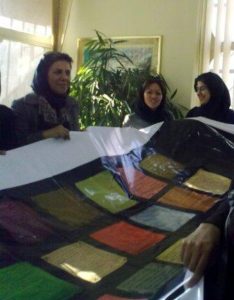
    On the occasion of the ‘International Day for the Elimination of Violence against Women, 4 x 1  meter protest banner made in Iran was unveiled by Association des Chercheurs Iraniens (ACI) in collaboration with the International Coalition Against Violence in Iran (ICAVI).

    Called “Chehel Tekeh,” the banner is supported by 15,000 names, addresses and signatures from inside Iran. It features 40 tragic stories relating to the consequences for women of the Family Protection Act which was presented to the Islamic Consultative Assembly in November last year.

    “Chehl Tekeh” will travel around Europe to raise awareness and seek support for the fight against unjust discriminatory laws against women in Iran.

  • Lake Oroumieh: urgent environmental crisis unfolding in North West of Iran

    Lake Oroumieh: urgent environmental crisis unfolding in North West of Iran

    Ref:    201 / M / 501

    Date:  Tuesday, 30 August 2011

    HE Ban Ki-Moon

    UN Secretary General

    UN – New York


    Your Excellency,


    I would like to draw your attention to an urgent environmental crisis unfolding in North West of Iran with national, regional and global consequences.


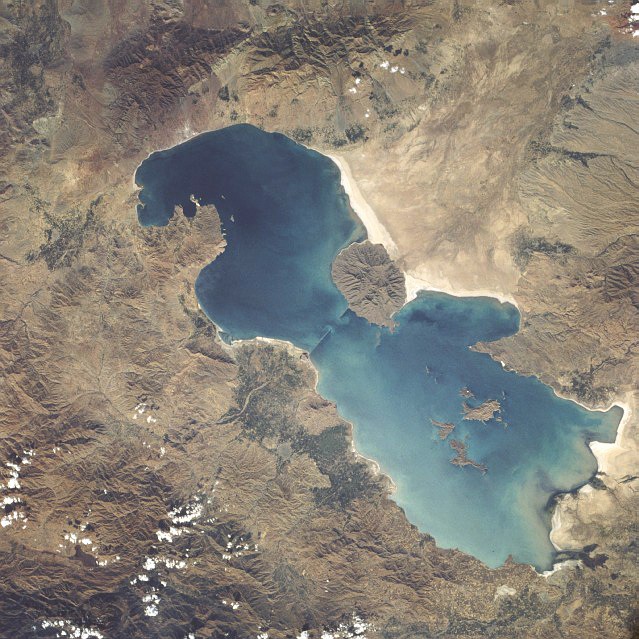
    Lake Oroumieh, the world’s third largest salt lake and a UNESCO Biosphere Reserve, is drying up at an alarming rate due to drought, misguided irrigation policies, development and the irresponsible damming of rivers that feed it.

    Mentioned as early as 9th century BC in Assyrian text, the lake serves as a natural divide between the major cities of Oroumieh and Tabriz in the provinces of East and West Azerbaijan:

    • A major tourist attraction and national park, its wetlands are listed in the Ramsar Convention (number 38 – 23 June 1975);
    • It holds 31 billion cubic meters of water with a catchments area of 51876 square kilometres;
    • Its endangered birds, flora and fauna are listed by IUCN and WWF;
    • Its 102 rocky islands are home to migrating birds
    • 27 types of mammals, 212 types of birds, 41 types of reptiles, 7 types of amphibians and 26 types of fish inhabit the Lake’s ecological areas

    The “wise use” concept at the heart of Ramsar Convention is the conservation and sustainable use of wetlands and their resources, for the benefit of humankind. However, in Iran today there are threats of serious and irreversible damage to Lake Oroumieh, with no real measures to prevent the human and environmental degradation.

    Since early 1990s decision makers have not been accountable for policies that have created the present day crisis. In the recent months environmental activists and ordinary members of public who have protested against these erroneous policies have been arrested and detained in an effort to silence the protest. Arrests of over 300 people in the last few days is quickly turning an environmental issue into a human rights crisis whereby the right to peaceful protest is violated and individuals are arrested and detained arbitrarily.

    Your Excellency, it is of utmost importance that the international community hears of the looming catastrophe that could result in a ‘salt tsunami’ far exceeding the borders of Iran and affecting not just the lives and livelihood of people around Lake Oroumieh’s catchment area but millions of people in the region.

    ACI asks that an investigative group visits the region urgently and action is taken to prevent a human and environmental catastrophe.

    Respectfully


    Dr Hossein Ladjevardi

    President – ACI