Category: Events

  • ‘Baluchistan’: Dignity, Freedom, and Justice for All

    ‘Baluchistan’: Dignity, Freedom, and Justice for All

    The situation of civil, political, economic, social, cultural rights of the Iranian Baloch people

    December 9, 2023 – Marshall Building, LSE – London

    ACI is holding its fifty second international conference dedicated to the plight of the Iranian Baloch People to coincide with the seventy fifth anniversary of UN Human Rights Day with its theme of ‘Dignity, Freedom and Justice for All’.

    This one day seminar proposes to discuss the wider dimensions of poverty, multidimensional deprivation and discrimination based on religious, ethnic and linguistic rights to give context to the grievances and challenges facing the Iranian Baloch People in over four decades. Along with the issues concerning discrimination, poverty and human rights, the question we aim to discuss further is the continuous disproportionate use of the death penalty and the systematic use of lethal force against unarmed civilian population leading to many deaths in the Baluchistan region with regard to the ICC Statute and crimes against humanity. December 9, 2023, also marks the 75th anniversary of the landmark Convention on the Prevention and Punishment of the Crime of Genocide (Genocide Convention). This was the first human rights treaty adopted by the General Assembly.

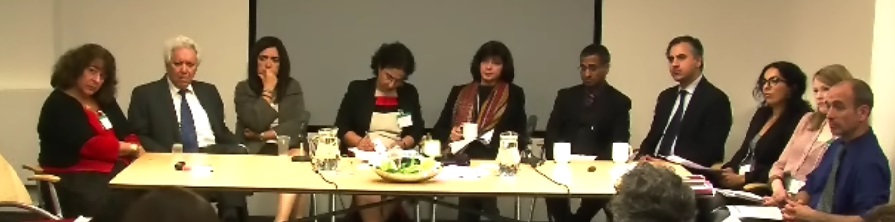
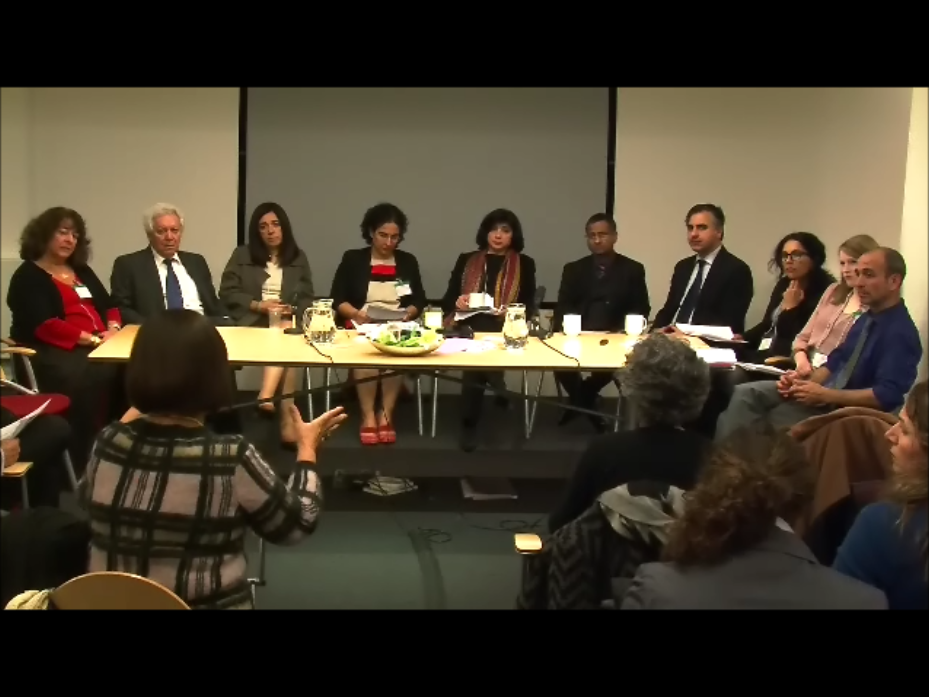
    Panel 1 – 10:00 – 13:00 (ENGLISH)

    Along with the issues concerning discrimination, poverty and human rights, the question we aim to discuss further is the continuous disproportionate use of the death penalty and the systematic use of lethal force against unarmed civilian population leading to many deaths in the Baluchistan region with regard to the ICC Statute and crimes against humanity:

    Film: Panel 1 – Morning session (English)

    • Opening Remarks and Welcome – Dr Hossein Ladjevardi (Persian)
    • Dr Fereydoon Rahmani – Associate Professor, Programme leader – Human Rights & Equity Studies ‘Comparative look: international standards, State responsibilities and the situation in Balochistan’
    • Ms Sabah Bandouie -‘Balochistan Human Rights Group’ UN representative ‘44 years of intentional systematic injustice’
    • Fariba Baloch – Human Rights Defeder: ‘Testimony of a mother, a woman and a Baloch human rights defender’
    • Dr Sima Sabet – Iran Expert: ‘A Strategic look to Balochistan’

    Film: Panel 2 – Morning Session (English)

    • Hon. Bijan R. Kian – Former senior official of the United States Government: ‘Intentional economic development deprivation of specific regions in Iran linked with international narcotics trafficking’
    • Nasser Boladai  – Chairperson ‘Baluchistan People’s Party’ : ‘Crimes against humanity or inconsequential killings?’
    • Professor Payam Akhavan – Professor of International Law, Special Adviser on Genocide, ICC (TBC): ‘What are crimes against humanity?’
    • Professor Javaid Rehman – United Nations Special Rapporteur on the situation of human rights in Iran: ‘Balochistan and human rights’

    Panel 2 –  14:00-18:00 (Persian)

    Prospects for the future: Wider dimensions of poverty, multidimensional deprivation and discrimination based on religious, ethnic, and linguistic rights as told by activists and human rights defenders with special emphasis on the rights to education:

    • Dr Fereydoon Rahmani – Associate Professor, Programme leader: Human Rights & Equity Studies, ‘Comparative look: international standards, State responsibilities and the situation in Balochistan’
    • Mohsen Borhanzehi – Baloch Human Rights Defender: Testimonies from Iran: Maki Mosque 30 September 2022
    • Ms Fariba Baloch – Baloch Human Rights defender: Testimony of a human rights defender
    • Dr Roya Boroumand – Boroumand Foundation: Extra Judicial Killings and Executions
    • Ms Fariba Borhanzehi – Baloch child rights defender: Story of two little children – Hangol and Morid
    • Ms Shahin Nosrati – Writer, Women’s right defender: Women: Inequitable access to education and employment opportunities
    • Laebe Aram – Writer: ‘Intersectionality of culture, tradition and economic deprivation impacting the fate of Baloch women‘
    • Dr Abdolsatar Doshoki – political analyst: ‘Inequitable access to higher education’
    • Rahim Bandouie – ‘Baluchistan People’s Party’: ‘Economic discrimination and intentional poverty’
    • Masoud Raeisi – Journalist – ‘Poverty, multi-dimensional deprivation and prospects for the future‘
    • Messages from:

    Organised by Association des Chercheurs Iraniens (ACI) in collaboration with Azadi Network and Balochistan Human Rights Group
  • ‘Balochistan’ – ‘Dignity, Freedom, and Justice for All’

    Press Release : ‘Tehran funds Hamas while starving children at home’.

    The situation of civil, political, economic, social, cultural rights of the Iranian Baloch People

    Saturday 9 December 2023 – 10:00-13:00 English, 14:00-18:00 Persian

    Marshall Theatre, The Marshall Building, LSE, 44 Lincoln’s Inn Fields, London WC2A 3LY

    (On Saturday the Entrance is accessed through Portugal Street opposite the LSE Library)

    SPEAKERS LIST

    One day seminar in London examines possible ‘crimes against humanity’ committed against Iranian Baloch people on ‘Zahedan’s Bloody Friday’ with UN rights experts and Baloch minority activists and human rights defenders.

    While with the Israel-Gaza war, Iran’s prioritising of funding for terrorism is headlining international news, at home the latest annual budget keeps the Balochistan province as the most deprived and under invested province in Iran.

    The seminar will hear from Baloch activists who accuse the regime of intentional policies of keeping the region underdeveloped and deprived to further its aim of illicit gain from drugs smuggling. The ingress point for Billions of dollars in street value of narcotics is 565 miles of the province’s common border with Pakistan and 572 miles of common border with Afghanistan.

    The morning panel (10am-1pm) in English, will hear from Prof Javaid Rehman the UN Special Rapporteur on the situation of human rights in Iran who has said that the “scale and gravity” of violations committed by Iranian authorities during the ‘Women Life Freedom’ movement in Balochistan pointed to “the possible commission of international crimes, notably the crimes against humanity of murder, imprisonment, enforced disappearances, torture, rape and sexual violence, and persecution”. Prof Payam Akhavan, Professor of International Law, Special Adviser on Genocide, International Criminal Court will discuss the recent events. The panel will hear firsthand accounts of the plight of families whose loved ones have been executed, killed and/or sustained life changing injuries during the ‘Bloody Friday’ on September 30, 2023.

    The afternoon panel (2-6pm) in Persian, examines the wider dimensions of religious and ethnic persecution and violence against the Iranian Baloch people through the regime’s economic and security policies. Poverty is deep-rooted. According to a Baloch MP in April this year ‘deep rooted poverty in the region means that people can only afford to eat subsidised bread and provisions for that are even failing to meet the demands’. Reports on the region’s inequitable access to education, housing, healthcare, employment, and crumbling infrastructure will examine their impact on the rights of women and children in particular.

    Looking to the future, the seminar will conclude with its call for action and recommendations. Ends.

    Further information

    Organised by Association des Chercheurs Iraniens (ACI) in collaboration with Azadi Network and Balochistan Human Rights Group

    Background information:

    Sistan and Balochistan, the third largest of Iran’s 31 provinces, sits in the southeast corner of Iran with access to the waters of the Persian Gulf. It borders Pakistan and Afghanistan.

    Balochistan has 3.3 million inhabitants. It is also home to over 700000 Afghan refugees. It has had one of the highest rates of population growth in Iran with 67% of the population below 30 years of age. 28% of this group are between 15-30 years of age. This young population presents huge potential for future growth if planned for correctly while simultaneously creating real problems for the regime that has so far failed to meet the demands and aspirations of the people.

    The Balochistan region in the most deprived province in Iran according to the Islamic Republic’s own figures. It has the worst access to education, healthcare, housing, employment opportunity. Over 60% of the population live under poverty line.

    At least 274 Baluch people have been executed for drug-related charges since 2021, 40% of all drug executions in that time period. This is while they only make up 2-5% of Iran’s population[1].

    On 30 September 2022, during Friday Prayers in Zahedan the regime’s forces opened fire on unarmed civilians. According to Amnesty International at least 82 Baluchi protesters and bystanders were killed in bloody crackdown. ‘Iranian security forces unlawfully killed at least 66 people, including children, and injured hundreds of others after firing live ammunition, metal pellets and teargas at protesters, bystanders and worshippers during a violent crackdown after Friday prayers on 30 September in Zahedan, Sistan and Baluchistan province, Amnesty International said today. Since then, another 16 people were killed in separate incidents in Zahedan amid an ongoing clampdown on protests. Evidence gathered from activists, victims’ families, eyewitness testimonies, and images and videos of the protests suggest the real death toll from Zahedan is likely to be higher.’[2]

    Poor water management and changing climate, have created draughts and debilitating dust storms which have severely impacted the lives of the indigenous people of the region[3].


    [1] https://iranhr.net/en/reports/35/

    [2] https://www.amnesty.org/en/latest/news/2022/10/iran-at-least-82-baluchi-protesters-and-bystanders-killed-in-bloody-crackdown/

    [3] https://www.nationalgeographic.com/environment/article/drought-climate-change-turn-iran-sistan-and-baluchestan-into-dust-bowl

  • ‘Balochistan’: ‘Dignity, Freedom, and Justice for All’

    ‘Balochistan’: ‘Dignity, Freedom, and Justice for All’

    The situation of civil, political, economic, social, cultural rights

    of the Iranian Baloch People

    Saturday 9 December 2023 – Central London

    Space is limited so please register
    List of Speakers

    ACI would like to announce ACI its fifty second international conference dedicated to the plight of the Iranian Baloch People to coincide with the seventy fifth anniversary of UN Human Rights Day with its theme of ‘Dignity, Freedom and Justice for All’.

    This one day seminar proposes to discuss the wider dimensions of poverty, multidimensional deprivation and discrimination based on religious, ethnic and linguistic rights to give context to the grievances and challenges facing the Iranian Baloch People in over four decades. Along with the issues concerning discrimination, poverty and human rights, the question we aim to discuss further is the continuous disproportionate use of the death penalty and the systematic use of lethal force against unarmed civilian population leading to many deaths in the Baluchistan region with regard to the ICC Statute and crimes against humanity.

    Speakers include Dr Javaid Rehman United Nations Special Rapporteur on the situation of human rights in the Islamic Republic of Iran who will examine the present day situation of the Iranian Baloch people alongside other international experts, Baloch activists and human rights defenders.

    Panel 1 (English) – 10:00 – 13:00

    Along with the issues concerning discrimination, poverty and human rights, the question we aim to discuss further is the continuous disproportionate use of the death penalty and the systematic use of lethal force against unarmed civilian population leading to many deaths in the Baluchistan region with regard to the ICC Statute and crimes against humanity

    Panel 2 (Persian) –  14:00-18:00

    Prospects for the future: Wider dimensions of poverty, multidimensional deprivation and discrimination based on religious, ethnic and linguistic rights as told by activists and human rights defenders

    Subjects for consideration in Persian and English include but are not limited to:

    • Extreme poverty and human rights
      • Unemployment and employment opportunities
      • Housing rights
      • Access to healthcare
    • Rights of the Child:
      • access to education
      • child marriage
      • child labour
      • child soldier
    • Minority rights: Equality and equity
      • Women’s rights
      • Religious freedoms
      • Ethnic and linguistic rights
    • Civil and political rights
      • Brutal treatment of civilian population leading to deaths: ‘Crimes Against Humanity’?
      • Illegal detention, poor prison conditions, unfair trials,
      • Disproportionate and increasing use of the death penalty.
      • Political participation/office

    This conference is convened in collaboration with Azadi Network and Balochistan Human Rights Group

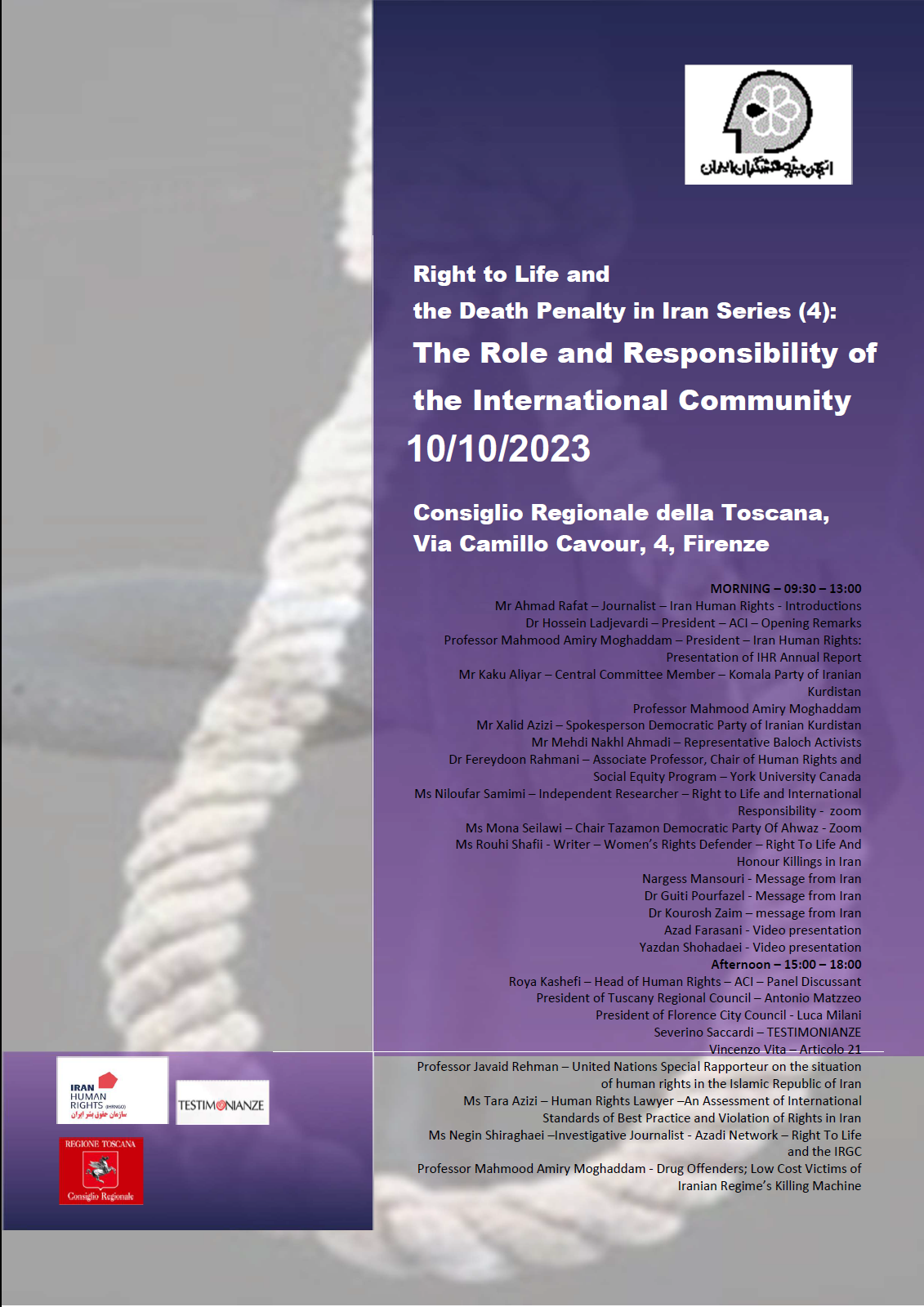
  • Right to Life and the Death Penalty in Iran

    Right to Life and the Death Penalty in Iran

    ‘The Role and Responsibility of the International Community’ – (series 4)

    Date:                 10 October 2023 – 9:30-18:00

    Location:          Consiglio Regionale, Via Camillo Cavour, 4, 50129 Florence

    In Collaboration With: Testimonianze, Iran Human Rights – Italia (IHRNGO) and Supported by: Consiglio Regionale della Toscana

    On March 15, 2023, UNODC signed a Country Partnership Programme with the Islamic Republic of Iran for 2023-2026. It is stated that this Programme aims to further strengthen the cooperation between the UNODC and Iran on drugs, crime, international criminal justice, corruption, and alternative livelihood through promoting United Nations standards and international best practice.

    The UNODC guidance on the protection of human rights in countries where aid is provided for anti-drugs programmes explicitly acknowledges the links between funding and executions and recommends withdrawal of support where improvements were not made. While there is clearly a need for international cooperation on counter-narcotics efforts, this must be proportionate to right to life and respect for human rights.

    In view of the increased number of executions in Iran on drugs related charges this year alone, our conference’s focus is the role and responsibility of the international community:

    1. How is the international community and the UN agencies reconciling the use of the death penalty and lashes as punishments – even for addicts – with United Nations standards and international best practice?
    2. How is the international community and the UNODC resolving the contradictions between cooperation with the IRGC and the regime with the fact that IRGC is complicit in international organised crime and drugs trafficking?
    3. How is the international community and the UNODC resolving the increased numbers of arrests, detentions, torture and ill treatment and unfair biased trials for protestors in the last year with UN standards and international best practice?
    4. What is the role and responsibility of the international community when the State not only fails to protect the safety and security of its people but, poisons, maims, kills and executes its people?

    Speakers

    MORNING – 09:30 – 13:00
    Film: Part One
    Mr Ahmad Rafat – Journalist – Iran Human Rights – Introductions
    Dr Hossein Ladjevardi – President, ACI – Welcome and Opening Remarks
    Professor Mahmood Amiry Moghaddam – President, Iran Human Rights (IHRNGO) : Presentation of IHR Annual Report  
    Film:Part Two
    Alphabetical order:
    Mr Kaku Aliyar – Central Committee Member – Komala Party of Iranian Kurdistan
    Mr Xalid Azizi – Spokesperson Democratic Party of Iranian Kurdistan
    Mr Mehdi Nakhl Ahmadi – Representative of Baloch Activists
    Dr Nargess Eskandari-Grünberg – Mayor of Frankfurt: Message of solidarity – Zoom
    Dr Fereydoon Rahmani – Associate Professor, Chair of Human Rights and Social Equity Program – York University Canada
    Ms Niloufar Samimi – Independent Researcher – Right to Life and International Responsibility –  zoom
    Ms Mona Seilawi – Chair Tazamon Democratic Party Of Ahwaz – Zoom
    Ms Rouhi Shafii – Writer – Women’s Rights Defender – Right To Life And Honour Killings in Iran
    Mr Fazel Walian – HANA , human rights group
    Azad Farasani – Video presentation
    Yazdan Shohadaei – Video presentation
    Messages from Iran
    Nargess Mansouri – Message from Iran
    Dr Guiti Pourfazel – Message from Iran
    Dr Kourosh Zaim – message from Iran

    Afternoon – 15:00 – 18:00
    Roya Kashefi – Head of Human Rights – ACI – Panel Chair
    Film: Part One
    Ahmad Rafat – Introductions
    Welcome Address from Antonio Matzzeo, President of Tuscany Regional Council
    Luca Milani, President of Florence City Council

    Severino Saccardi – TESTIMONIANZE
    Senator Vincenzo Vita – Articolo 21
    Film: Part Two
    Professor Javaid Rehman – United Nations Special Rapporteur on the situation of human rights in the Islamic Republic of Iran
    Ms Tara Azizi – Human Rights Lawyer – An Assessment of International Standards of Best Practice and Violation of Rights in Iran
    Ms Negin Shiraghaei – Investigative Journalist – Azadi Network – Right To Life and the IRGC
    Film: Part Three
    Professor Mahmood Amiry Moghaddam – Head of IHRNGO Drug Offenders; Low Cost Victims of Iranian Regime’s Killing Machine
    Closing Remarks and ceremony

    In Collaboration With: Testimonianze, Iran Human Rights – Italia
    Supported by: Consiglio Regionale della Toscana  
  • Yesterday, Today and Tomorrow of Iran

    PROPOSED CONFERENCE PROGRAM

    Yesterday, Today and Tomorrow of Iran

    Submission of Abstracts:   

    ACI would like to announce a conference under the above title. The conference will address the increasing problems facing the today and tomorrow of Iran.

    Relying on the knowledge and expertise of the scholars and experts participating in this major conference, our main aim is to offer a considered exit strategy from the present day problems and look to a better future for Iran. We hope that the findings of ACI’s public opinion surveys can offer a valuable starting point to the discussions.

    This conference will be livestreamed through ACI’s website and broadcast simultaneously through several satellite television stations.

    In view of the particular structure of the conference, each panel and specific topics of discussion will be steered by an expert in the field. They will be introduced in due course. (more…)

  • Equality and Religious Freedom in Iran

    Equality and Religious Freedom in Iran

    Q & A

    21 November 2014

    Amnesty International Secretariat – London, UK

    This one day seminar was co-sponsored by Amnesty International


    Download  PDF report here

    On 21 November 2014 Association des Chercheurs Iraniens (ACI) held a one day seminar co-sponsored by Amnesty International at their International Secretariat in London. (more…)

  • Right to life and Death penalty in Iran – 3

    Right to life and Death penalty in Iran – 3

    24, 25 May 2014
    Location: California Room – UCLA Faculty Centre
    Language: Persian/English


    In this third conference,  we were honoured to have Senator Robert Badinter the ex-French Minister of Justice who successfully fought to abolish the death penalty in France as our keynote speaker.

    The proceedings heard the valuable contributions of US and international organisations such as ‘American Civil Liberties Union – ACLU’ and ‘Reprieve’ who offered valuable insight into the application and execution of the death penalty in the USA and the importance of raising awareness through carefully planned campaigns. (more…)

  • Right to Life and Death penalty in Iran – 2

    Right to Life and Death penalty in Iran – 2

    18 – 19 January 2014

    Thirty two speakers participated in this the second of ‘Right to life and Death penalty in Iran’ series of conferences, again held in Koln – Germany.

    ‘Don’t bury my heart‘ a touching and powerful documentary about minors on death row in Iran made by Saba Vasefi featuring the story of Ali Mahin-Torabi was also shown during the two days . A phone conversation with Ali Mahin Torabi and his gratitude to those who fight for the rights of minors on deathrow in Iran touched many present at the conference.

    ACI also presented the findings of its research on public attitude to death penalty at the conference.

    As always voices from Iran provided the latest news about the current situation and  the efforts by right to life defenders. The two main topics of discussion were right to life and activism, and the use of death penalty in Iran by the regime as a tool of oppression and fear. Human rights defenders, journalists, political activists and representatives of Iran’s ethnic and religious groups particpated in the lively debates of the two days. Films of the conference are available on ACI’s YouTube channel

    Speakers

    Kourosh Zaim – Iran (via Skype)

    Mohammad Mostafaie – Sweden

    Abdolsattar Doshoki – UK

    Bahram Abar – Germany

    Kouhyar Goudarzi – Turkey (via Skype)

    Azar Majedi – UK

    Mehrdad Darvishpour – Sweden

    Abdolreza Ahmadi – The Netherlands

    Farhang Ghassemi – France

    Shabnam Moinpour

    Saba Vasefi – film presentation – Don’t bury my heart

    Activist from Iran – via skype – identity protected

    Ladan Boroumand – USA (via Skype)

    Hossein Ladjevardi – Navid Fazel  – ACI Research findings

    Mina Ahadi – Germany

    Abdolreza Karimi – Germany

    Mahvash Alasvandi – Canada ( her two sons were executed in Iran)

    Reza Kaabi

    Kaweh Ahangari – Belgium

    Nader Zahedi – Germany

    Mohammad Mesri

    Faramarz Bakhtiar

    Khaled Hassanpour

    Shahryar Naghshbandi

    Saleh Hamid

    Amjad Hossein Panahi  – (report from Sunni and Kurdish prisoners on deathrow in Iran)

    Mohaammad Nayeri – UK

    Hossein Bagherzadeh – UK

    Mitra Khalatbari

    Sepideh Pouraghaie – France

    Vahid Sadeghi  Shirazi – UK

    Jamshid Faroughi – Germany

    Ahmad Rafat – UK

  • ‎’Iranian Music, past present and future’‎

    ‎’Iranian Music, past present and future’‎

    23-25 September 1999

    The Music Institute – University of Cologne

    ACI dedicated its twenty seventh international conference to the study of ‘Iranian Music, past present and future’. This conference was convened jointly with the Music Institute of Cologne University with the participation of renowned musicians and experts worldwide.

    The conference was opened with the welcoming words of Professor Dr Rüdiger Schumacher, the head of the Music Institute, who commented on the close ties between the Institute and the studies on Iranian Music.

    Opening Remarks

    • Dr Hossein Ladjevardi welcomed the audience on behalf of ACI. In his short opening speech, he reflected upon the famous Iranian musicians such as ‘Nakisa’ or ‘Barbod’ whose talents and abilities flourished under the Persian Kings. He went on to explain the aims and objectives of ACI in organising the Music conference. He hoped that with the aid of the experts the pleasure and joy derived from hearing music can be returned to the Iranian culture and replace the culture of mourning and lamentations governing it at present.

    Day One – Panel One

    • Professor Dr Nasser Kanani, one of the organisers of the conference was the first speaker to present his paper. With the aid of some very illuminating slides, he demonstrated the pre-Islamic history of Music in Iran and its importance in the every day lives of Iranians. Professor Dr Kanani completed his tour of the history of Iranian music on the second day by talking about post-Islamic music in Iran.
    • Dr Thoms Ogger, an expert and lecturer on Iranian music based his interesting paper on Iranian music, past, present and future. Drawing on his first hand experiences in Iran during the last several years he introduced his views on modernity in Iranian music at present and where he sees it going.
    • Professor Dr Hormoz Farhat, one of the most prominent authorities on Iranian music was the last speaker of the first session. His presence and paper on ‘Authenticity versus reform in traditional Persian music’ created a great deal of excitement. Amongst some very revealing points, in his opinion, traditional Persian music is noble yet familiar, private, and spiritual. He believes that it is to be heard in small and private gatherings as he did not believe it to have the same effect in a large informal concert hall. He believes it to be precious and one, which should be preserved.

    Day One -Panel Two

    • Dr Reza Torshizi, gave one of the most engaging talks of the conference as the first speaker of the second session on day one. He discussed rhythm in Iranian music. In his opinion, classical Persian poetry was the infrastructure upon which the rhythm of traditional Iranian music was based.
    • Abdolhamid Eshragh, presented a very entertaining paper on ‘Dastgah’ in Iranian music. He had accessed some first recordings of instruments played by masters, which he shared with the audience. Amongst them a very beautiful impromptu dialogue between a canary and the ‘tar’ playing of one of the masters.
    • Ghassem Talebzadeh, an accomplished and renowned violinist, discussed modernity in traditional Iranian music and suggested that by deriving inspiration from folk and traditional music, the music of the time must be created and that it must catch the essence of the era it is written and performed for.

    Day Two – Panel Three

    • Dr Jalal Akhbari, expert and musician, opened the first session of the second day by discussing the history of ancient Iranian music. In the second part of his paper in the afternoon session, he related the history to ‘Santoour’, its evolution, and teaching technique during the ages.
    • Dr Hossein Omoumi, one of the most famous masters of ‘Ney’ presented a most charming and engaging papers on the history and teachings of the art of playing the ‘Ney’. He paid homage to his master, Hassan Kassaie as well as demonstrating a variety of methods for playing the ‘Ney’.
    • Majid Khalaj, a young and accomplished musician whose expertise, knowledge and dedication in the art of Iranian drums have placed him highly amongst the masters of the instrument gave a most interesting talk punctuated by demonstrations of various rhythms and their language.

    Day Three – Panel Four

    • Professor Dr Rüdiger Schumacher, opened the afternoon session. He presented a most informative paper on the teachings in the Music Institute of Cologne University and its ties with Persian music. He dedicated his paper to Dr Massoudieh a colleague and close friend.
    • Dr Eckart Wilkens, an expert on Iranian Music, discussed whether it was necessary to modernise traditional music for it to become global. He demonstrated his understanding of Iranian music a beautiful piece for the piano entitled ‘Sun, moon and the stars’. The audience received this very warmly.
    • Dr Mohamad Assemi, enthralled the audience with his exciting and passionate delivery of traditional poems and their rhymes and rhythms which in his opinion had directly affected the music of their time.

    The Concerts

    • This particular conference was a new yet pleasant experience for the organisers because of the concerts, which were organised. The generosity of the experts and musicians who donated their time and performances for two evenings of traditional and modern music was received warmly by the audience. Both evenings were also recorded and broadcast into Iran by the BBC, Voice of America, Radio Free Europe, Radio France Internationale, Voice of Israel and Deutsche Welle.
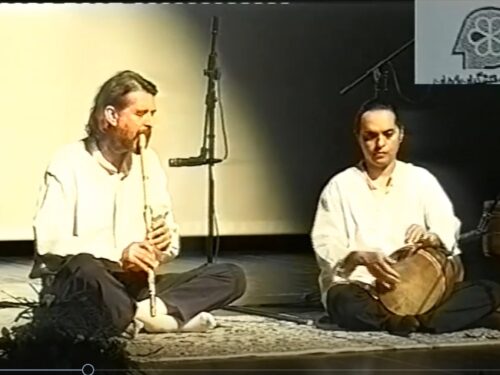
    • The first evening was dedicated to traditional Iranian music. Madjid Derakhshani and his beautiful tar playing opened the concert. Jalal Akhbari followed this with a piece on the ‘Santoor’ with the guest accompaniment of Reza Torshizi on the ‘Tonbak’. To close the evening, Hossein Omoumi and Madjid Khaladj received standing ovations for their enchanting performance of ‘Ney’ and ‘Tonbak’.
    • The second evening was opened by a special piece for the flute written and performed by Dr Wilkens for the concert. This was followed by Guiti Khosravi accompanied on the piano by Dr Sara Hassanpour and later a by Gahssem Talebzadeh who had composed a piece as a surprise for the organisers. Cyrus Malakouti closed the first half of the evening with a classical piece performed on his specially modified and designed guitar.
    • The second half saw a very entertaining piece by Maryam Akhundi and her group. This was followed by the beautiful folk singing of Parvin Cox accompanied by a student of the Tonbak ‘Nassim’. The evening came to its end with the beautiful performance of the ‘Bahar’ dance group with choreography by Bahrampour.

    In celebration of the life and works of Iraj Janatie Attaie

    • The final evening was dedicated to Iraj Janati-Attaie. In his honour, ACI had invited his friends and colleagues as well as two of the most famous Iranian popular artists ‘Dariush’ and ‘Ebi’. His poems were instrumental in their phenomenal success both before and after the Islamic Revolution.
    • ACI believes that the successes and achievements of individuals must be honoured while they are still alive. Not only rewarding, but this will also allow them to carry on stronger than ever before and encourage the young generation to follow their example.

    Thanks and gratitude

    ACI would like to thank Professor Dr Kanani, Dr Mahmoud Khoshnam and, Dr Mehdi Rosefid, head of ACI Germany for their valued support and contribution. ACI extends its special thanks and gratitude to Professor Dr Rüdiger Schumacher at the University of Cologne’s the Music Institute whose vision and support made the conference possible.

  • “Devolved Power, Federalism …? – 2”

    info@sabi.fi – in association with SABI

    Ref:      362 / M / 369

    The Today and Tomorrow of Iran

    “Devolved Power, Federalism …? – 2”

    18, 19, 20 November 2010

    Technopolis Innopoli 2, Tekniikantie 14, 02150 Espoo – Finland

    Association des Chercheurs Iraniens (ACI) held its forty eighth conference under the above title. This conference was co-convened with  the Scandinavian Art and Business Institute in Finland. Our aim, as always, was to discuss and look into as many different aspects of the chosen topics in an unbiased and scholarly manner.

    Centralized policies and governing systems have proved discriminatory and inflicted severe pressure on Iranians living in different parts of Iran for far too long. Mindful of safeguarding Iran’s territorial integrity, there is an urgent need to find a viable governance structure that would resolve the present issues and grievances for all Iranians.

    The many studies and consultations undertaken by ACI indicate that the future governance structure should be based on some form of devolved power. ACI proposed that equality and democracy are prerequisites to sustainable change.

    Panel discussions:

    • An assessment of today’s unstable political situation in Iran (political, social, economic and legal assessment with special emphasis on the deteriorating human rights situation)
    • Reaching a common understanding of terms and definitions
    • Examining the role and place of a common shared language, official language, and mother tongues in the future of Iran
    • “Devolved Power, Federalism…?” What is the best structure for Iran?
    • Methods of transition to a form of devolved power, democratic socio-political coexistence, and an effective political system for the future of Iran.

    The conference was conducted in the Farsi language. English translations of the papers presented will be available soon.