Watch it LIVE on E2 satellite channel (US and Canada)
Live streaming on WWW.PAMTV.US
On March 8th 2008, International Women’s Day, Association des Chercheurs Iraniens (ACI) will launch a year long programme of celebrations to honour the courage and achievements of Iranian women under oppression.
Faced with social and legal discrimination, as well as cultural barriers, Iranian women have found creative and inspirational ways of working towards gaining equal social and political rights. And remarkably, despite facing extreme, many times violent, opposition against their demands women have remained at the epicentre of social change.
Without a doubt, international awareness and recognition of their achievements will offer them moral support and relative protection. The focus of ACI’s roundtable is the important role international organisations can play in supporting and empowering grassroots organisations and NGOs in campaigning for equal rights. (more…)
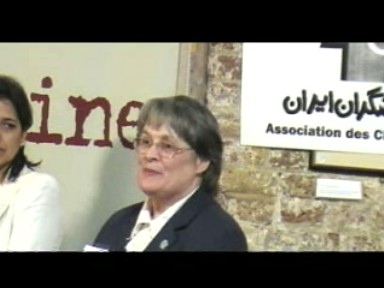
Iran is probably the world leader in misogyny, the relentless persecution of women as a tool in the regime’s armoury to ensure they stay in power. Intimidation of women is a key element in terrorizing families and whole communities. It is enforced by a huge, nation-wide police force, the Revolutionary Guard.
This corrupt organisation, actively engaged in drug and human trafficking, enforces the mullah’s crazy ruling regarding women’s behaviour. These police are brutal, and we can only marvel at the courage of the Iranian women remaining in Iran, who continue to protest and peacefully demonstrate how the mullahs’ regime is violating even the Iranian constitution.
The mullahs have not recognised the rights of women stated in the Constitution. Instead, they have introduced more and increasingly savage – ludicrous if they were not so savage – constraints on women’s lives. These constraints have been enforced both capriciously and cruelly.
What on earth are the authorities with their huge police force doing, spending time on arresting and imprisoning women for wearing scarves which don’t cover their heads and necks? Don’t they have a country to run? The state security force has even issued a list of clothing which is deemed ‘dangerous to social and moral security’. Dangerous?
Throughout 2007, every month hundreds of thousands of women were stopped and warned by the police. Thousands were actually arrested, sent to police headquarters or imprisoned. The sole purpose of this treatment must be to spread anxiety and to intimidate. And the fears are well founded. Behind the silly dress codes much worse things are happening. Iran is the only country in the world which hangs women in public. Official sources record six women hanged in 2007, and sentences of death passed on 24 women, including 18 to death by stoning.
In Iran, fathers go unpunished for murdering daughters, husbands go unpunished for inflicting permanent physical and psychological damage on their wives. An estimated 60,000 girls, many in forced marriages, run away from home each year. The level of suicide for young women aged 15-24 is the highest in the world.
On International Women’s Day 2007, women were arrested for demonstrating in Tehran on the grounds of distributing anti-government propaganda. They were collecting 1 million protest signatures. 123 arrests were officially recorded, a serious underestimate. Imprisonment in Iran means brutal treatment and ofen torture. Yet still, brave women protest. I fear we shall learn of more protests in Tehran today, and the same violent police attacks as before. Of course, if we care for women, if we care for democracy and for gender equality, we must salute them, we must bear witness.
I hope David Milliband has a copy of the report ‘The Hell on Earth’ and thinks about our country’s attitude to such a regime.
Above all, as women we must oppose this terrible regime – and, of course, all such regimes which fail to recognise women’s full humanity. Sadly, Iran is not the only country where women’s rights are denied and where domestic and other violence is tolerated or even encouraged.
We must work for the Millennium Goals, the third of which is the advancement of women. Kofi Annan, when he was UN Secretary General, said that unless this goal was achieved, all the others would fail.
A major issue, affecting women worldwide, is violence against women. UNIFEM has described it as pandemic, with 20% or so of married women experiencing domestic violence, even in the democracies committed to universal human rights.
On 25th February, the present UN Secretary General, Ban Ki-moon, launched a worldwide campaign to reduce this violence – to stop what he called “the untold cost that violence against women inflicts on all mankind.” “Violence against women” he said, “is never acceptable, never excusable, never tolerable.”
89 nations now have legislation outlawing domestic violence. 104 recognise marital rape as a criminal offence. The White Ribbon Campaign, which enlists men to oppose violence, now operates in 47 countries. Harriet Harman has made elimination of violence against women one of her three priorities. Today, let us celebrate Iran’s brave resistance movement and commit ourselves to the global campaign to eliminate violence against women.
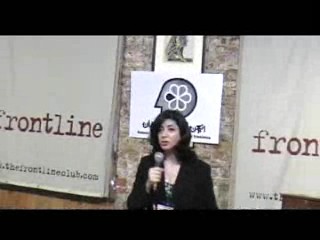
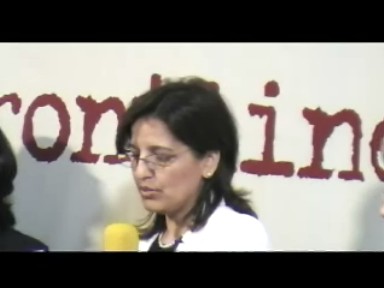
Good afternoon. Thank you for inviting me to share a few words to mark the International Women’s Day, recognizing the crucial role that women have in nurturing and guiding future leaders
Throughout history, walls have been raised between peoples, such as the Berlin Wall and the separation barrier in Israel; but the most entrenched walls are those that exist within people themselves. Once people begin to view different groups as “the other”, divisions occur where one puts one’s interests above the interests of the other party. These divisions are more deeply rooted and more difficult to pull down than any physical barrier. The unavoidable result is a destructive and imbalanced relationship of violence and retribution, intolerance and resentment, whether between different individuals, races, religions or nations.
Women in particular are uniquely equipped to move beyond these internal barriers of self-interest. Women have the unique qualities of empathy, forgiveness and unconditional love, such as that shown by a mother for her child, which are essential for fostering peace, whether in the family, the greater society, or even the world. The finest minds have always understood the peacemaking role of women.
WFWP encourages every woman to become a ‘woman of peace’ through cultivating her heart, the mother’s heart, to care not just for her own children, but for the children of others, the children of other nations.
The value of volunteerism and character education is a central aspect of education. In spite of the centuries of rule by brute force, we can observe the instrumental role historically played by individual women in laying the foundations for peace.
It has become more and more apparent through the years of peace building, discussions, and networking that peace is not only NOT attainable without the involvement of women, but that in that process, “women have significantly contributed to redefining the concept of peace and how leadership must be exercised in pursuit of that goal”. We women will, and need, to become a cornerstone for strengthening co-operation and partnership between others.
In order to strive for world peace it must be achieved through true love based on motherly love. We must encourage the women leaders to end conflict around the world; we know the oppression and discrimination which women in history faced and are facing. However, now they are able to discard this historic suffering because ‘the time of women has come.’
As women, we share a common heart and common experience because we are daughters, sisters, wives, and mothers. We share the same joys and we share the same heartaches. This shared and common heart allows us to connect deeply with one another, and urges us to live for the greater good. Even though this is my first time to listen to Roya and the other distinguished ladies on the panel, I feel close to the women here. There is much that I can learn from the Iranian women. The tradition of filial piety and continual care of children, runs deep in the Iranian culture and stands as an example for women throughout the world
The general consensus is that now, more than ever, with humankind having reached a crossroad between destruction and development, the transformative and educational mechanisms in a healthy family are the best paradigm for peace-building and for fostering human dignity. The recommendation is that women receive access to tools and resources for leadership towards a culture of peace and development.
As Kofi Annan once stated,
“Without more equal input from women we can never hope to achieve our goals”.
Coalition between women is essential. We must unite for the common good and put our differences aside.





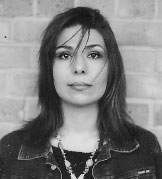 hirin Razavian


