Category: Reports and Open Letters

  • Enough is Enough

    Enough is Enough

    Dear UN Secretary-General, António Guterres

    Enough is Enough – Open letter of Protest to UNGA 77

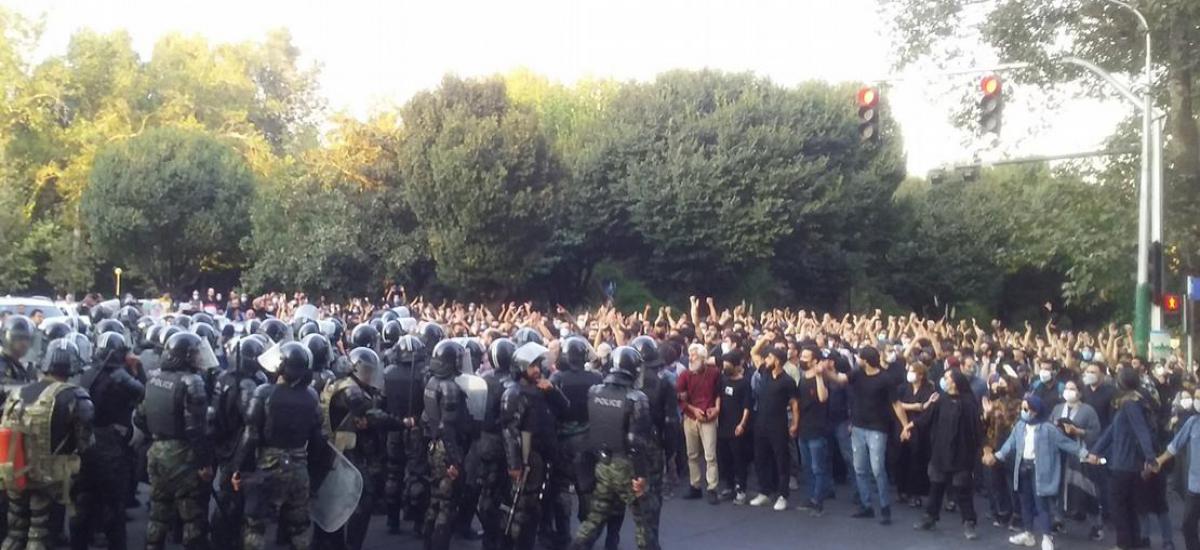
    As you prepare to receive world leaders at the UN annual meeting among them will be the president of the Islamic Republic. This open letter of protest is not only about the unrepresentative nature of his presence but the way the Islamic regime in its entirety views and treats the Iranian nation, in particular, Iranian women.

    The appearance of Iranian women has been a symbol for the Islamic Republic since its inception in 1979. However, since 2005 when the then President Khatami, as the head of the Supreme Council of Cultural Revolution, issued a directive to the coercive apparatus of the State and its affiliates to propagate the culture of hejab and chastity, an open war has been declared on the women of Iran and their place within society.

    From the original discriminatory laws affecting every aspect of women’s lives, to disregarding international obligations, refusal to accede to and ratify CEDAW, to legislating against the presence of women in public spaces and work places, to adversely affecting the physical and mental health  of women by prohibiting birth control and actively encouraging multiple child birth to setting up numerous judicial and extra judicial agencies and patrols to control women’s appearance in public have made criminals of hundreds of thousands of women for non-observance of the hejab rules, long prison terms, forced televised confessions and now culminating in the tragic death of a young twenty two year old woman, Jina (Mahsa) Amini, while in police custody.

    The level of violence targeted at Iranian women in law and in practice is neither tolerable nor acceptable. It can no longer be allowed to continue. The judicial and extra-judicial persecution, ill-treatment and harassment of women must stop.

    The international community has a collective responsibility in sustaining this regime and is complicit in the state sponsored violence perpetrated against women in Iran by condoning the regime’s actions through financial support and EU’s actions in colluding with the regime to evade sanctions through various mechanisms. We ask you as the highest international arbiter and the Secretary General of the United Nations in a spirit of solidarity with the Iranian nation, to defend their rights violated systematically by the entirety of the Islamic regime who are squandering the future of our country Iran.

    Enough is enough.

    Respectfully

    Hossein Ladjevardi

    President – ACI

    Paris – September 20, 2022

  • Forthcoming visit of UNSR to Iran

    Ms Michelle Bachelet,

    UN High Commissioner for Human Rights

    The forthcoming visit of Professor Alena Douhan,

     Special Rapporteur on the negative impact of the unilateral coercive measures to Iran

    7-18 May 2022

    The Islamic Republic has faced sanctions since its inception in 1979. Sanctions throughout the last forty-three years have been used as punitive measures against the regime’s belligerent actions at home, in the region and the wider international community. These economic sanctions have been unilateral and multilateral including those imposed by the UN Security Council. As such, decisions to impose sanctions against the Islamic regime in the last forty-three years have had widespread international support.

    Their effectiveness in deterring the Islamic Republic from state sponsorship of terrorism, development of nuclear weapons and the violation of the human rights of Iranian nationals at home and abroad may be questionable since they have learnt to find like-minded partners in the international community who have assisted them in overcoming sanction restrictions through illegal means. These efforts have created a very lucrative and profitable black economy for state actors and their agents whose interests in fact go hand in hand with the sanctions remaining in place.

    The Islamic Republic has knowingly chosen to not join the Financial Action Task Force (FATF) standards thus effectuating self-imposed sanctions and remains on FATF’s blacklist as of March 4, 2022.  The need to interfere, by whatever means available, in the domestic affairs of neighbouring states to widen the sphere of its political influence, together with the growth of its international money laundering activities, organised crime and financial and political corruption at home will not allow the Islamic Republic to implement the FATF standards. As such, regardless of externally imposed sanctions the Islamic Republic has willingly alienated itself from the international banking system and over two hundred countries and jurisdictions who have implemented the requirements.

    Without a doubt, the Islamic Republic is experiencing a most serious economic and political crisis, but it must look no further than itself. The tragedy of everyday struggles experienced by the majority of eighty-five million Iranians is created by its own hands. If there are US economic sanctions, there are also European Union, United Nations Security Council and other states imposed economic sanctions that no doubt adversely affect the lives of ordinary Iranians. The question is why? Why is it that the people of Iran have had to live under such challenging conditions for over forty years with every single one of their civil, political, economic, social and cultural rights violated. The answer is simple and at home. The solution is not in the hands of the Special Rapporteur on the negative impact of the unilateral coercive measures who has been invited to visit Iran under false pretences.

    Professor Alena Douhan’s mandate requires her to have freedom of movement, freedom on inquiry, confidential and unsupervised contacts with civil society, including non-governmental organizations, private institutions, media, witnesses and other private persons, assurances that no persons who have been in contact with the mandate holder will suffer threats, harassment or punishment for doing so. One look at the number of civil and equal rights activists, women’s rights activists, human rights defenders, environmental activists, members of religious groups, journalists and lawyers who are in prisons throughout Iran is enough to prove that none of the necessary and genuine contact for the fulfilment of her mandate will be realised.

    The Islamic Republic plays its hand well at the Human Rights Council. On one hand it aggressively rejects any reports by other UN mandate holders and refuses them access and on the other hand through creating state sponsored pseudo-NGOs claims sanctions are violating the rights of the Iranian people and extends an invitation for the Special Rapporteur on the negative impact of the unilateral coercive measures.

    This invitation by the Islamic Republic has no intention to show true issues of everyday life and with all due respect to Professor Douhan and the integrity and independence of her office, it is political to manipulate the truth for sanction relief.

    Respectfully

    Hossein Ladjevardi

    President – ACI

    Paris – April 26, 2022

  • Merry Christmas and Happy New Year!

    Merry Christmas and Happy New Year!

    ACI would like to wish the very best wishes for Christmas and the New Year to all Iranian Christians, particularly Christians from a Muslim Background.

  • ACI CONDEMS THE ELECTION OF IR TO CSW

    ACI CONDEMS THE ELECTION OF IR TO CSW

    UN Women

    Commission on the Status of Women

    ACI has been fighting the election of the Islamic Republic of Iran’s election to the Commission on the Status of Women for many years. We are outraged that in 2021 a regime that blatantly and systematically continues to discriminate against women and girls in law and in practice has been elected as a member of a body tasked with “promoting women’s rights, documenting the reality of women’s lives throughout the world, and shaping global standards on gender equality and the empowerment of women”.

    How can a regime that condones honour killings in its Penal Code assess the promotion of women’s rights and shape global standards on gender equality and the empowerment of women?

    ACI reiterates that religion, tradition and cultural identity cannot be used as an excuse for violation of universal rights accorded by international standards.

    Islamic Republic’s membership in CSW is an outright abuse of the UN system and utter contempt for universal values of equality and justice for which many human rights defenders are in detention in Iran today.

  • The Islamic Republic is not and will not be the future of Iran

    The Islamic Republic is not and will not be the future of Iran

    Secretary-General of the United Nations  – Mr António Guterres

    President of the United States – Mr Joe Biden

    President of France – Mr Emanuel Macron

    Chancellor of Germany – Dr Angela Merkel

    Prime Minister on the United Kingdom Boris Johnson

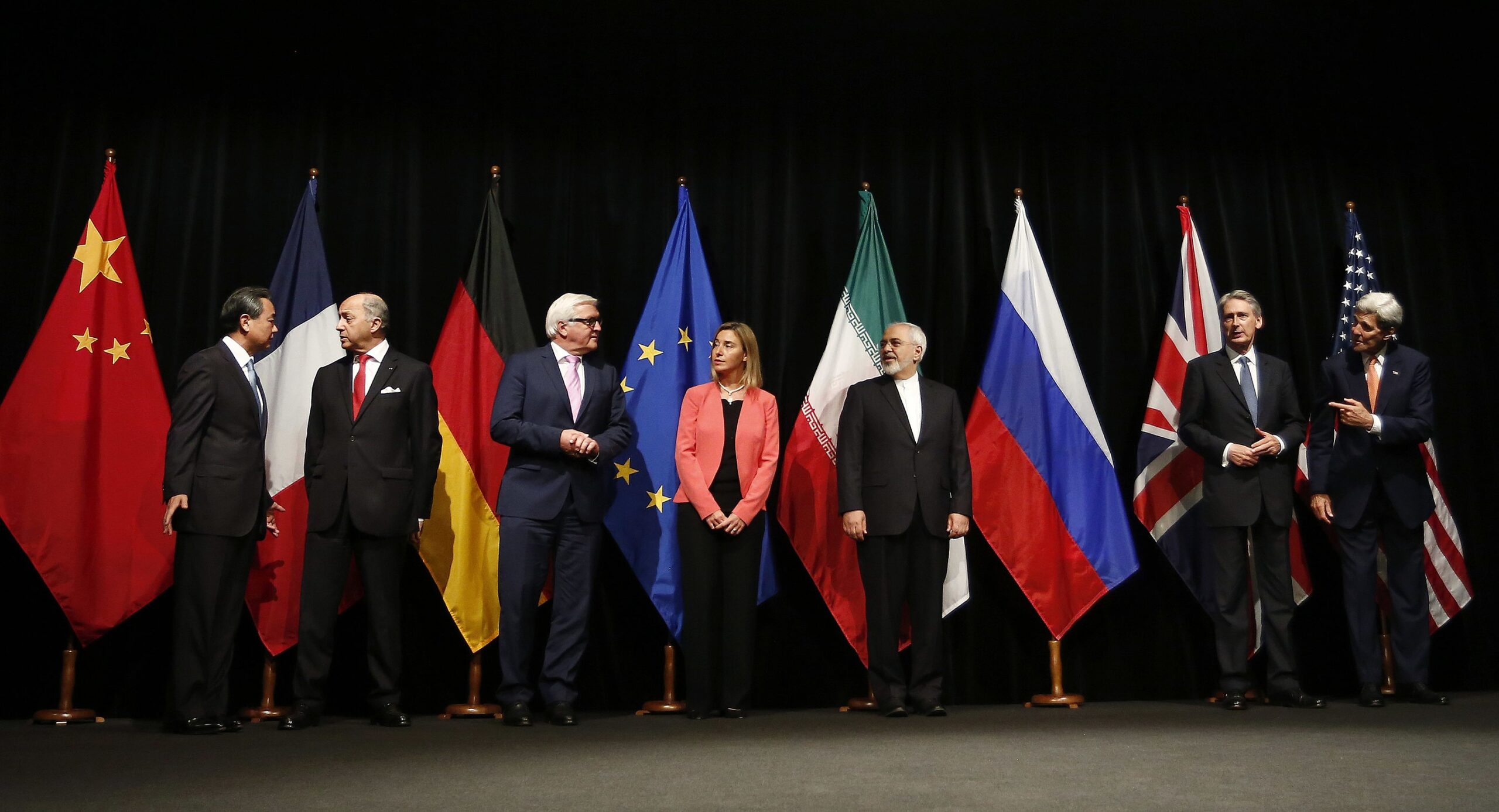
    The recent political changes in the United States can lead to dialogue with the Islamic Republic on the issue of JCPOA and open doors to fresh economic deals with an attractive market such as Iran. However, neither will have any positive impact on the lives of the Iranian people.

    There is no need to refer to discriminatory laws, religious persecution, abject poverty, marginalisation, disillusionment, dissatisfaction, managed factionalism within the regime, state sponsor terrorism that has a global reach or even institutional systematic corruption, embezzlement and money laundering that also adversely impact the global community, instead we would like to highlight the following three cases that have happened in the last few days as indication of the type of regime you are planning to negotiate and trade with, a regime that has no regard for its own people:

    1. A forty two year old woman, Zahra Esmaeili, was the seventeenth person to be executed on 17 February 2021 in Rajaie Shahr prison in Karaj. Witnessing the executions of sixteen people in front of her she suffered a heart attack and according to her lawyer died. Nevertheless she was pulled up on the rope and hanged. She and her two children were arrested for the murder of her abusive husband. She took the blame for the killing and was sentenced to death in 2018.
    2. Thirty three years old prisoner, Behnam Mahjoubi, a member of the persecuted Gonabadi Dervish order was summoned to serve his two year prison term. Following his original arrest in April 2018 he was under the care of a psychiatrist for serious panic disorder. The public medical examiner confirmed and certified that Mahjoubi was not fit to served time. Nevertheless, he was imprisoned at Tehran Evin prison on 20 June 2020. Following promises that he would receive the prescribed medication by his own specialist Mahjoubi stopped his hunger strike on 1 August.  In September 2020, the prison clinic’s doctor pressured him to take sleeping tablets apparently to control his panic disorder, after which he suffered seizures and partial paralysis. During his time in prison until his final transfer to hospital on 13 February 2021, he was taken to a psychiatric unit on multiple occasions where he was ill treated, tortured and injected with chemical substances against his will and without information about what was administered. In a recorded message he told his wife he was stripped, shackled to the bed while they peed on him and performed acts that he was too embarrassed to say. On 13 February 2021 he was finally transferred to hospital and fell into a coma. On 16 February 2021, his friends and family announced his death but that was denied by hospital authorities who kept him artificially breathing on life support system until 22 February when he was finally declared dead.
    3. On 22 February border police shot directly at a group of cross border carriers (sookhtbar) in Saravan located in Balochistan province of Iran. Unofficial figures estimate thirty-seven dead and many more injured. So far, the identity of fifteen of the deceased has been determined. Protest against the mass killings on 23 February was also met with brute force and internet access was cut. Reports of many arrests and injured are coming in as we write this letter.

    The above cases demonstrate where the Islamic Republic is after forty two years. The Islamic regime lies and cheats its own people.

    The Islamic Republic is not and will not be the future of Iran.

    Hossein Ladjevardi

    Founding President – ACI

    Paris – February 23, 2021

  • The EU must not ignore human rights violations in Iran for trade and short term financial gain

    The EU must not ignore human rights violations in Iran for trade and short term financial gain

    Dear Commission Vice President,

    The EU must not ignore human rights violations in Iran for trade and short term financial gain

    In the few weeks since our last open letter to you Sir the Islamic Republic has:

    • Executed over twenty one Baloch minority prisoners among others including a female child offender;
    • Four Arab minority prisoners at risk of imminent execution;
    • Arrested over one hundred Kurdish civil and human rights activists;
    • Published figures indicating that there has been a 23% increase in the registered marriages of 10-14 year old girls (16381 cases) in 2020/21;
    • Prohibited the purchase and administration of COVID 19 vaccines developed and produced by the USA and the United Kingdom thus endangering the lives of Iranians and hindering the global fight against the Coronavirus pandemic;
    • Had one of its diplomats convicted of state sponsored terrorist activities in Europe and another diplomat implicated in an assassination in Turkey;
    • resumed enriching uranium to 20% purity at Fordo facility.

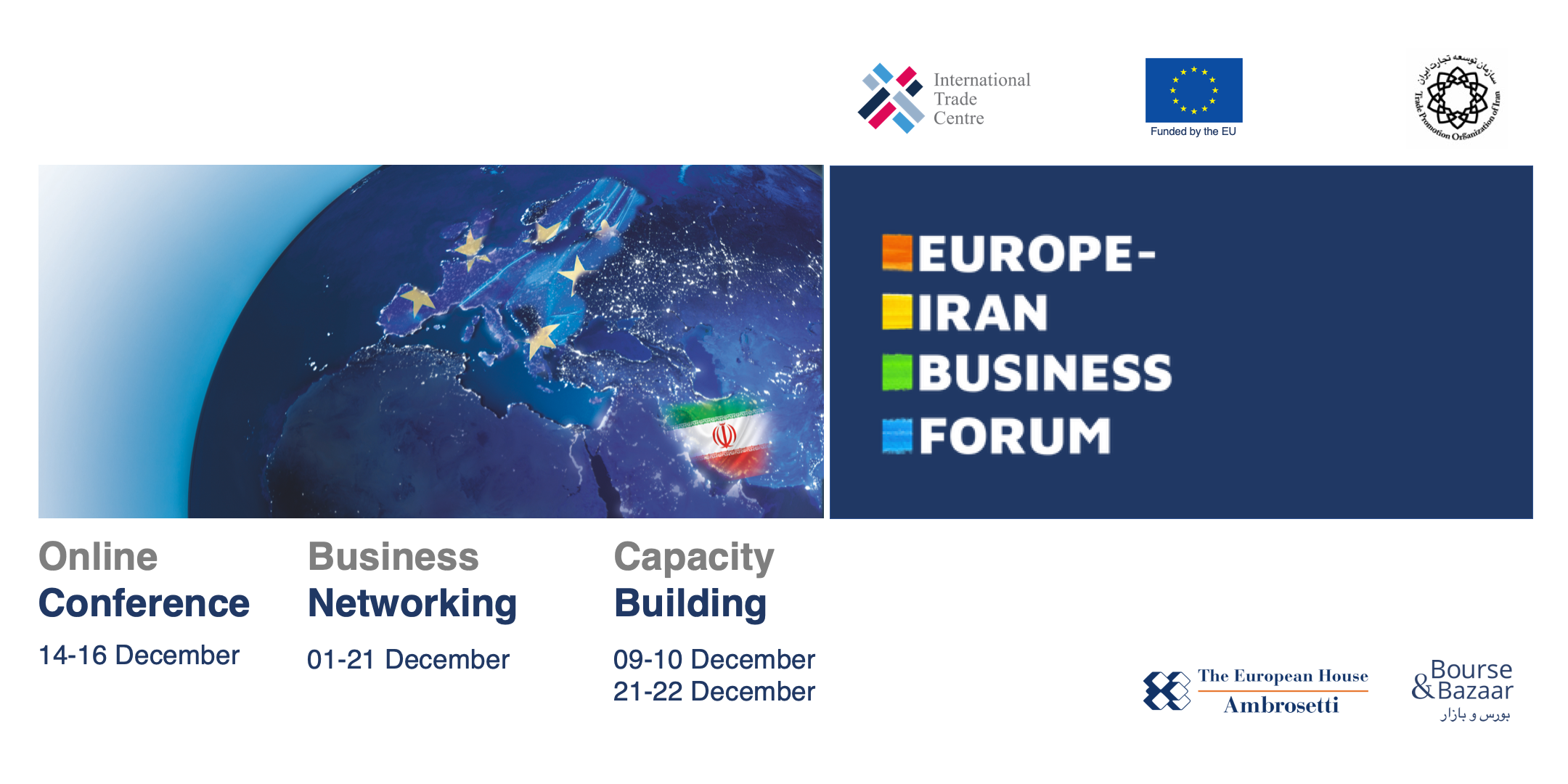
    It is with grave concern that once again we note your name among the participants at the Europe Iran Business Forum in March 2021.

    While we recognise and respect the rights and needs of enterprise and private business in Iran, more than any other group, they are aware of the stranglehold of the Sepah Pasdaran on Iran’s economy which is also riddled with cronyism, nepotism, institutionalised and systematic embezzlement and corruption. The Islamic Republic remains on FATF’s blacklist which it has refused to join because it would impact their money laundering activities and the ability to fund their state sponsored terrorist activities in the region and beyond.

    If, as you have stated Sir, human rights matter we call on you once again that the EU must not ignore ‎

    human rights violations in Iran for trade and short term financial gain. The Islamic Republic is not the future of Iran.

    Respectfully,

    Dr Hossein Ladjevardi

    President – ACI

    February 16, 2021

  • The EU must not ignore human rights violations in Iran for trade and short term financial gain

    The EU must not ignore human rights violations in Iran for trade and short term financial gain

    Josep Borrell Fontelles

    Commission Vice-President in charge of coordinating the external action of the EU

    By email (@JosepBorrellF)

    Dear Commission Vice President,

    The EU must not ignore human rights violations in Iran for trade and short term financial gain

    For forty two years the wealth and assets of the Iranian people have been squandered by a regime that for the duration has benefited greatly through sanction busting and money laundering.

    In November 2019 as access to the internet was cut off an estimated 1500 people were shot and killed by regime’s agents while hundreds of thousands of people rallied nationwide for a better life and against the unacceptable increase in the price of petrol. Since then, the Iranians have experienced one of the darkest years of their lives under Islamic rule. While the media reports daily on trials of corruption and embezzlement on an astronomical scale by the regime’s elite, ordinary Iranians buy bread on credit by putting their ID cards as collateral with local bakers.

    For forty two years the regime has ruled through state sponsored terrorism against its people. Europe’s efforts in maintaining trade – call it dialogue – with one of the biggest violators of rights have not gone unnoticed by the Iranian people. While on one hand on December 10, 2020, the EU launched a new EU Global Human Rights Sanctions Regime declaring ‘more human rights means more freedom, prosperity and peace, for us all’; on the other hand its principles and ambassadors to the Islamic Republic plan to participate in a Europe-Iran Business Forum.

    The EU and the global community are well aware of the extent of violations of rights of the Iranian people at the hands of the Islamic regime. The EU and the global community are well aware of the destructive role the Islamic Republic plays in the region and the wider international community through its proxies.

    The question remains Sir, how are you going to be more “assertive” and what actions will the EU take to defend the rights of the Iranian people when their civil, political, economic, social and cultural rights have been so brazenly violated? History has shown that violent dictatorships such as the Islamic Republic will not last what will your answer be to the Iranian people then?

    ACI calls on the international community, including member states of the EU, to not standby in silence. We call on you to not trade the future and the rights of Iranian people for short term economic gain.

    Respectfully,

    Dr Hossein Ladjevardi

    President – ACI

  • Iran Protests: the use of lethal force / shutting down of the internet

    Iran Protests: the use of lethal force / shutting down of the internet

    European Commission President 

    Jean-Claude Juncker 

    European Commission 
    Rue de la Loi / Wetstraat 200 
    1049 Brussels 

    Tuesday, November 19, 2019 

    Dear President Juncker 

    Iran Protests: the use of lethal force / shutting down of the internet 

    As I am sure you are aware, since Friday 15 November 2019 nationwide demonstrations are taking place in Iran sparked by the sudden increase in petrol prices of 300%. Peaceful demonstrations turned violent when the security forces used tear gas and live ammunition to disperse crowds. Unconfirmed reports put the number of dead at around two hundred, further three thousand people injured and over one thousand arrested since Friday.  The Revolutionary Guards have also threatened ‘decisive’ force against protesters and ongoing demonstrations. The indiscriminate use of lethal force was followed by the shutting down of internet on Saturday, cutting off means of communication nationally and internationally.  This attempt at news blackout is of grave concern and indicates on going protests and further brutal crackdown. At the time of writing Iran remains offline. 

    The ongoing protests in Iran are similar in nature to recent protest in Iraq and Lebanon in rejecting the political system as a whole. In Iraq and Lebanon protestors demand an end to Islamic regime’s interference in their internal affairs and in Iran the slogans reflect the frustration of Iranian people in the Islamic regime’s political and financial intervention in regional affairs. However, as always, the regime attributes domestic unrest to foreign intervention.  

    Almost 40% of Iran’s population is below forty years of age; a quarter of the population (over twenty million) is less than fifteen years old. The present economic crisis in Iran, unemployment, inflation and poverty may be affected by the sanctions but were not created by them. The mismanagement of Iran’s affairs in the last forty years has created an unjust, unequal and fractured society leaving little or no room for any hope for the future of Iran’s young population. Since the 1979 Islamic Revolution, the Revolutionary Guards’ stranglehold over the nation’s economy has tightened, numerous multi-million-dollar ‘charitable organizations’ engaged in trade and construction owned by the regime’s rulers and their dependants are exempt from paying any tax, corruption is endemic in the ranks and file of the regime and its organizations and institutions – one of the reasons FATF cannot be ratified by the regime, and huge chunks of the nation’s income is paid to maintain Islamic religious organizations and institutions leaving a small proportion of the country’s income for the people that together with the devaluation of the national currency and inflation adversely impact the income and quality of life of the majority of Iranians. The sudden increase in the price of petrol affects the most vulnerable of the society. 

    It is inconceivable that the regime did not foresee the kind of nationwide protest and demonstrations that such a decision would create. Having learnt from previous demonstrations, without a shadow of a doubt, the security forces were ready and the order to use lethal force against the most vulnerable of the Iranians was sanctioned at the highest level making the deaths premeditated murder at the hands of the regime’s forces. 

    In view of the fact that the Islamic Republic of Iran desperately needs EU support, we ask you to rise to the defense of the Iranian people and offer them international protection. We demand: 

    • an immediate end to the use of lethal force, sharp shooters and violent crackdown of unarmed protestors; 
    • An immediate end to the internet shutdown that is hindering free flow of information; Iranians must be able to access the Internet in order to exercise and enjoy their rights to freedom of expression and opinion; State sponsored murder is taking place under the dark veil of news blackout. 
    • An independent investigation into the number of the dead and injured as a result of unjustifiable use of lethal force. Based on previous experience, many injured are not seeking medical attention in hospitals fearing identification and arrest further endangering their life; 
    • An independent investigation into the number of those arrested and detained and the conditions under which they are being kept. In view of deaths in custody following the 2017/8 nationwide protests and prevalence of the use of torture and degrading inhuman treatment to extract false confessions in official and unofficial detention centers the situation of those arrested is of urgent and grave concern. 

    Iran is rich in its human and natural resources. With proper and careful management of these resources, Iran and Iranians will be a positive, productive and contributing member of the international community. This is our just and rightful demand.  

    Dr Hossein Ladjevardi 

    President – ACI 

  • Repression of those seeking truth and justice for 1980s killings needs to stop

    Repression of those seeking truth and justice for 1980s killings needs to stop

    JOINT PUBLIC STATEMENT

    The Iranian authorities should stop the harassment, intimidation and prosecution of human rights defenders seeking truth and justice on behalf of individuals who were summarily executed or forcibly disappeared during the 1980s and their families, said 20 human rights groups.

    Over the past few months, several human rights defenders, including Mansoureh Behkish, Maryam AkbariMonfared and Raheleh Rahemipour, have been subjected to harassment, reprisals or prosecution on vague national security-related charges for their peaceful efforts to learn the fate and whereabouts of their loved ones. The persecution signals renewed efforts by the authorities to suppress the struggle that has been ongoing for over three decades to reveal the truth about the gross human rights violations that were perpetrated by the Iranian authorities during the 1980s, including the extrajudicial executions of several thousands in 1988 and their burial in unmarked mass graves.

    The latest wave of persecution of those seeking truth and justice appears to have been triggered by the release in August 2016 of an audio recording of a meeting in 1988 in which senior officials are heard discussing and defending the details of their plans to carry out the 1988 mass executions.

    The audio recording has sent shockwaves across the country and prompted the authorities to admit for the first time that the mass killings of 1988 were planned at the highest levels of government. Ahmad Montazeri, the son of the late Ayatollah Hossein Ali Montazeri, who was at that time the Deputy Supreme Leader, has since been sentenced to imprisonment for posting the audio file on his father’s website.

    The undersigned human rights organizations are deeply concerned about these developments and call on the Iranian authorities to quash the convictions and sentences issued against Maryam Akbari-Monfared, Raheleh Rahemipour and Ahmad Montazeri; close the criminal case opened against Mansoureh Behkish; and immediately and unconditionally release Maryam Akbari-Monfared. The authorities should also ensure a safe and enabling environment in which it is possible for human rights defenders, including family members, to seek information about the mass killings, express themselves without any fear of persecution, and defend the rights to truth, justice and reparation, as a first step to ending impunity in Iran.

    The undersigned human rights organizations urge the Iranian authorities to stop their attempts to silence human rights defenders and others seeking to shed light on past atrocities. Instead, they should respect their obligations under international human rights law to carry out thorough and impartial investigations into the serious human rights violations committed in the 1980s, including the 1988 extrajudicial executions, and ensure the rights to truth, justice and reparations for the victims and their families.

    Cases of individuals targeted Individuals who have been targeted in recent months for seeking truth and justice include human rights defenders Mansoureh Behkish, Maryam Akbari-Monfared and Raheleh Rahemipour, and the son of the late Ayatollah Hossein Ali Montazeri, Ahmad Montazeri.

    Mansoureh Behkish was informed on 29 October 2016 that she had been charged with “gathering and colluding to commit crimes against national security” and “spreading propaganda against the system”. The charges stem solely from her peaceful human rights work to seek truth and justice, including her work with the Mothers and Families of Khavaran, a group comprised of mothers and other family members of political prisoners summarily executed during the 1980s, and from holding commemorative gatherings at her home and going with other families to Khavaran, a deserted mass gravesite in the south of Tehran where Iranian authorities buried some of the thousands of political prisoners extrajudicially executed in the 1980s, including Mansoureh Behkish’s sister, four brothers and brother-in-law.

    Maryam Akbari-Monfared has faced reprisals since October 2016, when she filed a formal complaint from inside prison requesting an official investigation into the mass executions of political prisoners in the 1980s, including her brother and sister; the location of the graves where their bodies were buried; and the identity of the perpetrators involved. Officials have cancelled her medical care arrangements for her rheumatoid arthritis and thyroid problems and restricted visits from her family, including her three children, in retaliation. The prosecution authorities have also threatened her with new charges. According to her family, the Associate Prosecutor of Evin prison has said: “What does she want to know? Those who executed her brothers and sister have either died or become elderly and her brothers and sister are probably buried in Khavaran… Such complaints are of no use. They would only make her conditions in prison more difficult and impede her release or access to [prison] leave.”

    Maryam Akbari-Monfared is serving a 15-year sentence in Tehran’s Evin prison on several charges, including “enmity against God” (moharebeh), after a May 2010 sentencing. Amnesty International’s research indicates that her conviction was based on the fact that she had made several phone calls to her siblings, who are members of the banned opposition group known as the People’s Mojahedin Organization of Iran (PMOI), and had once visited them near the PMOI-run Camp Ashraf in Iraq. She has consistently denied her alleged membership in the PMOI. She was never provided with a written judgement, setting out the evidence and legal reasoning relied upon to convict her. Her husband has said that during her trial session, the judge told her “she was paying for the activities of her brother and sister with the PMOI”. Her appeals were dismissed in a summary fashion with no reasons provided. Her request for judicial review is currently pending before Iran’s Supreme Court.

    Raheleh Rahemipour was sentenced to one year’s imprisonment in January 2017 after Branch 15 of the Revolutionary Court in Tehran convicted her of “spreading propaganda against the system” for her peaceful efforts to learn the truth about the whereabouts of her brother Hossein Rahemipour, who was summarily executed in 1984, and his baby daughter Golrou Rahemipour, who was forcibly disappeared 15 days after she was born in Evin prison. The prison authorities took the baby away, ostensibly for medical tests, but never returned her to her mother. The family was subsequently told that baby Golrou Rahemipour had died, but the authorities never provided a death certificate, information about her death, or where she had been buried.

    The court verdict issued against Raheleh Rahemipour cites her media interviews, her participation in peaceful gatherings while holding a sign that read “You killed my brother! What did you do to his daughter?”, and her signature on a petition in support of demands for truth and justice for those summarily executed as “evidence” of acting against national security. In May 2016, the UN Working Group on Enforced or Involuntary Disappearances sent a communication to the Iranian authorities with regard to the case of Raheleh Rahemipour’s brother and niece. The authorities had not responded by the end of February 2017. Raheleh Rahemipour remains at liberty, awaiting the outcome of her appeal.

    Ahmad Montazeri, the son of the late Ayatollah Hossein Ali Montazeri, was sentenced to 21 years’ imprisonment in November 2016 after the Special Court of Clergy convicted him of several charges including “spreading propaganda against the system” and “revealing plans, secrets or decisions regarding the state’s domestic or foreign policies… in a manner amounting to espionage”. The court ruled that in light of Ahmad Montazeri’s family history and lack of a criminal record, he only needs to serve six years of the sentence. Ahmad Montazeri’s conviction stems from the publication of the audio file on his father’s website, which the authorities said advanced the interests of the enemies of the Islamic Revolution, and the media interviews that he subsequently gave to media outlets based outside Iran. Ahmad Montazeri was imprisoned on 22 February 2017 to begin serving his sentence, but was granted temporary prison leave the next day. He was informed several days later that his prison sentence had been suspended.

    Background

    Ayatollah Hossein Ali Montazeri was once in line to become the late Supreme Leader Ayatollah Ruhollah Khomeini’s successor but he lost his status after he voiced strong opposition to the 1988 mass killings. In the audio file released by his son in August 2016, Ayatollah Hossein Ali Montazeri is heard saying: “The greatest crime committed in the Islamic Republic, for which history will condemn us, has been committed at your hands and, in the future, your names will go down in history as criminals.” Under international law, individuals against whom there is evidence of criminal responsibility for serious international crimes, including those with command responsibility, should be prosecuted and tried before a court established by law and with all necessary procedural guarantees, in accordance with international fair trial standards. If found guilty, they should be punished with appropriate penalties, which take into account the grave nature of the crimes but which do not include the death penalty or corporal punishments.

    Signatories:

    1. Abdorrahman Boroumand Foundation
    2. All Human Rights for All in Iran
    3. Amnesty International
    4. Article 19
    5. Association des Chercheurs Iraniens – ACI
    6. Association for the Human Rights of Azerbaijani People in Iran(AHRAZ)
    7. Association of Human Rights in Kurdistan of Iran-Geneva – KMMK-G
    8. Front Line Defenders
    9. Human Rights Activists in Iran
    10. Human Rights Watch
    11. Insight Iran
    12. International Campaign for Human Rights in Iran
    13. Iran Human Rights
    14. Justice for Iran
    15. Kurdistan Human Rights Network
    16. Small Media
    17. The Baloch Activists Campaign
    18. United4Iran
    19. Universal Tolerance
    20. Women Living


  • Flags of Identity – Flags of State

    Flags of Identity – Flags of State

    Ref:        229/M/533

    Re:         Flags of Identity – Flags of State

    Dear Secretary Kerry

    Following the 2015 Freestyle Wrestling World Cup in Los Angeles I have become aware that Iranian spectators were prohibited from carrying their flags and am writing to express concern about the repeat of such decision for any future sports events.

    The flag of Iranian national unity and identity has carried the emblem of the lion and the rising sun for over one thousand years. Although we are fully aware of the international recognition of the present ‘official flag’, we would like to remind you of Iran’s unique position:  not only many of the near five million Iranians dispersed globally (of which a high proportion have settled in the United States) but many Iranians inside Iran recognise the lion and sun as a symbol of national identity. With this in mind, we find it incomprehensible that ‘the land of free’ will prohibit its citizens from carrying a symbol of their national identity into a sports stadium while at the same time we witness the valuable efforts the organisers to ensure the attendance of the very same Iranians at such events.

    Such decisions and actions raise the following key questions:

    • Are the organisers aware of the social repercussions and international media coverage that the violations of the first amendment of the United States Bill of rights will have?
    • Is it not that such action will only be interpreted as appeasing the Islamic Republic which can only lead to negative sentiments amongst Iranians against the United States?
    • Is it not that the prohibition of carrying a symbol of national identity for many Iranians is against the spirit of article 6 of the Olympic Charter?
    • Are the organisers aware that the attendance and celebrations of Iranians – of whatever persuasion they may be – at such events has nothing to do with support for the Islamic Republic but everything to do with national pride and credibility?


    In conclusion and to reiterate the issue here is not one of an ‘official flag’ but of a flag that has great socio-cultural relevance and value amongst many Iranians.


    Sir, ACI awaits your response with the hope that any such prohibition will be lifted and Iranians may carry their flag of choice into the sports stadium.


    Dr Hossein Ladjevardi

    President – ACI