Category: Child Rights

  • Executive Summary:  Baluchistan: Dignity, Freedom, and Justice for All

    Executive Summary: Baluchistan: Dignity, Freedom, and Justice for All

    Date: December 9, 2023
    Venue: London School of Economics (LSE)

    On December 9, 2023, ACI hosted a one-day seminar titled ‘Baluchistan: Dignity, Freedom, and Justice for All,’ addressing critical human rights issues and systemic injustices in the Baluchistan region. The seminar highlighted the challenges faced by the Iranian Baloch people over the past four decades, including discrimination, poverty, and violations of their religious, ethnic, and linguistic rights. Additionally, the seminar addressed the disproportionate use of the death penalty and the continued use of lethal force against unarmed civilians, raising serious concerns regarding crimes against humanity under the ICC Statute.

    The event coincided with the 75th anniversary of the Convention on the Prevention and Punishment of the Crime of Genocide, marking a significant occasion to reflect on the importance of human rights and justice for vulnerable populations like the Baloch people.

    Key Themes and Discussions:

    1. Discrimination, Poverty, and Human Rights
      The seminar delved into the historical and ongoing challenges facing the Baloch people, focusing on issues such as multidimensional deprivation, ethnic and linguistic discrimination, and violations of basic human rights. Testimonies and discussions illuminated the severe socio-economic conditions in the region, including lack of access to education, employment, and healthcare.
    2. Systematic Use of Lethal Force and the Death Penalty
      One of the key topics of the seminar was the excessive use of lethal force against unarmed civilians and the high rates of executions in Baluchistan, with many participants emphasizing the human cost of these practices. Discussions explored how these acts may constitute crimes against humanity under international law, particularly in the context of the International Criminal Court (ICC) Statute.
    3. Testimonies and Personal Accounts
      Human rights defenders, activists, and experts shared powerful testimonies that highlighted the personal and collective suffering of the Baloch people. Among the poignant speakers were Fariba Baloch, a human rights defender, and Mohsen Borhanzehi, who recounted the events surrounding the Maki Mosque massacre in 2022. These first-hand accounts underscored the human toll of state-sanctioned violence and systemic injustice in the region.
    4. International Perspectives and Legal Frameworks
      Experts such as Professor Payam Akhavan, Professor of International Law and Special Adviser on Genocide, and Professor Javaid Rehman, UN Special Rapporteur on Human Rights in Iran, provided a legal framework for understanding the situation in Baluchistan. They analyzed how international standards and state responsibilities intersect with the ongoing violations in the region and discussed potential avenues for accountability.
    5. The Right to Education
      A significant portion of the seminar focused on the denial of education and economic opportunity for the Baloch people, particularly women and children. Speakers like Ms. Shahin Nosrati and Laebe Aram highlighted the intersectionality of cultural traditions, economic deprivation, and the lack of educational access, particularly for Baloch women. The importance of education in breaking cycles of poverty and advancing human rights was emphasized as a vital area for future advocacy.
    6. Future Prospects for Balochistan
      Panel discussions also considered potential paths forward for the region, including the role of international advocacy, legal frameworks, and grassroots efforts in addressing the systemic issues faced by the Baloch people. Activists, political analysts, and journalists underscored the need for broader international attention and intervention to ensure justice, dignity, and freedom for the people of Baluchistan.

    Closing Remarks:

    The seminar concluded with an emphasis on the importance of international solidarity, legal accountability, and the need for sustained efforts to address the grave human rights violations in Baluchistan. Several messages from prominent figures reinforced the critical need for a focused global response to ensure the protection of the rights of the Baloch people, particularly in terms of education, economic opportunity, and the prevention of violence.

    In conclusion, the seminar served as a crucial platform for raising awareness, providing testimonies, and offering legal insights into the systemic injustices faced by the Baloch people in Baluchistan, and the need for urgent action to protect their dignity, freedom, and rights.

    ——————————————————

    Film: Panel 1 – Morning session (English)

    • Opening Remarks and Welcome – Dr Hossein Ladjevardi (Persian)
    • Dr Fereydoon Rahmani – Associate Professor, Programme leader – Human Rights & Equity Studies ‘Comparative look: international standards, State responsibilities and the situation in Balochistan’
    • Ms Sabah Bandouie -‘Balochistan Human Rights Group’ UN representative ‘44 years of intentional systematic injustice’
    • Fariba Baloch – Human Rights Defeder: ‘Testimony of a mother, a woman and a Baloch human rights defender’
    • Dr Sima Sabet – Iran Expert: ‘A Strategic look to Balochistan’

    Film: Panel 2 – Morning Session (English)

    • Hon. Bijan R. Kian – Former senior official of the United States Government: ‘Intentional economic development deprivation of specific regions in Iran linked with international narcotics trafficking’
    • Nasser Boladai  – Chairperson ‘Baluchistan People’s Party’ : ‘Crimes against humanity or inconsequential killings?’
    • Professor Payam Akhavan – Professor of International Law, Special Adviser on Genocide, ICC (TBC): ‘What are crimes against humanity?’
    • Professor Javaid Rehman – United Nations Special Rapporteur on the situation of human rights in Iran: ‘Balochistan and human rights’

    Panel 2 –  14:00-18:00 (Persian)

    Prospects for the future: Wider dimensions of poverty, multidimensional deprivation and discrimination based on religious, ethnic, and linguistic rights as told by activists and human rights defenders with special emphasis on the rights to education:

    • Dr Fereydoon Rahmani – Associate Professor, Programme leader: Human Rights & Equity Studies, ‘Comparative look: international standards, State responsibilities and the situation in Balochistan’
    • Mohsen Borhanzehi – Baloch Human Rights Defender: Testimonies from Iran: Maki Mosque 30 September 2022
    • Ms Fariba Baloch – Baloch Human Rights defender: Testimony of a human rights defender
    • Dr Roya Boroumand – Boroumand Foundation: Extra Judicial Killings and Executions
    • Ms Fariba Borhanzehi – Baloch child rights defender: Story of two little children – Hangol and Morid
    • Ms Shahin Nosrati – Writer, Women’s right defender: Women: Inequitable access to education and employment opportunities
    • Laebe Aram – Writer: ‘Intersectionality of culture, tradition and economic deprivation impacting the fate of Baloch women‘
    • Dr Abdolsatar Doshoki – political analyst: ‘Inequitable access to higher education’
    • Rahim Bandouie – ‘Baluchistan People’s Party’: ‘Economic discrimination and intentional poverty’
    • Masoud Raeisi – Journalist – ‘Poverty, multi-dimensional deprivation and prospects for the future‘
    • Messages from:
    • Dr Saeed Paivandi: Importance of education in building the future
    • Dr Rezvan Moghadam:  Stop Honour Killings!
    • Shirin Razavian: A poem for Balochistan
  • ‘Baluchistan’: Dignity, Freedom, and Justice for All

    ‘Baluchistan’: Dignity, Freedom, and Justice for All

    The situation of civil, political, economic, social, cultural rights of the Iranian Baloch people

    December 9, 2023 – Marshall Building, LSE – London

    ACI is holding its fifty second international conference dedicated to the plight of the Iranian Baloch People to coincide with the seventy fifth anniversary of UN Human Rights Day with its theme of ‘Dignity, Freedom and Justice for All’.

    This one day seminar proposes to discuss the wider dimensions of poverty, multidimensional deprivation and discrimination based on religious, ethnic and linguistic rights to give context to the grievances and challenges facing the Iranian Baloch People in over four decades. Along with the issues concerning discrimination, poverty and human rights, the question we aim to discuss further is the continuous disproportionate use of the death penalty and the systematic use of lethal force against unarmed civilian population leading to many deaths in the Baluchistan region with regard to the ICC Statute and crimes against humanity. December 9, 2023, also marks the 75th anniversary of the landmark Convention on the Prevention and Punishment of the Crime of Genocide (Genocide Convention). This was the first human rights treaty adopted by the General Assembly.

    Panel 1 – 10:00 – 13:00 (ENGLISH)

    Along with the issues concerning discrimination, poverty and human rights, the question we aim to discuss further is the continuous disproportionate use of the death penalty and the systematic use of lethal force against unarmed civilian population leading to many deaths in the Baluchistan region with regard to the ICC Statute and crimes against humanity:

    Film: Panel 1 – Morning session (English)

    • Opening Remarks and Welcome – Dr Hossein Ladjevardi (Persian)
    • Dr Fereydoon Rahmani – Associate Professor, Programme leader – Human Rights & Equity Studies ‘Comparative look: international standards, State responsibilities and the situation in Balochistan’
    • Ms Sabah Bandouie -‘Balochistan Human Rights Group’ UN representative ‘44 years of intentional systematic injustice’
    • Fariba Baloch – Human Rights Defeder: ‘Testimony of a mother, a woman and a Baloch human rights defender’
    • Dr Sima Sabet – Iran Expert: ‘A Strategic look to Balochistan’

    Film: Panel 2 – Morning Session (English)

    • Hon. Bijan R. Kian – Former senior official of the United States Government: ‘Intentional economic development deprivation of specific regions in Iran linked with international narcotics trafficking’
    • Nasser Boladai  – Chairperson ‘Baluchistan People’s Party’ : ‘Crimes against humanity or inconsequential killings?’
    • Professor Payam Akhavan – Professor of International Law, Special Adviser on Genocide, ICC (TBC): ‘What are crimes against humanity?’
    • Professor Javaid Rehman – United Nations Special Rapporteur on the situation of human rights in Iran: ‘Balochistan and human rights’

    Panel 2 –  14:00-18:00 (Persian)

    Prospects for the future: Wider dimensions of poverty, multidimensional deprivation and discrimination based on religious, ethnic, and linguistic rights as told by activists and human rights defenders with special emphasis on the rights to education:

    • Dr Fereydoon Rahmani – Associate Professor, Programme leader: Human Rights & Equity Studies, ‘Comparative look: international standards, State responsibilities and the situation in Balochistan’
    • Mohsen Borhanzehi – Baloch Human Rights Defender: Testimonies from Iran: Maki Mosque 30 September 2022
    • Ms Fariba Baloch – Baloch Human Rights defender: Testimony of a human rights defender
    • Dr Roya Boroumand – Boroumand Foundation: Extra Judicial Killings and Executions
    • Ms Fariba Borhanzehi – Baloch child rights defender: Story of two little children – Hangol and Morid
    • Ms Shahin Nosrati – Writer, Women’s right defender: Women: Inequitable access to education and employment opportunities
    • Laebe Aram – Writer: ‘Intersectionality of culture, tradition and economic deprivation impacting the fate of Baloch women‘
    • Dr Abdolsatar Doshoki – political analyst: ‘Inequitable access to higher education’
    • Rahim Bandouie – ‘Baluchistan People’s Party’: ‘Economic discrimination and intentional poverty’
    • Masoud Raeisi – Journalist – ‘Poverty, multi-dimensional deprivation and prospects for the future‘
    • Messages from:

    Organised by Association des Chercheurs Iraniens (ACI) in collaboration with Azadi Network and Balochistan Human Rights Group

  • ‘Balochistan’ – ‘Dignity, Freedom, and Justice for All’

    Press Release : ‘Tehran funds Hamas while starving children at home’.

    The situation of civil, political, economic, social, cultural rights of the Iranian Baloch People

    Saturday 9 December 2023 – 10:00-13:00 English, 14:00-18:00 Persian

    Marshall Theatre, The Marshall Building, LSE, 44 Lincoln’s Inn Fields, London WC2A 3LY

    (On Saturday the Entrance is accessed through Portugal Street opposite the LSE Library)

    SPEAKERS LIST

    One day seminar in London examines possible ‘crimes against humanity’ committed against Iranian Baloch people on ‘Zahedan’s Bloody Friday’ with UN rights experts and Baloch minority activists and human rights defenders.

    While with the Israel-Gaza war, Iran’s prioritising of funding for terrorism is headlining international news, at home the latest annual budget keeps the Balochistan province as the most deprived and under invested province in Iran.

    The seminar will hear from Baloch activists who accuse the regime of intentional policies of keeping the region underdeveloped and deprived to further its aim of illicit gain from drugs smuggling. The ingress point for Billions of dollars in street value of narcotics is 565 miles of the province’s common border with Pakistan and 572 miles of common border with Afghanistan.

    The morning panel (10am-1pm) in English, will hear from Prof Javaid Rehman the UN Special Rapporteur on the situation of human rights in Iran who has said that the “scale and gravity” of violations committed by Iranian authorities during the ‘Women Life Freedom’ movement in Balochistan pointed to “the possible commission of international crimes, notably the crimes against humanity of murder, imprisonment, enforced disappearances, torture, rape and sexual violence, and persecution”. Prof Payam Akhavan, Professor of International Law, Special Adviser on Genocide, International Criminal Court will discuss the recent events. The panel will hear firsthand accounts of the plight of families whose loved ones have been executed, killed and/or sustained life changing injuries during the ‘Bloody Friday’ on September 30, 2023.

    The afternoon panel (2-6pm) in Persian, examines the wider dimensions of religious and ethnic persecution and violence against the Iranian Baloch people through the regime’s economic and security policies. Poverty is deep-rooted. According to a Baloch MP in April this year ‘deep rooted poverty in the region means that people can only afford to eat subsidised bread and provisions for that are even failing to meet the demands’. Reports on the region’s inequitable access to education, housing, healthcare, employment, and crumbling infrastructure will examine their impact on the rights of women and children in particular.

    Looking to the future, the seminar will conclude with its call for action and recommendations. Ends.

    Further information

    Organised by Association des Chercheurs Iraniens (ACI) in collaboration with Azadi Network and Balochistan Human Rights Group

    Background information:

    Sistan and Balochistan, the third largest of Iran’s 31 provinces, sits in the southeast corner of Iran with access to the waters of the Persian Gulf. It borders Pakistan and Afghanistan.

    Balochistan has 3.3 million inhabitants. It is also home to over 700000 Afghan refugees. It has had one of the highest rates of population growth in Iran with 67% of the population below 30 years of age. 28% of this group are between 15-30 years of age. This young population presents huge potential for future growth if planned for correctly while simultaneously creating real problems for the regime that has so far failed to meet the demands and aspirations of the people.

    The Balochistan region in the most deprived province in Iran according to the Islamic Republic’s own figures. It has the worst access to education, healthcare, housing, employment opportunity. Over 60% of the population live under poverty line.

    At least 274 Baluch people have been executed for drug-related charges since 2021, 40% of all drug executions in that time period. This is while they only make up 2-5% of Iran’s population[1].

    On 30 September 2022, during Friday Prayers in Zahedan the regime’s forces opened fire on unarmed civilians. According to Amnesty International at least 82 Baluchi protesters and bystanders were killed in bloody crackdown. ‘Iranian security forces unlawfully killed at least 66 people, including children, and injured hundreds of others after firing live ammunition, metal pellets and teargas at protesters, bystanders and worshippers during a violent crackdown after Friday prayers on 30 September in Zahedan, Sistan and Baluchistan province, Amnesty International said today. Since then, another 16 people were killed in separate incidents in Zahedan amid an ongoing clampdown on protests. Evidence gathered from activists, victims’ families, eyewitness testimonies, and images and videos of the protests suggest the real death toll from Zahedan is likely to be higher.’[2]

    Poor water management and changing climate, have created draughts and debilitating dust storms which have severely impacted the lives of the indigenous people of the region[3].


    [1] https://iranhr.net/en/reports/35/

    [2] https://www.amnesty.org/en/latest/news/2022/10/iran-at-least-82-baluchi-protesters-and-bystanders-killed-in-bloody-crackdown/

    [3] https://www.nationalgeographic.com/environment/article/drought-climate-change-turn-iran-sistan-and-baluchestan-into-dust-bowl

  • ‘Balochistan’: ‘Dignity, Freedom, and Justice for All’

    ‘Balochistan’: ‘Dignity, Freedom, and Justice for All’

    The situation of civil, political, economic, social, cultural rights

    of the Iranian Baloch People

    Saturday 9 December 2023 – Central London

    Space is limited so please register
    List of Speakers

    ACI would like to announce ACI its fifty second international conference dedicated to the plight of the Iranian Baloch People to coincide with the seventy fifth anniversary of UN Human Rights Day with its theme of ‘Dignity, Freedom and Justice for All’.

    This one day seminar proposes to discuss the wider dimensions of poverty, multidimensional deprivation and discrimination based on religious, ethnic and linguistic rights to give context to the grievances and challenges facing the Iranian Baloch People in over four decades. Along with the issues concerning discrimination, poverty and human rights, the question we aim to discuss further is the continuous disproportionate use of the death penalty and the systematic use of lethal force against unarmed civilian population leading to many deaths in the Baluchistan region with regard to the ICC Statute and crimes against humanity.

    Speakers include Dr Javaid Rehman United Nations Special Rapporteur on the situation of human rights in the Islamic Republic of Iran who will examine the present day situation of the Iranian Baloch people alongside other international experts, Baloch activists and human rights defenders.

    Panel 1 (English) – 10:00 – 13:00

    Along with the issues concerning discrimination, poverty and human rights, the question we aim to discuss further is the continuous disproportionate use of the death penalty and the systematic use of lethal force against unarmed civilian population leading to many deaths in the Baluchistan region with regard to the ICC Statute and crimes against humanity

    Panel 2 (Persian) –  14:00-18:00

    Prospects for the future: Wider dimensions of poverty, multidimensional deprivation and discrimination based on religious, ethnic and linguistic rights as told by activists and human rights defenders

    Subjects for consideration in Persian and English include but are not limited to:

    • Extreme poverty and human rights
      • Unemployment and employment opportunities
      • Housing rights
      • Access to healthcare
    • Rights of the Child:
      • access to education
      • child marriage
      • child labour
      • child soldier
    • Minority rights: Equality and equity
      • Women’s rights
      • Religious freedoms
      • Ethnic and linguistic rights
    • Civil and political rights
      • Brutal treatment of civilian population leading to deaths: ‘Crimes Against Humanity’?
      • Illegal detention, poor prison conditions, unfair trials,
      • Disproportionate and increasing use of the death penalty.
      • Political participation/office

    This conference is convened in collaboration with Azadi Network and Balochistan Human Rights Group

  • ‘The Revolution is not televised’

    ‘The Revolution is not televised’

    #Qatar2022 Group B: Iran, England, Wales, USA


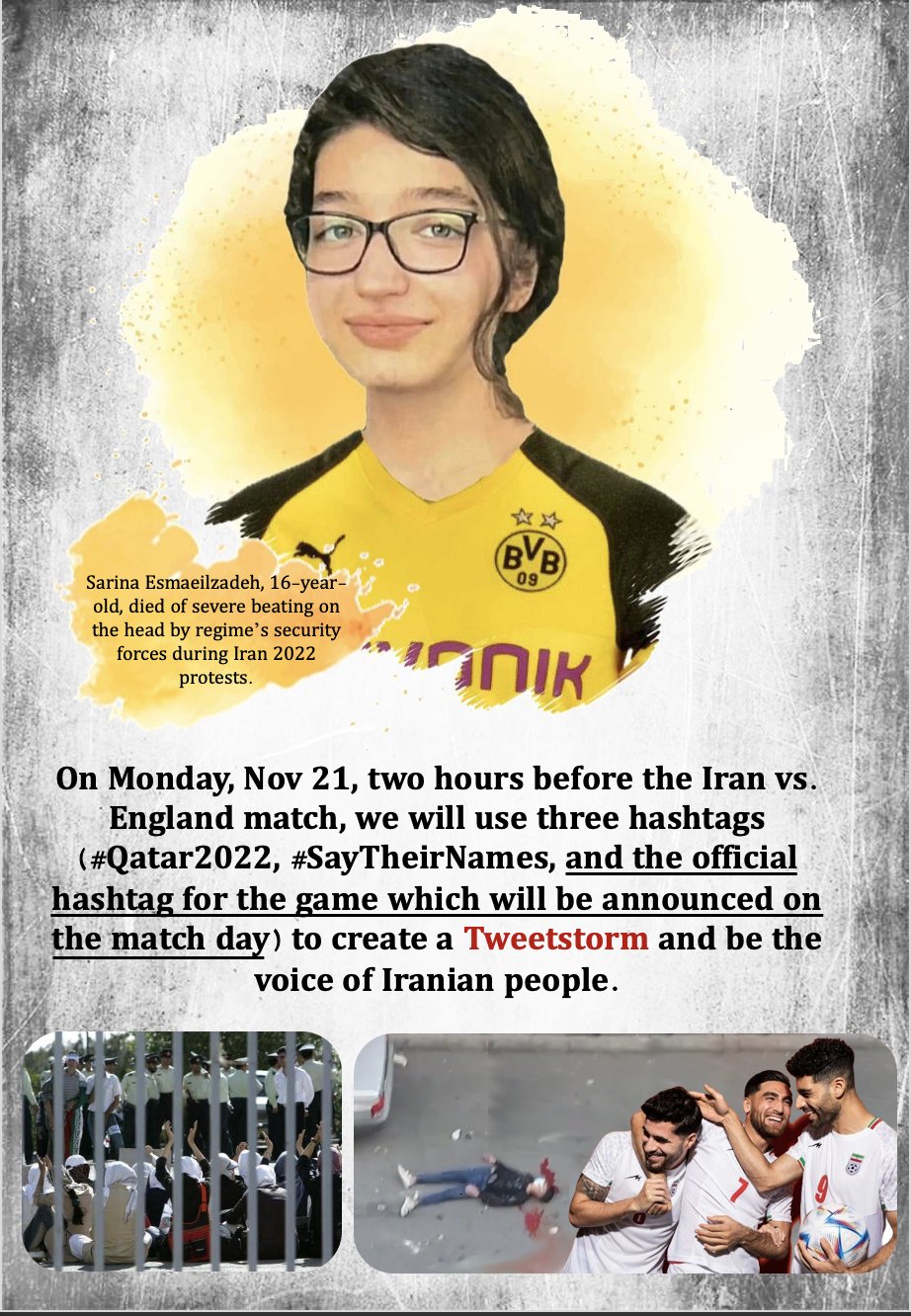
    As football fever is about to grip the world for the next few weeks many Iranians inside and outside the country are choosing to not support the team from the Islamic Republic. Stars of Iranian soccer like Ali Daei, and Ali Karimi have turned down FIFA’s invitation to attend the games in support of the protestors.

    10 year old Kian Pirfalak, pictured above, is one of the latest victims of the shoot-to-kill policy of the Islamic Republic’s response to demands for equality and freedom by peaceful protestors. Other than Kian, forty six other children have been identified as killed since September 16, 2022, when a young 22-year-old Iranian Kurdish woman, Mahsa [Jina] Amini died in custody as a result of blows to her head when she was arrested and detained for not fully observing the mandatory hejab laws in Iran.

    Iranians have written many letters to FIFA asking them to ban the Iran soccer team. FIFA also received official demand to suspend Team Melli prepared by a Spanish law firm sponsored by a group of Iranian sportsmen and women.

    As the games kick off on Sunday, November 20, we ask the free world press to be the voice of those who are being killed on the streets in Iran demanding ‘an ordinary life’, where religious and gender discrimination and persecution will no longer hinder the lives of half of Iran’s young vibrant population in law and practice. 

    Iranian journalists are in prison, foreign correspondents are not allowed in the country, the internet is heavily censored and little independent information is emerging from the country. Yet the news that makes its way outside is overwhelming of deaths, arbitrary arrests, disappeared children arrested from schools, torture, forced confessions and brutal military crackdown. The ruling elite has declared war against the people.

    The Islamic Republic’s Football Association is state-sponsored and managed – violation of FIFA statute 19, women have not been allowed to enter stadiums since 1981 – violation of FIFA statute 4. Many women who have attempted to enter stadiums have been arrested. One young woman, Sahar Khodayari, facing a six months prison term set herself alight in protest and lost her life. With FIFA’s intervention, women were invited to attend a world cup qualifier match in Mashhad. Tickets in hand they were met with batons and pepper spray and prohibited to enter the stadium. The continued killings and human rights violations violate FIFA statute 3. 

    • So, where FIFA has failed, YOU be the voice of the Iranian people.
    • While celebrating the beautiful game remind your public to be aware of what is happening.

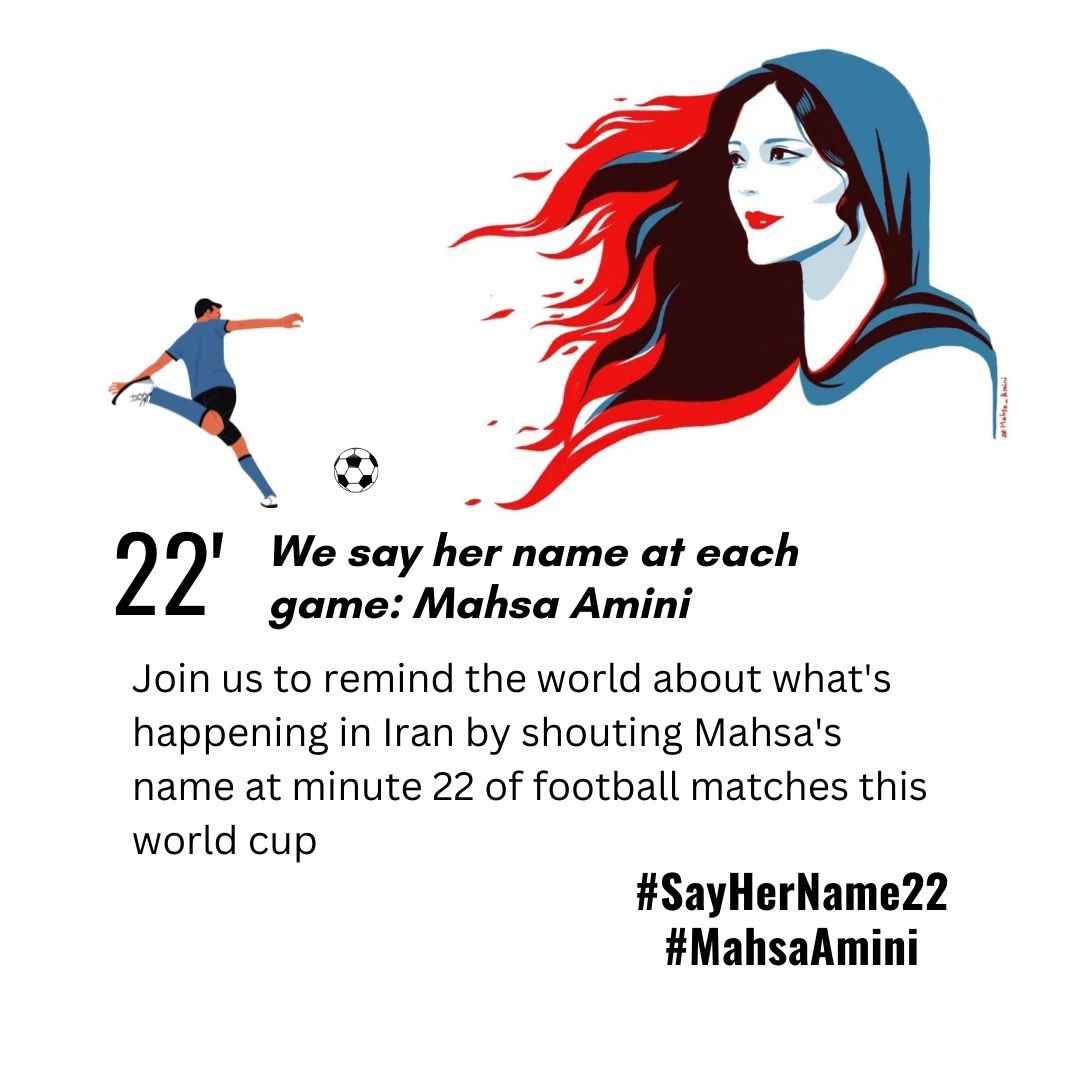
    Some ways to show solidarity include calling out Mahsa Amini’s name at minute 22 of all matches in respect of her age and birth date. @neginsh

    Image

    @OpenStadiums 

    @openStadiums

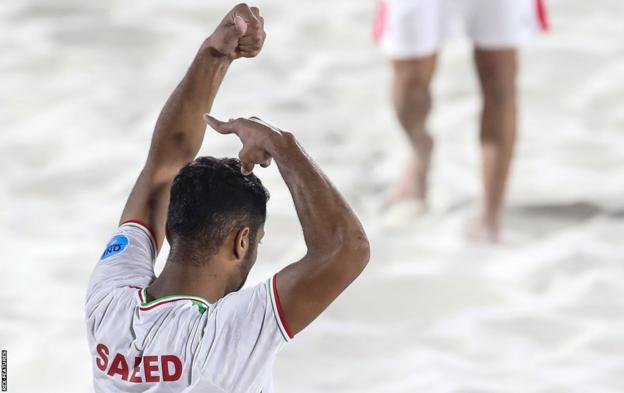
    Another (@omid9) is a call to Team Melli – if and when – they score a goal to celebrate the goal by miming scrunching hair and snipping it as other Iranian beach football players did at their international matches recently. 

    Iranian beach football player Saeed Piramoon pretends to cut his hair
    Saeed Piramoon’s hair-cutting gesture was widely interpreted as supportive of the protest movement CREDIT: Ali Haider/EPA-EFE/Shutterstock

    Be our Voice: Woman Life Freedom

    ——————————————–

    FIFA statue – 3:  Human rights
    FIFA is committed to respecting all internationally recognised human rights
    and shall strive to promote the protection of these rights.


    FIFA Statute – 4: Non-discrimination, equality and neutrality
    1.
    Discrimination of any kind against a country, private person or group of
    people on account of race, skin colour, ethnic, national or social origin, gender,
    disability, language, religion, political opinion or any other opinion, wealth,
    birth or any other status, sexual orientation or any other reason is strictly
    prohibited and punishable by suspension or expulsion.
    2.
    FIFA remains neutral in matters of politics and religion. Exceptions may be
    made with regard to matters affected by FIFA’s statutory objectives.


    FIFA Statue – 19: Independence of member associations and their bodies
    1.
    Each member association shall manage its affairs independently and without
    undue influence from third parties.
    2.
    A member association’s bodies shall be either elected or appointed in that
    association. A member association’s statutes shall provide for a democratic
    procedure that guarantees the complete independence of the election or
    appointment.
    3.
    Any member association’s bodies that have not been elected or appointed in
    compliance with the provisions of par. 2, even on an interim basis, shall not be
    recognised by FIFA.
    4.
    Decisions passed by bodies that have not been elected or appointed in
    compliance with par. 2 shall not be recognised by FIFA.


  • Legalising Paedophilia?
    Legalising Paedophilia?

    Legalising Paedophilia?


    ‘Unsupervised or Ill Supervised Children and Youth Protection Bill’

     Islamic Republic of Iran

    Ratified 22 September 2013


    Ref:    214/M/518

    Date: 26 September 2013 


     Summary

     On 22 September 2013 the Islamic Consultative Assembly ratified a Bill by which a legal guardian can marry his/her adoptive child. Although the ‘Unsupervised or Ill Supervised Children and Youth Protection Bill’ has some positive points it also has many ambiguities and other objectionable articles. However, none are as dangerous to the moral, mental and physical integrity of the child (particularly the girl child) as article 27 of the said Bill.

    Since other laws in the Islamic Republic legalise temporary marriages and girls as young as 9 lunar years can be married with the permission of the courts, the proposed article 27 seriously undermines the best interest of the girl child in any placement. It also seriously undermines the State Welfare’s Organisation’s ability in assessing suitable placements in the best interest of the vulnerable children in its care.

    The following report discusses the background to the Bill as well as assessing the consequences of such marriage. Three questions remain unanswered:

    1. By insisting on conformity to the Islamic criteria, is the Guardian Council putting the tenets of Islam above the best interest of the [girl] child?
    2. How can Behzisty (the State Welfare Organisation) ensure best placement for a [girl] child? How can they know the intention of the adoptive parent at the point of legal guardianship?
    3. How will the [girl] child be able to express her opinion about marrying her/his parent? If s/he is mature enough to marry s/he is mature enough to have an opinion. How can s/he express opinion in court and what weight will be given to this opinion?

    ACI recommends an amendment to article 27 prohibiting any such marriage as well as the right to remedy and reparation for existing victims.

     —————————————

    A little girl runs into the arms of her father and snuggles in his lap. This sentence evokes unspoken emotions of safety, security, protection, love and trust. What emotions would be evoked if the father stroked his little girl knowing that he was going to marry her? Unconscionable?

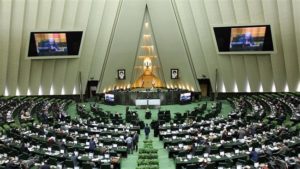
    After five years of debates, deliberations and expert consultations, on Sunday 22 September, the Islamic Consultative Assembly passed the long awaited ‘Unsupervised or Ill Supervised Children and Youth Protection Bill’ (the Bill) which legalised marriage between the child and the legal guardian. It has been passed on to the Guardian Council for its final approval. As with all Bills the process has gone through numerous consultations with the Guardian Council whose duty it is to examine conformity of all articles with Islamic criteria[1]. Although the Bill had been sent to the Guardian Council in the past, the difference this time is that all articles have been agreed upon prior to the final passing and ratification by the Islamic Consultative Assembly.

    The History

     The rules pertaining to adoption were last reviewed on 28 February 1975. In view of the fact that Iran became an Islamic Republic in 1979 and that the laws need to conform to Islamic criteria it was necessary to have new sets of laws particularly since Islamic law does not recognise adoption and instead a form of permanent legal guardianship has been developed. The 1975 Bill was silent on the question of marriage between the child and the legal guardian as was the Civil Code. There are no provisions for adoption in any form in the present Civil Code.

    On 22 February 2009 the Ahmadinejad administration presented its ‘Unsupervised or Ill Supervised Children and Youth Protection Bill’ (The Bill) to the eighth Islamic Consultative Assembly[2]. In article 24 of this Bill the legalisation of marriage between child and legal guardian was introduced for the first time. Article 24 stated that with the expert opinion of the State Welfare Organisation (Behzisty) the matter could be referred to a competent court for approval.

    The first consultation on the proposed Bill stated that the inclusion of this article would be unacceptable to the public morale and should be removed[3]. The consequent amended draft dated 29 July 2009 excluded article 24[4]. On 29 September 2009 a member of the Islamic Consultative Assembly even went a step further and suggested prohibiting any such marriage in a note to article 27[5] which was implemented and the newly amended Bill resubmitted to the Guardian Council on 13 October 2009[6]. However, the progress of the Bill was effectively halted by the Guardian Council on a technicality on 2 November 2009[7] with the last correspondence between the /Guardian Council and the eighth Assembly recorded on 17 March 2010[8].

    Following the parliamentary elections for the ninth Islamic Consultative Assembly on 2 March 2012 the Bill was rescheduled for assessment and the newly elected members resubmitted the October 2009 Bill on 24 April 2012 to the Guardian Council[9]. Expert consultation on 13 June 2012 expressed Guardian Council’s opinion on the marriage between child and the legal guardian as ‘may be in the best interest of the mature / pubescent child’ and it was recommended that the note to article 27 prohibiting the marriage should be amended to read, ‘marriage between the child and the legal guardian either during the time of guardianship or after is prohibited unless after the child has reached maturity / puberty marriage with the guardian would be in the best interest of the child. The matter should be decided after expert consultation with Behzisty by a competent court’[10]. Despite this recommendation the redrafted Bill submitted on 25 July 2012 maintained its position on the prohibition of marriage[11]. In its opinion of 15 August, among many other comments concerning the state of conformity of other articles with the Islamic criteria, the Guardian Council unequivocally stated that the prohibition of marriage between the child and the legal guardian failed to conform to Islamic criteria and so it must be removed[12].

    In keeping with the Guardian Council’s recommendations on 6 January 2013 the ‘Social Affairs Commission’ amended the Bill and presented it to the Assembly for deliberation[13]. For the first time marriage between a child and legal guardian was declared legal.

    Ratified by the Islamic Consultative Assembly on 23 February 2013 the Bill was submitted to the Guardian Council for further comment[14]. While other articles were discussed in further correspondences no changes were made to article 27 and it was not discussed again.

    The final wording of the Bill was approved and ratified by the Islamic Consultative Assembly and sent to the Guardian Council on 22 September 2013.

    Duty to Protect

    When it is not possible for a child to live with family the State become responsible for protecting the rights of that child and ensuring appropriate alternative care which would be in his/her best interest. In Islamic Republic of Iran this duty of care and responsibility is that of the Absolute Supreme Leader who has appointed the State Welfare Organisation (Behzisty) to act with his authority in this regard.

    Risk of harm to the girl child

    Based on article 5.J of the Bill single women of thirty years and above with sufficient means can also adopt a child which in itself is a positive development. However, they are limited to adopting girls only. This article read in conjunction with article 27 makes it clear that the legislator is principally talking about a marriage between an adoptive father and a girl child.

    The Family Protection Law 2013 allows two types of marriage contract, full or temporary. According to Islamic Shari’a and the Family Protection Law polygamy is legal (article 4.4, 21). According to article 1401 of the Civil Code marriage age is set at 13 for girls; yet, girls can enter into marriage contract at a younger age with the permission of a competent court. This means that based on article 27 girls as young as 9 lunar years[15] are potentially at risk.

    Girls who marry at such young age are at risk of violence, abuse and exploitation. Quiet apart from the fact that legalising marriage for girls at such young age is deeply rooted in gender discrimination the Guardian Council has disregarded the social stigma facing a young girl for being married to her father.

    As a result of this proposed harmful law the girl child will certainly face serious risk to her physical, mental and moral integrity.

    How can this marriage possibly be in the best interest of the child? The idea that the girl child can be both a daughter and a wife is morally and socially reprehensible

    The role of Behzisty

    One of the positive points of the Bill is the increased supervisory role of Behzisty. Yet, many ambiguities remain. For example, how can Behzisty ensure a girl child’s best interest in any placements when it has no way of assessing the father’s future intentions? How can Behzisty offer expert consultation on the fact that the best interest of the child is to marry her father and on what basis is Behzisty to make such recommendation to a competent court? How can Behzisty determine that a mother will offer unconditional love and care to a girl child when she thinks that she could be raising her husband’s future wife? How can Behzisty ensure that the child is being placed in the best environment possible? In effect article 27 actually invites Behzisty to collude in such marriage by offering expert consultation to the competent court.

    Right of the child to express an opinion

    As signatory to the CRC, Islamic Republic must assure the child’s right to express an opinion freely about her welfare. If a girl child is mature enough for marriage she certainly is mature enough to have an opinion about marrying her father. Her right of being provided an opportunity to be heard at the competent court deciding on her future must be ensured.

    The legislator must make clear where and how the girl child’s views about the marriage can be heard and what weight would be given to her expressed views.

    Who will protect the rights of the child in such a marriage?

    In a traditional or conventional marriage the bride’s father principally negotiates for her rights within the marriage; who will do this on behalf of the child when she is in fact marrying her father? Will Behzisty’s supervision end at the time of marriage? Who will ensure that she has access to, for example, education? Who can she turn to if she has any concerns or is being abused? She certainly will not be able to ask her legal guardians for support and protection.

    No legal impediments according to Islamic Shari’a

    It is argued that according to Shari’a there are no  legal impediment since there is no affinity or consanguinity in an adoptive relationship and any sexual relationship between a legal guardian and the girl child is not incestuous.

    In legalising such marriage the Guardian Council and 290 members of the ninth Islamic Consultative Assembly appear to be more concerned in protecting the tenets of Islamic Shari’a than the best interest of the girl child.

    The Guardian Council has to explain why when the Bill was first introduced in 2009 prohibiting such marriage categorically, its nonconformity to the Islamic Shari’a was never raised and it took them three years to make such determination. The Guardian Council in its expert recommendation of August 2012 seems to forget that the principle of adoption or legal guardianship is to benefit the child and not to gratify the wishes of the adoptive parents.

    Adoption for nefarious purposes

    Article 27 of the Bill could lead to the girl child being adopted for nefarious purposes and at risk of abuse by paedophiles. The legislator seems to disregard the fact that based on national laws as well as article 21 of CRC and all other related documents the child’s best interest is paramount in any placement. Here, instead of taking steps to criminalise any such act the Guardian Council has legalised it.

    ‘It happens already’

    It has been said that in some remote villages in Iran such marriages have taken place and by introducing the role of a competent court it will act as a deterrent.

    However, there is no provision for punishment for a man who enters into a temporary marriage contract with the girl child without the permission of a competent court.

    Furthermore, this is an objectionable argument since enforcing the prohibition of such marriage would certainly better protect the child and stop any such idea at inception.

    CONCLUSION

    The ‘Unsupervised or Ill Supervised Children and Youth Protection Bill’ has positive developments as well as other questionable or ambiguous points. Nevertheless, it is article 27 that threatens the most vulnerable in our society and must be amended to protect the best interest of the girl child.

    The society in Iran is often more progressive and advanced than the Islamic laws governing Iran. The public reaction to this article certainly demonstrates this point. Laws must be there to protect and not to legalise the abuse of the most vulnerable such as a child in desperate need of a home and a loving family. Article 27 is morally and socially deplorable.

    By punishing the perpetrator and prohibiting the marriage the best interest of the girl child will be served and will provide the child with a real opportunity of living with a loving and caring family.

    It is understood that most adoptions concern children of two years and less. In this regard the idea that a man will adopt a little girl, love and care for her as his daughter and then decide to marry her is unconscionable and deplorable. It undermines the very spirit of adoption and care for children.

    Article 27 puts Behzisty in an impossible position when assessing the best interest of the child in any placement.

    In this respect, it is the duty of the State to legislate against such unacceptable practices and educate and change culture in an effort to stop discriminatory and abusive treatment of the girl child.

    RECOMMENDATION

    • ACI recommends an amendment to the existing article by prohibiting this type of marriage.
    • ACI also recommends that efforts be made to identify victims of such harmful practice. They must be given the right to remedy and reparation.


    [1] According to article 94 of the Islamic Constitution, ‘all legislation passed by the Islamic Consultative Assembly must be sent to the Guardian Council. The Guardian Council must review it within a maximum of ten days from its receipt with a view to ensuring its compatibility with the criteria of Islam and the Constitution. If it finds the legislation incompatible, it will return it to the Assembly for review. Otherwise the legislation will be deemed enforceable’.

    /[2] Registration number 288 – 07/03/2009

    [3] Guidance serial number 9667 – 17/05/2009

    [4] Registration number 288 – 10/08/2009

    [5] Registration number 288 – 29/09/2009

    [6] Registration number 288/34852 – 13/10/2009

    [7] Ref number 88/30/36374 – 02/11/2009

    [8] Ref number 88/30/37757 – 17/03/2010

    [9] Ref number 288/4629 – 24/04/2012

    [10] Guidance serial number 24012435-3 – 13/06/2012

    [11] Ref number 10/22740 – 24/07/2012

    [12] Ref number 91/30/47840 – 15/08/2012

    [13] Registration number 10 – Ref number 61583/50/D – 06/01/2013

    [14] Ref number 10/73515 – 23/02/2013

    [15] Age of puberty according to article 1210 of the Civil Code


    The report is prepared by the ACI’s Human Rights Committee

    under the supervision of Roya Kashefi

    Contact: rk@aciiran.com

    26 September 2013

    All Rights Reserved © Association des Chercheurs Iraniens (ACI) 2013