Tag: Iran

  • Right to life and Death penalty in Iran – 1

    Right to life and Death penalty in Iran – 1

    Right to Life and the Death Penalty

    A Faltering Regime and

    the Deployment of Violence and Executions

    Cologne – Germany

    5-6 December 2009

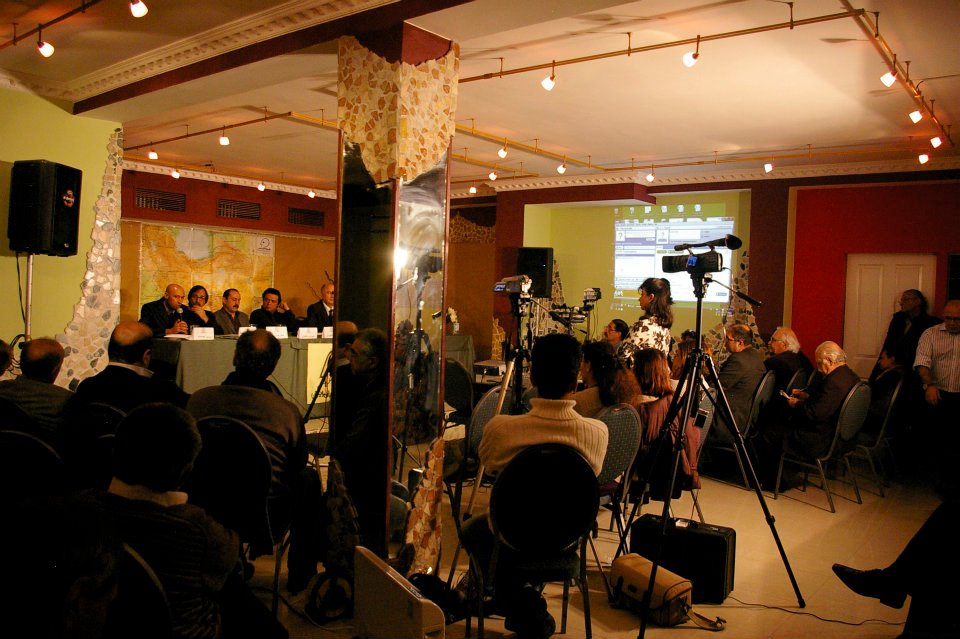
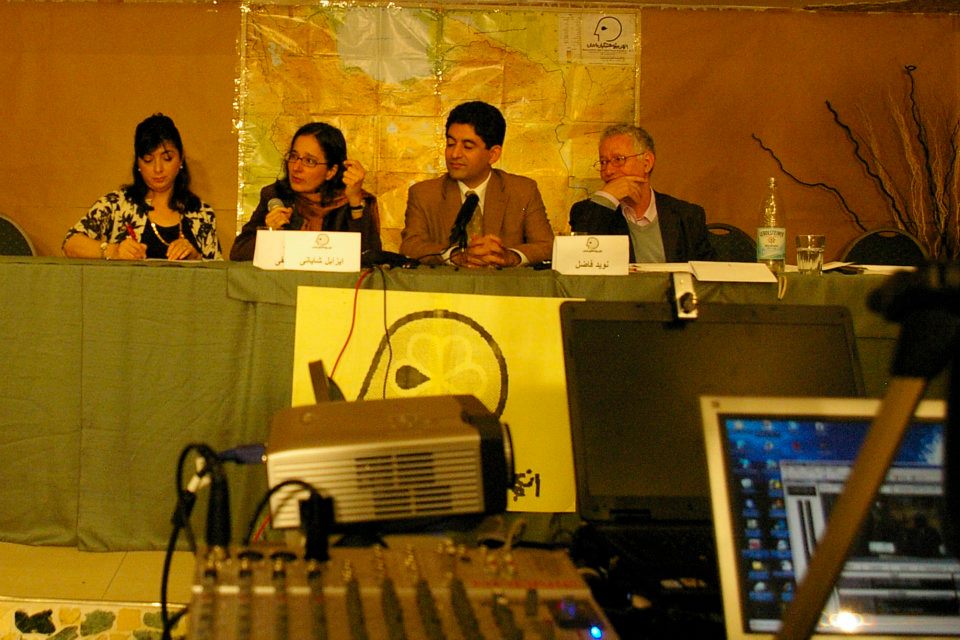
    In view of the widespread deployment of violence, intimidation, rape, imprisonment and the ultimate cruel, inhuman and degrading punishment ‘the death penalty’ of the last few months in Iran, ‘Association des Chercheurs Iraniens’ has organised an emergency conference in Cologne-Germany with the hope of reaching a coordinated and concerted effort in opposing and working towards abolishing the death penalty in Iran in all cases regardless of the nature of the crime, the characteristics of the offender, or the method used by the regime to kill the prisoner. In the conference examined the following key issues:

    • The Sociological Aspect of the Use of the Death Penalty
    • Human Rights: The Violation of Fundamental Rights In Iran
    • The Use of Violence and the Death Penalty Against Iran’s Ethnic Groups
    • The Use of Violence and the Death Penalty Against Iran’s Religious Groups
    • A Realistic Assessment of the Regime’s Instability and the Deployment of Violence And Executions

    Saturday – December 5, 2009

    Panel One – Violation of Human Rights

    Roya Kashefi – ACI Human Rights Committee

    Mina Zarin – Human Rights Defender

    Rahim Rashidi – International Federation of Journalists

    Assad Seif – Writer

    Jahanbakhsh Rostami – Kurd Cultural Centre – Germany

    Panel Two – Punishment and State-Sponsored Violence in Iran

    Sirus Malakooty – ACI

    Tonia Valioghli – ‘The Mourning Mothers’

    Nastaran Amjadi – Human Rights Defender

    Mitra Khalatbari – Jouranlist

    Fereydoon Ahmadi – Political activist

    Niloofar Bayzaei

    Sunday – December 6, 2009

    Panel Three – The Death Penalty and Violence Against Iran’s Ethnicities

    Hossein Ladjevardi – ACI

    Nosrat Teimourzadeh – Komala and Communist Party of Iran Central Committee

    Mohamad Mosri – Komala Iran Kurdistan

    Abdolsattar Doshoki –  Baluchestan Studies Centre

    Voria Mohamadi – Komala of the Toilers of  KurdistanIran

    Khaled Hassanpour – Kurdistan Democratic Party

    Panel Four– The Death Penalty and Violence against religious groups in Iran

    Navid Fazel – ACI

    Asghar Abdi – Researcher

    Isabel Schayani – Journalist

    Panel Five – The Faltering State and the Rise of Violence and Executions in Iran

    Hossein Ladjevardi – ACI

    Foad Taban – Editor in Chief Akhbar Rooz

    Jamshid Farooghi – Head of Deutsche Welle – Persian

    Behzad Karimi – The Organization of Iranian People’s Fadaian (Majority)

    Hamila Nisgilli – Rahe Kargar Central Committee

    Abdullah Mohtadi – Secretary General of Komala Party of Iranian Kurdistan

    ACI maintains an impartial and an unprejudiced approach to all its activities and respects all schools of thought. We work actively with colleagues from all over the world, and hope to contribute towards a better future for Iran. We welcome and invite the participation of all those interested in the future of Iran.

  • The plans and role of the ‘Opposition’ in the future of Iran

    IRAN IN THE 21ST CENTURY

    23, 24, 25 June 2000 – Berlin 

    Haus der Kirche, Goethestr 26-30, BERLIN GERMANY

    Call for Papers

    Conference Report

    Friday 23 June 2000

    • 12:30    Getting to know ACI
    • 13:00    Keynote Speech

    PANEL ONE

    An Assessment of Conditions in Today’s Iran

    • 13:30    Hassan Nazih – Ex-chief of Law society of Iran – France,

    Referendum for dissolution of the Islamic Republic and the preparation of an Alternative

    • 13:50    Dr Siagzar Berelian – Writer – England,

    Dissenting the Present, Discussing the Future

    • 14:10    Dr Asghar Abdi – Researcher – England,

    A look at Opposition newspapers out of Iran (Kar & Nimrooz)

    • 14:30    Dr Bahman Niroomand – Writer & Journalist – Germany

    The reason behind the formation of reformist trend in the Islamic Republic of Iran

    14:50    BREAK

    • 15:10    Dr Jamshid Assadi – University lecturer – France,

    Abroad Iranian Opposition: Some distorted sights

    • 15:30    Parviz Dastmalchi – Writer and researcher – Germany

    The Dovom Khordad Movement, and Opposition

    • 15:50    Dr Ali Reza Noorizadeh – Journalist and Political Affairs Researcher – England,

    A new look at the factions and personalities in the new parliament

    16:10    BREAK

    PANEL TWO

    • 16:30    Speakers open debate
    • 18:30    Break

    PANEL THREE

    • 19:00    Public Open Debate
    • 22:00    End of Day One

    Saturday 24 June 2000

    10:00    Getting to know ACI

    PANEL FOUR

    Reform, Overthrow? Presentation of plans and Alternatives

    • 10:30    Organisation of Revolutionary Workers of Iran – Rahe Kargar
    • 10:50    The Union of People’s Fedaian of Iran
    • 11:10    The Organisation of Iranian People’s Fedaian (Majority)
    • 11:30    The Provisional Council of the Iranian Left Socialist
    • 11:50    The Democratic Party of Iranian Kurdistan
    • 12:10    Workers Left Unity
    • 12:30    Organisation of Fedaian (Minority)
    • 12:50    Jebhe Melli Iran – Europe
    • 13:10    Worker Communist Party of Iran

    13:30    BREAK

    PANEL FIVE

    • 14:30    Speakers Open Debate
    • 18:30    BREAK

    PANEL SIX

    • 19:00    Public Open Debate
    • 22:00    End of Day Two

    Sunday 25 June 2000

    • 10:00    Getting to know ACI

    PANEL SEVEN

    Reform, Overthrow? Presentation of plans and Alternatives

    • 10:30    Democratic People’s Party of Iran
    • 10:50    The Constitutionalist Movement of Iran ‘Front Line’
    • 11:10    The Organisation of Iranian National Republican
    • 11:30    Communist Party of Iran
    • 11:50    National Movement of Iranian Resistance
    • 12:10    The Organisation of Iranian People’s Fedaian (Majority)
    • 12:30    Constitutional Party of Iran

    12:50    Lunch

    PANEL EIGHT

    • 14:00    Speakers Open Debate
    • 15:30    BREAK

    PANEL NINE

    • 16:00    Public Open Debate

    PANEL TEN

    • 18:30    Conclusion

    19:00    END OF CONFERENCE

  • Changes facing Iran on the Threshold of Year 2000 – Bulletin 1

    Joschka Fischer  

    Bundesminister des Auswärtigen 

    Auswärtiges AMT 

    Adenanerallee 99-103 

    Postfach 1148,  

    53001 Bonn 

    Changes facing Iran on the Threshold of Year 2000 – Bulletin 1 

    Ref: 22 / M / 96  

    November 30, 1998 

    Sir, 

    Almost twenty years have passed since the Iranian Revolution, a time that with a populace and logical view towards home and world policy Iran could have been amongst the developed countries. 

    Today, by electing Mr. Khatami, himself an approved candidate of the ruling religious hierarchy, the people of Iran registered their protest with the only way available to them: A negative vote to Velayat Faghih, and at the same time putting their faith in Mr. Khatami by giving him the highest support because of his attractive promises for freedom and the rule of law. Sadly: 

    • Due to existing and worsening socio-political and economic problems, day by day during the last eighteen months people’s quality of life and standard of living have weakened and are on a downward spiral after putting behind the climax and difficulties arising form the presidential elections.  
    • Social Trend – Pressure on every level of the society has increased: The doubling of the population and its consequences, the enormous problems concerned with a very young population (under forties make up 4/5 of Iran’s population), exhaustive oppression of women and lack of any real and practical programs have caused widespread corruption and despondency within the society. 
    • Economic Trend – The ever decreasing income and purchasing power, destruction of the middle class and its dissolution into the lowest level of the society, the growing wealth of the small group in power, theft, bribery … have all limited progress within the society and reduced Iran, a rich country in its natural resources, to the present day situation. 
    • Political Trend – The pressures from the religious ideology of a small group governing the country, ignoring even the most basic of rights, non observance of the law – even the law according to the constitution of the Islamic Republic – and using terror for silencing dissent both in and out of Iran, has left no credit or reputation for the people of Iran at the end of this millennium. 

    The supportive policies of United States and the European Community towards the Islamic Republic by establishing economic relations and signing profitable contracts which are purely to alleviate economic problems at home are a complete disregard of the interest and rights of the Iranian people. We are in no doubt that:  

    1. Nothing even the smallest of the oppressive actions of the governing regime in Iran is not hidden from the eyes of the West. 
    1. Non observance of human rights, continuous executions, persecutions of the free thinkers and journalists, the employment of terror in and out of Iran like the heinous assassinations of Bakhtiar, Ghassemloo …, the fatwa on Salman Roshdi and most recently the brutal and vile murder of Parvaneh and Darius Forouhar in Iran, are but a few examples of the religious despotism governing Iran which are not hidden from the eyes of the West. 
    1. The plundering of Iran’s national wealth and the pillaging of its natural assets – for the benefit of the West – is not hidden from the eyes of the West. 
    1. The political incompetence of the government of the Islamic Republic and the true wish of the people of Iran for having a democratic government is not hidden from the eyes of the West. 

    Let us not forget that although global government, the formation of the European Union … has created a suitable and profitable platform for the western countries it has also brought certain responsibilities with it. If due to financial and economic policies United Nations, the Security Council, the United States and the European Union reserve the right to choose to support a group who do not necessarily represent the true wishes of the people of Iran, they must remember that the other side of the equation is almost seventy million people of Iran living in a vast country occupying 1,648,000 square kilometers of one of the most strategically sensitive areas of the world.  

    Economic and financial policies of the Western world must not blind them to the fact that Iran’s problems are accelerating at a dangerous speed and that it is heading towards another explosion. Of course, yet again the major harm will face the Iranian nation. But, the western countries that have tasted the bitter experience of unrestricted support of Iran’s previous regime and its consequences will pay a much higher price this time. 

    Dr Hossein Ladjevardi 

    President,  

    Association of Iranian Researchers. 

    cc  

    Kofi Annan, Secretary General, UN  

    Jürgen Trumpf – Secretary General, EU 

    Mr. Hubert Vedrine – Foreign Minister, France 

    Mr. Lamberto Dini – Foreign Minister, Italy 

    Robin Cook – Foreign Secretary, UK  

    Madeline Albright – Secretary of State, USA